
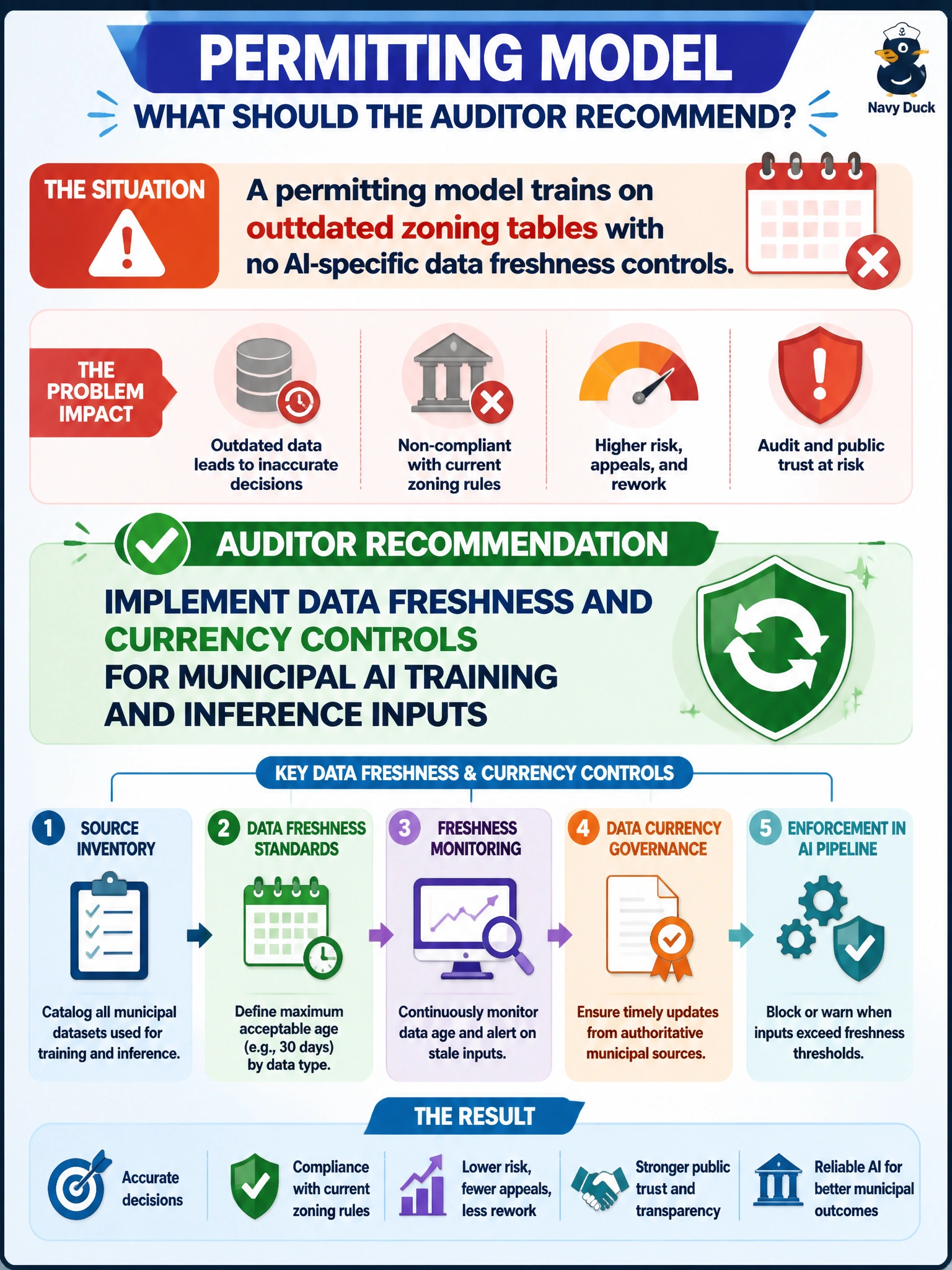
A permitting model trains on outdated zoning tables with no AI-specific data freshness controls. What should the auditor recommend?
Select an answer to reveal the explanation.
Short Explanation
Old zoning tables make smart models give dumb answers. Put freshness checks on the data that trains and feeds the permitting AI. Yesterday's code book is not a feature — it is a bug.
Full Explanation
A permitting model that trains on outdated zoning tables without AI-specific data freshness controls will produce incorrect or unlawful guidance for residents and planners. The auditor should recommend implementing data freshness and currency controls for municipal AI training and inference inputs because zoning and ordinance content are time-sensitive legal facts; stale tables become incorrect features that degrade model reliability and create resident harm. Freshness gates, owners, and refresh SLAs keep training and inference aligned to the current municipal code. Schedule permit zoning table refreshes from quarterly validation loss trend reviews fails by concept: validation loss trends measure model performance, not data currency, so tying table refreshes to loss trends can leave the model trained on outdated zoning tables between review cycles. Maintaining versioned archives of zoning tables to support full permit model reproducibility reviews fails by concept: versioned archives preserve old tables for audit and reproducibility but do not enforce freshness or currency for current permitting inputs, so the model can still train on obsolete code. Requiring planner sign-off on model low-confidence permit recommendations before issuance fails by concept: low-confidence sign-off is an output review control that happens after inference, not a data freshness control, so it does not prevent outdated zoning tables from shaping training and inference inputs. Exam caveat: AAIA AI data-management items emphasize freshness/currency controls for training and inference—not refresh schedules driven by validation loss trends, versioned archives alone, or output-level planner sign-off as substitutes for data currency. Operational check: tag zoning data with effective dates, enforce freshness thresholds before train/inference jobs, assign owners for feed currency, and sample permitting outputs against the current code after each refresh.