
A municipal AI trust-and-safety charter omits accessibility obligations for disabled residents. What should the auditor recommend?
Select an answer to reveal the explanation.
Short Explanation
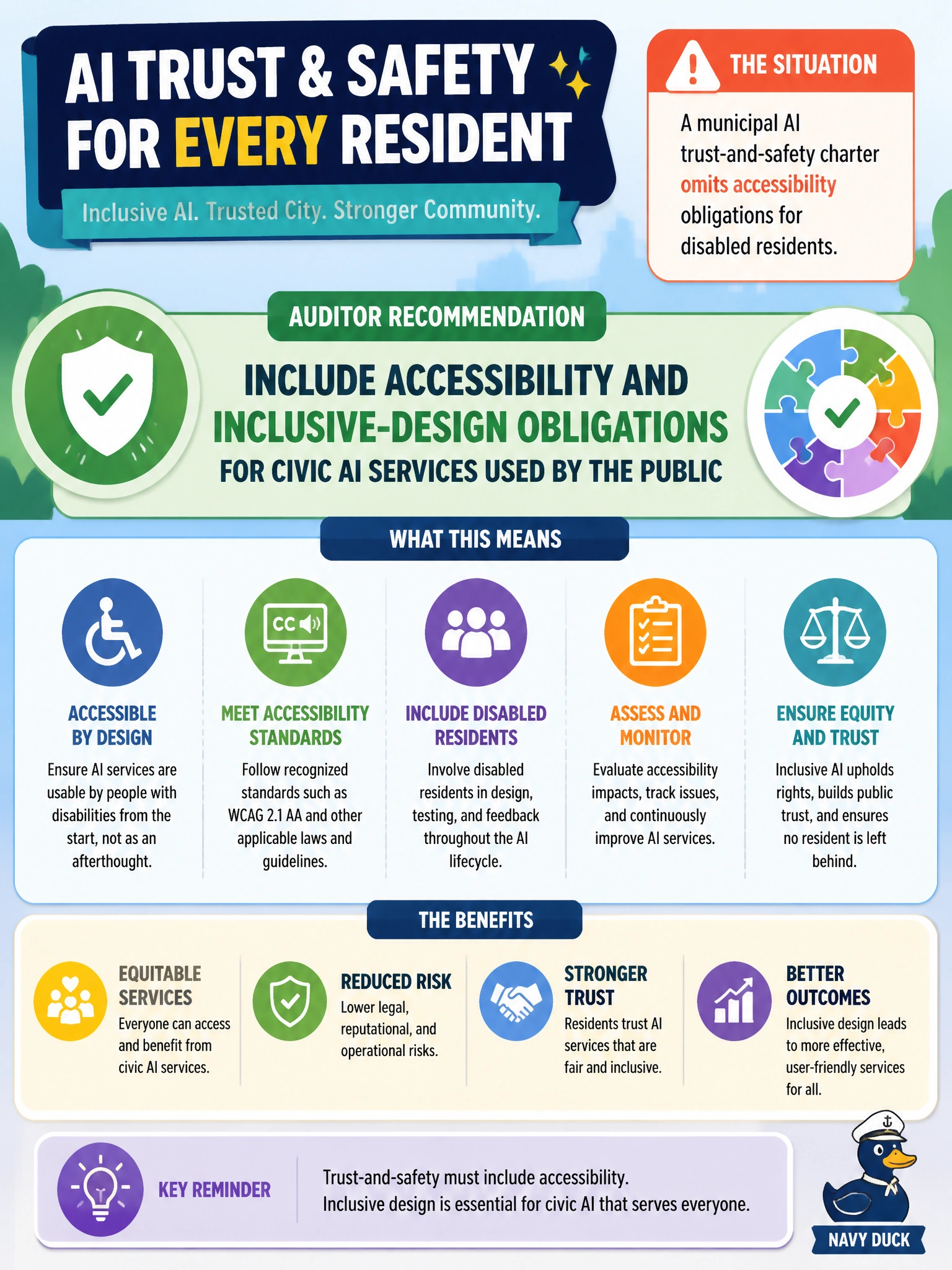
If the trust charter forgets disabled residents, it's not really about trust. Bake accessibility and inclusive design into civic AI the same way you bake safety. A voluntary annex for future deployments isn't enough — prove it now.
Full Explanation
A municipal AI trust-and-safety charter that omits accessibility obligations for disabled residents leaves a material inclusive-design and service-equity gap. The auditor should recommend including accessibility and inclusive-design obligations for civic AI services used by the public because resident-facing AI channels—chatbots, voice agents, portals—must remain usable by people with disabilities under ethical commitments and often under accessibility law or policy. Explicit charter language drives testing, remediation, and procurement requirements rather than assuming universal usability. Placing accessibility expectations in a voluntary annex for future municipal AI deployments fails by concept: accessibility obligations belong in the charter now, not in a voluntary annex deferred to future deployments. Addressing accessibility through vendor conformance statements for municipal chatbot platforms fails by concept: vendor paperwork does not substitute for charter obligations and does not ensure resident-facing AI is actually accessible. Prioritizing accessibility testing for high-traffic civic features within existing release schedules fails by concept: traffic volume does not predict which features disabled residents depend on, and charter-level obligations must cover all public-facing AI services, not just the busiest ones. Exam caveat: AAIA inclusive-design items expect accessibility commitments for public civic AI—not voluntary annexes for future deployments, vendor conformance statements alone, or high-traffic-only testing schedules. Operational check: amend the trust-and-safety charter with accessibility obligations, require accessibility testing for resident AI channels, track remediation, and verify human alternatives remain available where needed.