
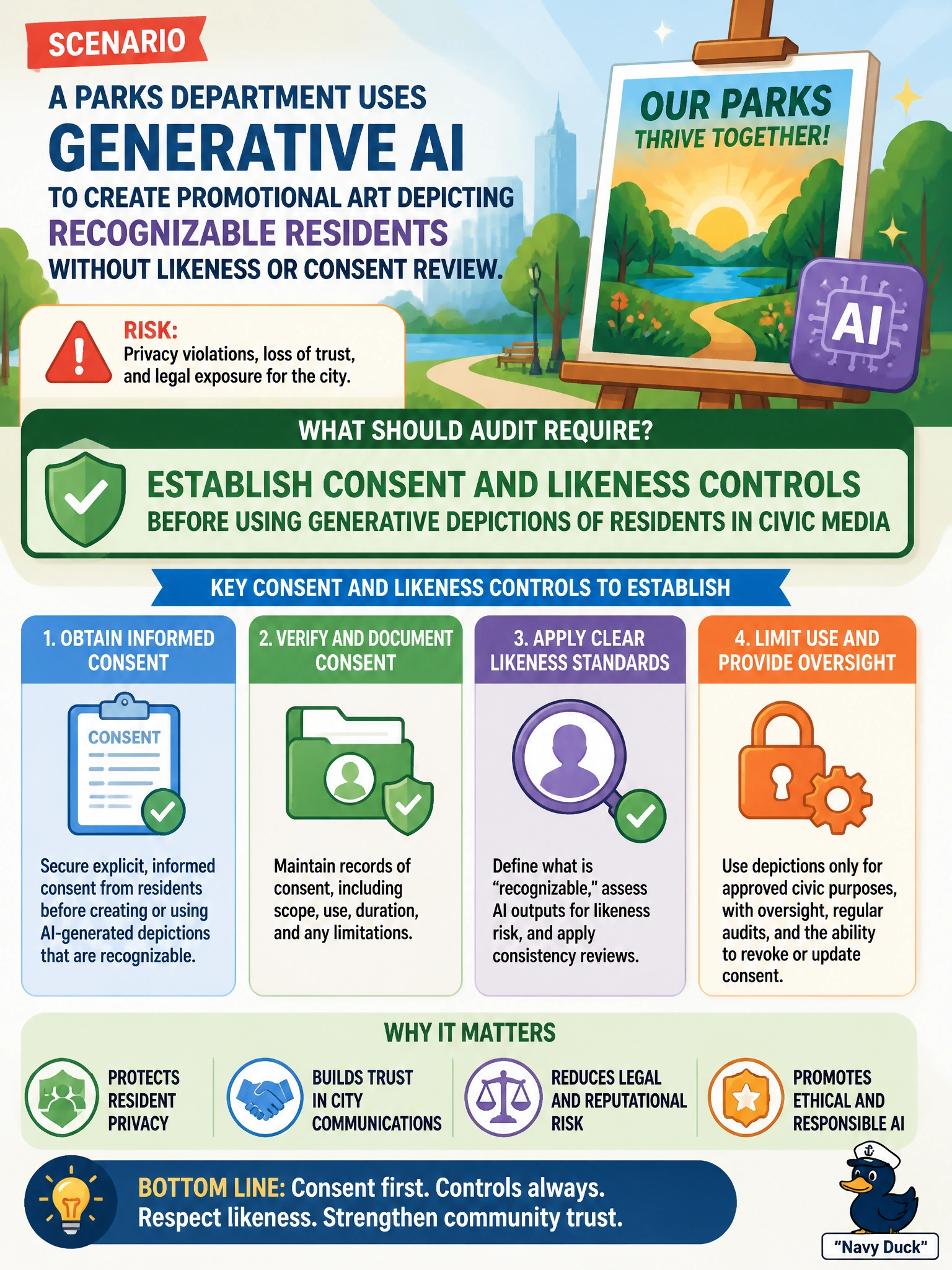
A parks department uses generative AI to create promotional art depicting recognizable residents without likeness or consent review. What should audit require?
Select an answer to reveal the explanation.
Short Explanation
Photoshopping a neighbor's face with generative flair still needs a consent conversation. A vendor model license doesn't give you rights to use residents' likenesses in promotions. Get rights and review in place before the posters go up.
Full Explanation
A parks department that uses generative AI to create promotional art depicting recognizable residents without likeness or consent review exposes the municipality to ethical, privacy, and reputational risk. Audit should require establishing consent and likeness controls before using generative depictions of residents in civic media because generative tools can synthesize or alter identifiable appearances that still implicate personality, publicity, and dignity interests. Pre-publication review, consent where required, and clear prohibition on unauthorized resident likenesses protect both residents and the city. Treat vendor model licenses as sufficient authorization for using resident likenesses in promotions fails by concept: a vendor's license to the AI model does not authorize the city to use identifiable residents' likenesses without consent. Recording training dataset sources for the image model to demonstrate compliance with likeness requirements fails by concept: documenting where training data came from does not replace the need for consent or likeness clearance when identifiable residents appear in civic media. Applying synthetic media labels to AI promotional art to meet transparency expectations for civic outreach fails by concept: transparency labels disclose AI use but do not substitute for prior consent and likeness controls for identifiable residents. Exam caveat: AAIA ethics items on generative civic media reward consent and likeness controls before publication—not treating vendor model licenses as sufficient authorization, dataset source recording as a substitute for consent, or transparency labels as a replacement for likeness review. Operational check: institute pre-publication likeness/consent review for parks generative campaigns, maintain consent records where applicable, block prompts and assets that recreate identifiable residents without approval, and sample published creatives for compliance.