
A hiring AI for city jobs shows disparate impact across demographic groups. What should audit prioritize?
Select an answer to reveal the explanation.
Short Explanation
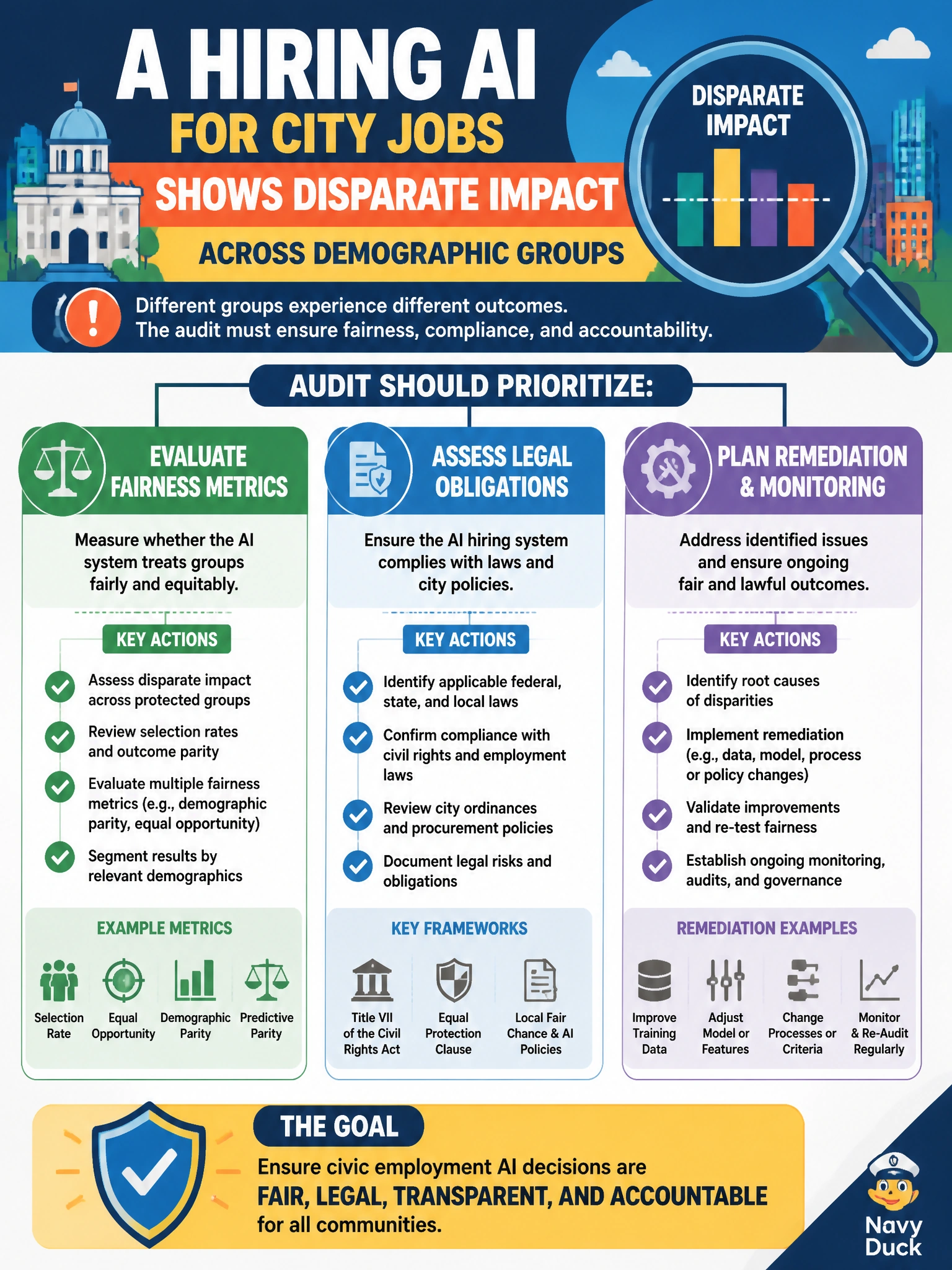
If the hiring model hits some groups harder than others, validating accuracy isn't the fix. Check fairness metrics, legal duties, and fix-it plans. City jobs are high-stakes — disparate impact belongs on the audit agenda.
Full Explanation
A hiring AI for city jobs that shows disparate impact across demographic groups creates legal, ethical, and trust exposure for municipal employment decisions. Audit should prioritize evaluating fairness metrics, legal obligations, and remediation for civic employment AI decisions because automated screening or ranking that disadvantages protected groups is not "neutral by design" and may trigger civil-rights, employment, or local equity requirements. A structured response assesses how impact was measured, which obligations apply, whether less discriminatory alternatives exist, and what remediation or human-review controls are needed before continued use. Reviewing detailed vendor bias test summaries and certification records for current hiring model approval fails by concept: vendor summaries and certifications do not substitute for the municipality's own obligation to evaluate fairness, legal exposure, and remediation for its own hiring decisions and data. Validating overall prediction accuracy and job performance correlation for ranked candidates fails by concept: prediction accuracy does not substitute for fairness assurance when city jobs affect livelihoods and equal opportunity. Auditing applicant data privacy controls and consent documentation for hiring systems fails by concept: privacy and consent checks do not replace fairness evaluation, legal exposure review, and remediation for municipal hiring decisions. Exam caveat: AAIA fairness items on employment AI expect fairness evaluation plus legal/remediation consideration—not accuracy-only validation or vendor-record reliance. Operational check: document disparate-impact findings, involve HR and legal, reassess features and thresholds, define remediation or compensating human review, and pause or constrain automated offer pathways until controls are accepted.