
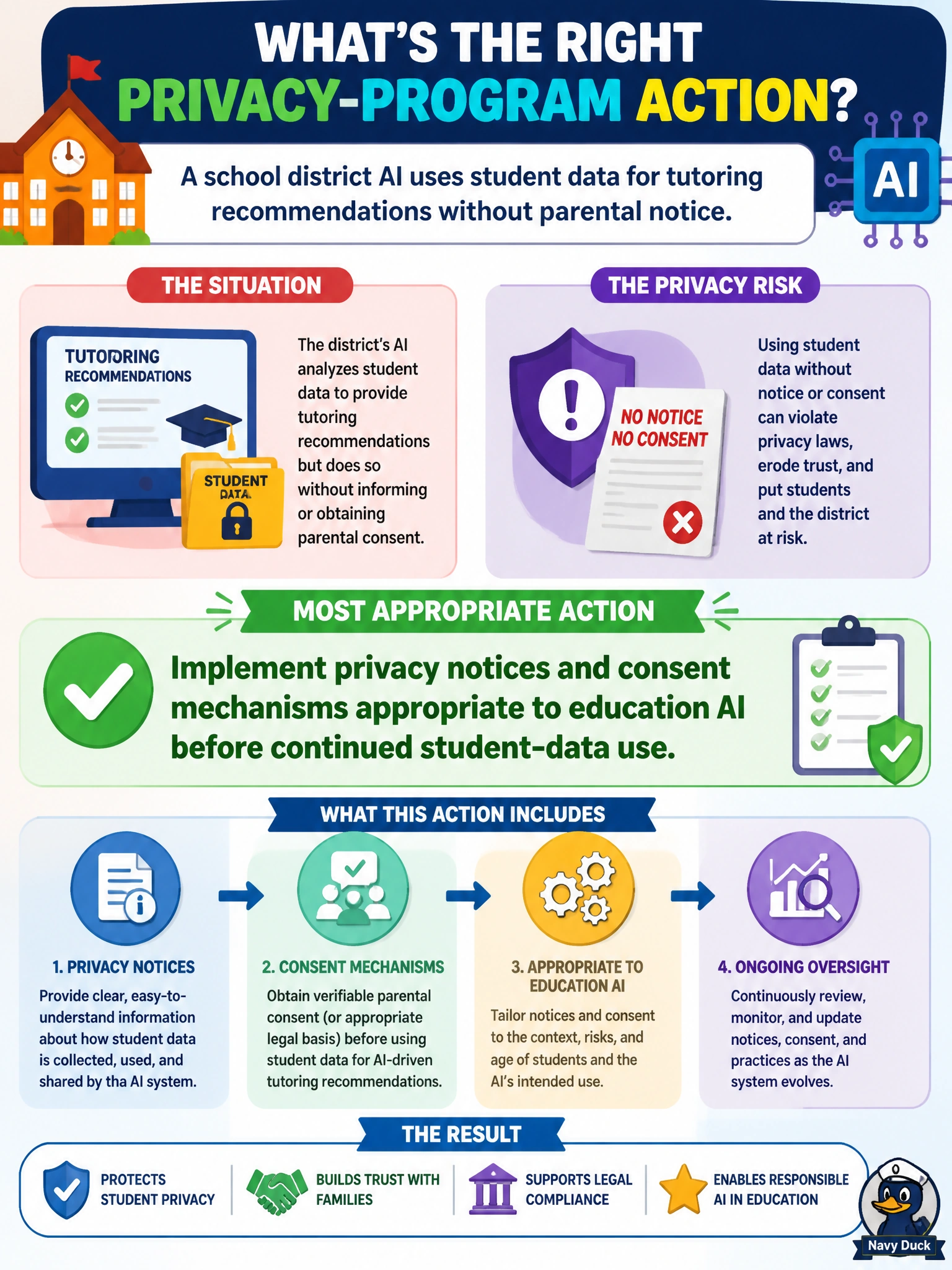
A school district AI uses student data for tutoring recommendations without parental notice. Which privacy-program action is most appropriate?
Select an answer to reveal the explanation.
Short Explanation
Parents deserve a heads-up when student data feeds tutoring AI — surprise is not a privacy strategy. Put the right notices and consent steps in place before you keep using that data. Education AI has extra eyes on it for a reason.
Full Explanation
The most appropriate privacy-program action is to implement privacy notices and consent mechanisms appropriate to education AI before continued student-data use. School-district tutoring recommenders that consume student data without parental notice operate outside expected education privacy transparency. Notices (and consent or other lawful bases where required) should precede ongoing use so families understand purposes, rights, and choices.
Relying on existing enrollment paperwork as sufficient consent for AI-driven tutoring recommendations fails because general enrollment paperwork does not specifically authorize AI-driven tutoring data use and cannot substitute for targeted parental notice and consent. Issuing a general district privacy policy covering administrative systems fails because a broad policy for administrative systems is not specific notice or consent for AI tutoring recommendations and does not meet education-data purpose limits. Providing comprehensive staff training while postponing parental notices during pilot evaluation fails because staff training does not replace required guardian notice, and delaying notice during a pilot still processes student data without parental awareness.
Exam caveat: a generic annual tech notice that never mentions AI tutoring purposes may not constitute adequate notice for this processing—specificity matters. Operational check: review live parent-facing notices and consent/opt records for the tutoring AI, confirm they describe student-data use, and pause expansion of data use until gaps are closed.