
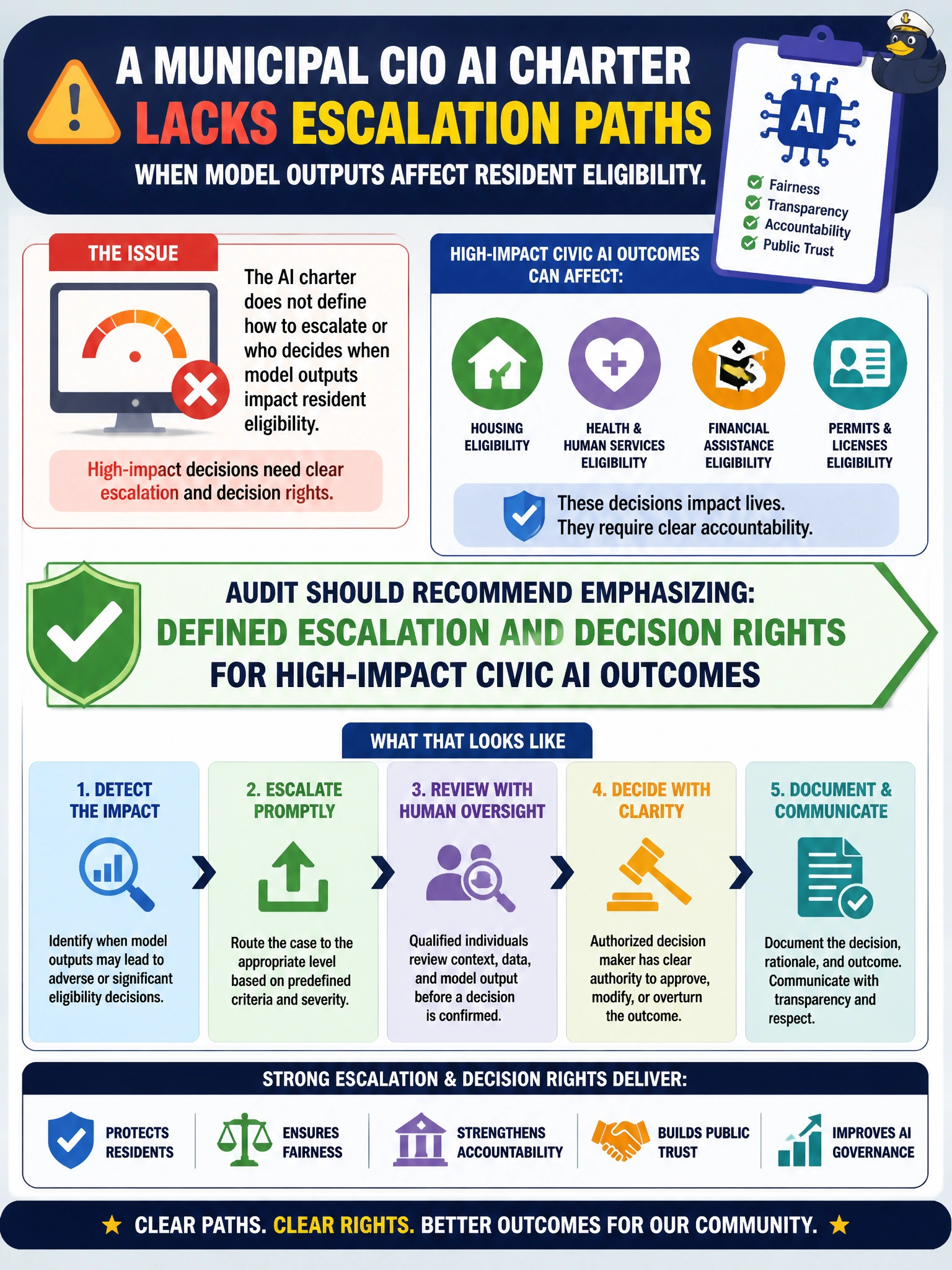
A municipal CIO AI charter lacks escalation paths when model outputs affect resident eligibility. What should audit recommend emphasizing?
Select an answer to reveal the explanation.
Short Explanation
When an AI score blocks a benefit, people need a known staircase to a human decision—not a shrug at a confidence percentage. Charters should name who escalates and who decides.
Full Explanation
A municipal CIO AI charter that lacks escalation paths when model outputs affect resident eligibility should emphasize defined escalation and decision rights for high-impact civic AI outcomes. Eligibility determinations need named human decision rights, timebound appeal and escalation routes, documentation standards, and authority limits on silent overrides. Confidence scores are model signals for triage, not substitutes for due process or program policy. Residents and staff must know who can reverse or stay an automated outcome.
Leaving disputes solely to confidence scores denies residents a governance path and can entrench errors. Escalating only branding complaints while eligibility errors go unrouted misprioritizes low-impact issues over material harm. Silent staff overrides without audit trails break accountability, obscure pattern errors, and prevent learning loops for model improvement.
Exam caveat: high-impact automated decisions require human governance design, not only model metrics or charismatic charter language. Operational check: publish escalation matrices in the charter, train staff on decision rights, log overrides with reasons and timestamps, and test a sample eligibility dispute end-to-end including resident notice.