
An EHS specialist manages a RCRA Large Quantity Generator central accumulation area holding 55-gallon steel drums of corrosive and ignitable wastes awaiting off-site shipment. Under 40 CFR 262.17(a)(1)(v), how often must the facility inspect these container storage areas for leaks and deterioration?
Select an answer to reveal the explanation.
Short Explanation
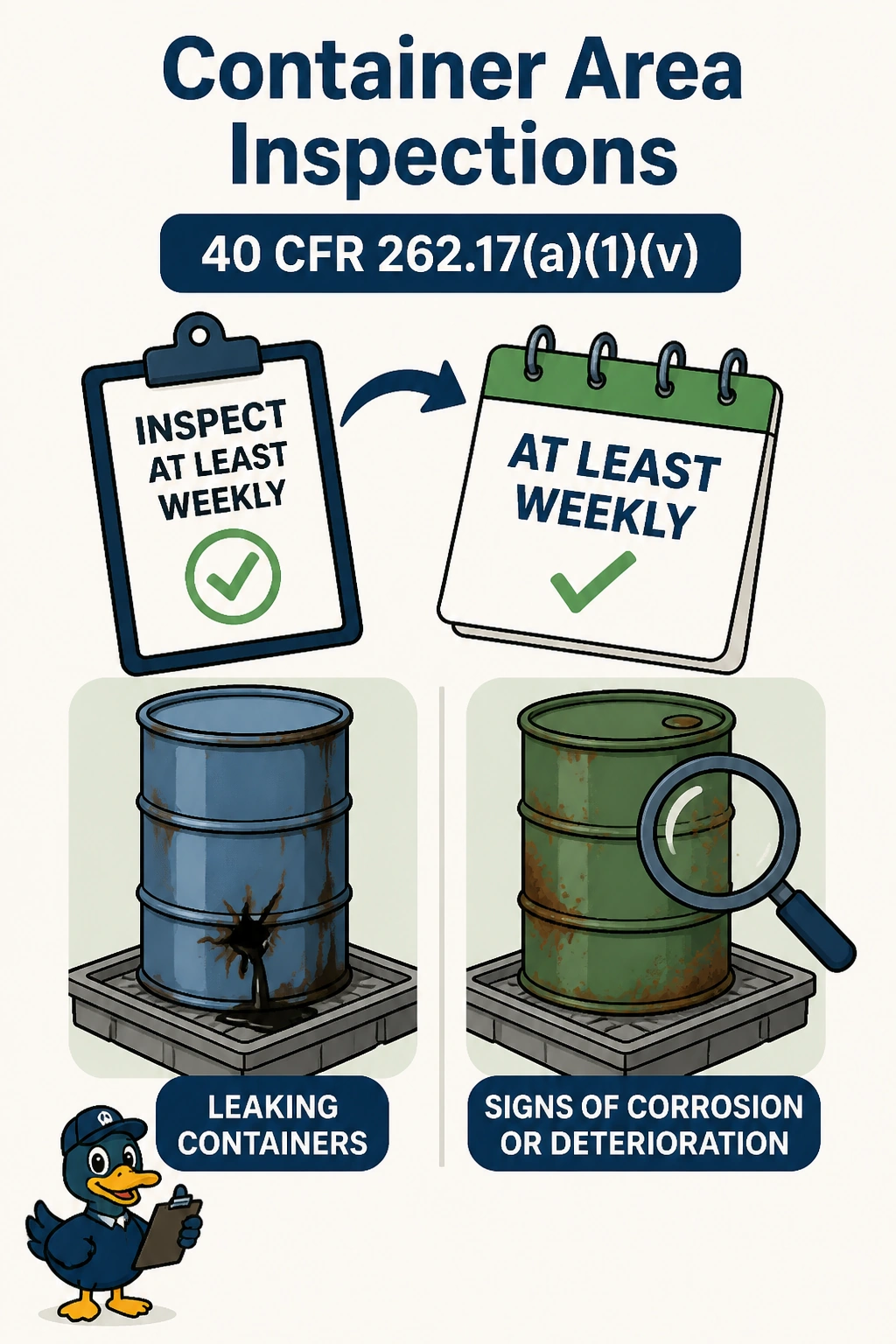
Corrosive waste can eat through a steel drum faster than you think, so waiting until pickup day is asking for a floor spill. Your trap here is confusing the 90-day accumulation limit or annual audits with the mandatory weekly walk-through.
Full Explanation
Under 40 CFR 262.17 container inspection standards, a Large Quantity Generator must inspect central accumulation areas At least weekly for leaking containers and signs of corrosion or deterioration so damaged drums can be overpacked or transferred before a release occurs. Only once every ninety days right before the scheduled hazardous waste transporter pickup confuses the maximum 90-day accumulation timeframe for Large Quantity Generators with the required inspection frequency. Annually during the facility's ISO 14001 environmental management system audit is far too infrequent to catch active drum corrosion, bung leaks, or weather damage. Only when a drum is moved onto a transport trailer for off-site disposal leaves stationary drums unmonitored for weeks and misses early warning signs such as bulging heads or rust streaks. Caveat: while federal Large Quantity Generator rules do not mandate keeping an inspection log in all cases, many states require signed weekly inspection logs, and written logs are essential to prove compliance during an EPA inspection. As an operational check, walk every aisle weekly with a standardized checklist covering container closure, label legibility, accumulation start dates, and secondary containment.
Prefer to study offline? Printable PDF study book + test engine ($7.50, unofficial). These questions stay free here.