
A specialty chemical shipper packs four 1-gallon plastic bottles of Class 8 corrosive liquid into a UN-certified 4G fiberboard box for highway transport. What must the shipper do under DOT Hazardous Materials Regulations (49 CFR 173.22) to ensure the package closure is legally compliant?
Select an answer to reveal the explanation.
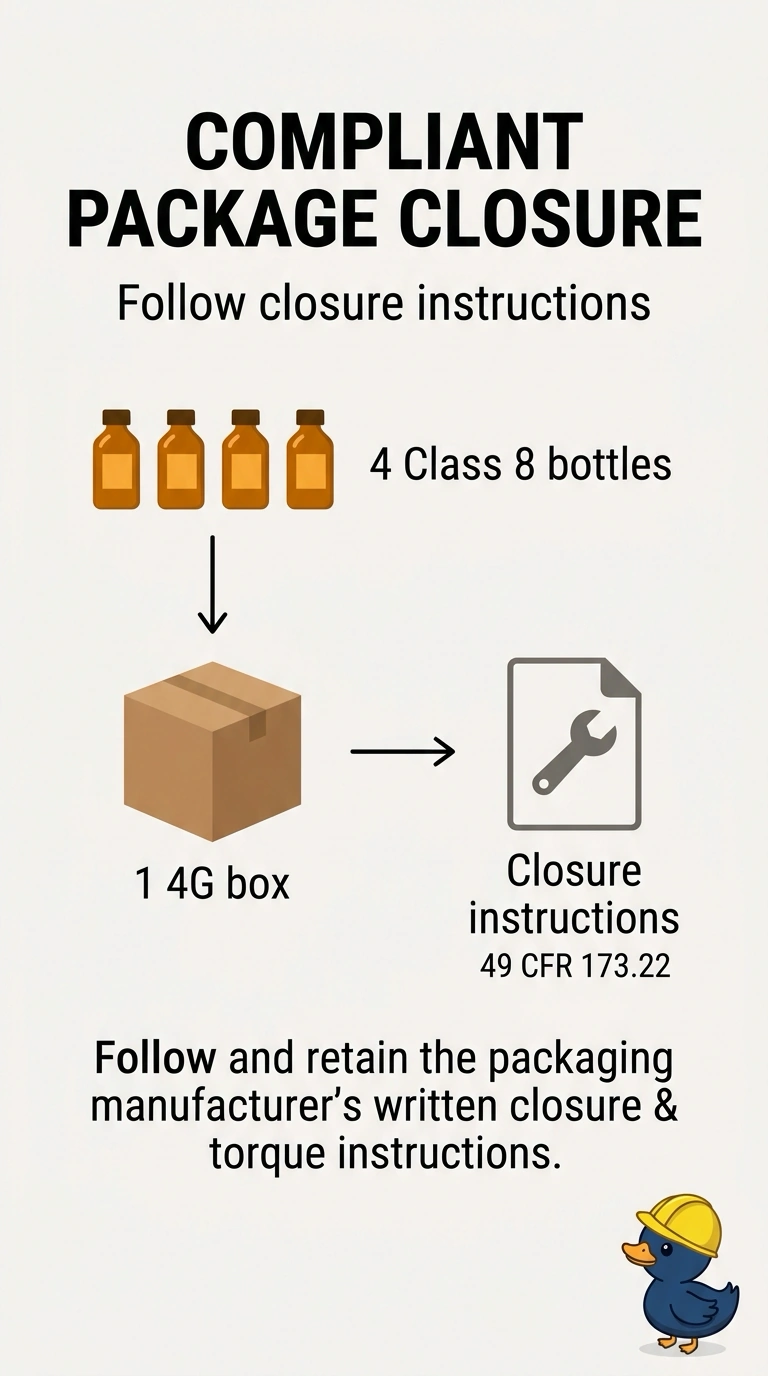
Short Explanation
You keep your UN 4G box compliant by closing it exactly as its tested design requires. Under DOT rules, follow and retain the manufacturer's written closure and tape instructions for each shipment. Skipping the specified tape width or pattern, using any duct tape, or swapping in a different cushion takes you outside that tested design.
Full Explanation
UN performance-oriented packagings are certified as complete systems: the fiberboard box, inner bottles, cushioning inserts, tape width and pattern, and closure steps work together to pass drop, stacking and vibration tests. Following and retaining the packaging manufacturer's written closure and torque instructions, as required under 49 CFR 173.22 and 49 CFR 178.2(c), ensures the assembled package matches the tested design and that the instructions are available for DOT inspection. Closing the fiberboard flaps by hand without the tape width or pattern in the closure instructions departs from that design because seal strength depends on the specified tape and overlap. Applying any heavy-duty duct tape across fiberboard box flaps does not ensure compliance; when the specification calls for a particular pressure-sensitive packing tape, substitution can fail adhesion or burst strength. Substituting a thicker aftermarket cushion for the tested inner-packaging insert before pickup changes impact absorption and bottle spacing, which can cause breakage or loss of containment. As a practical check, verify at the packing station that the specified tape, closure pattern and tested inserts are used as directed.
Prefer to study offline? Printable PDF study book + test engine ($7.50, unofficial). These questions stay free here.