
A chemical distributor unitizes four UN-certified 55-gallon steel drums of a Class 8 corrosive liquid onto a pallet and wraps them in opaque black stretch film for highway transport, completely hiding the drum labels and markings. What must the shipper do to comply with DOT 49 CFR 173.25?
Select an answer to reveal the explanation.
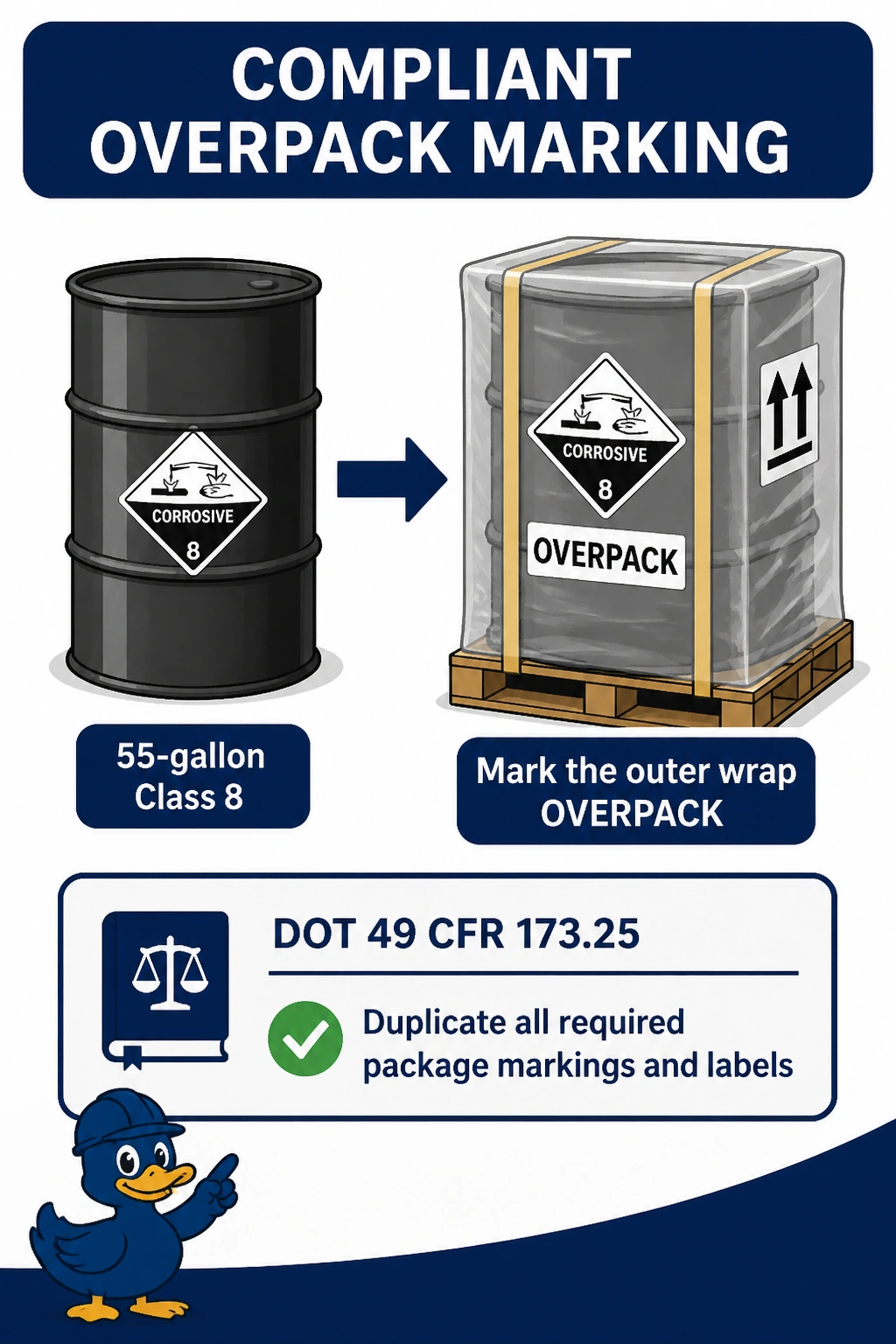
Short Explanation
When you bundle compliant hazmat drums under opaque shrink-wrap, first responders lose their X-ray vision into what is inside. Under DOT 49 CFR 173.25, you must mark the outer wrap OVERPACK and reproduce the required markings and hazard labels. The trap is assuming the hidden inner drum labels are enough once a wrap covers them.
Full Explanation
Under DOT 49 CFR 173.25, when compliant specification packages are consolidated in an enclosure such as opaque stretch film that conceals their markings and labels, the shipper must Mark the outer wrap OVERPACK and duplicate all required package markings and labels. The OVERPACK marking confirms that the inner packages inside meet UN performance standards even though their specification codes are hidden from view. Choosing to Mark the outer shrink-wrap only with the carrier tracking barcode leaves drivers and emergency responders blind to the corrosive hazard and proper shipping name. Choosing to Remove the inner drum labels so the outer pallet appears uniform violates 49 CFR Part 172 marking and labeling rules for each individual package if the pallet is broken down in transit. Choosing to Replace the UN specification markings with a general fragile sticker omits mandatory hazard communication and regulatory identification. Note that if clear wrap is used and all inner markings and labels remain plainly visible, duplicating them and adding OVERPACK is not required, so an operational check at the dock should inspect every wrapped pallet from all sides for clear hazard visibility before loading.
Prefer to study offline? Printable PDF study book + test engine ($7.50, unofficial). These questions stay free here.