
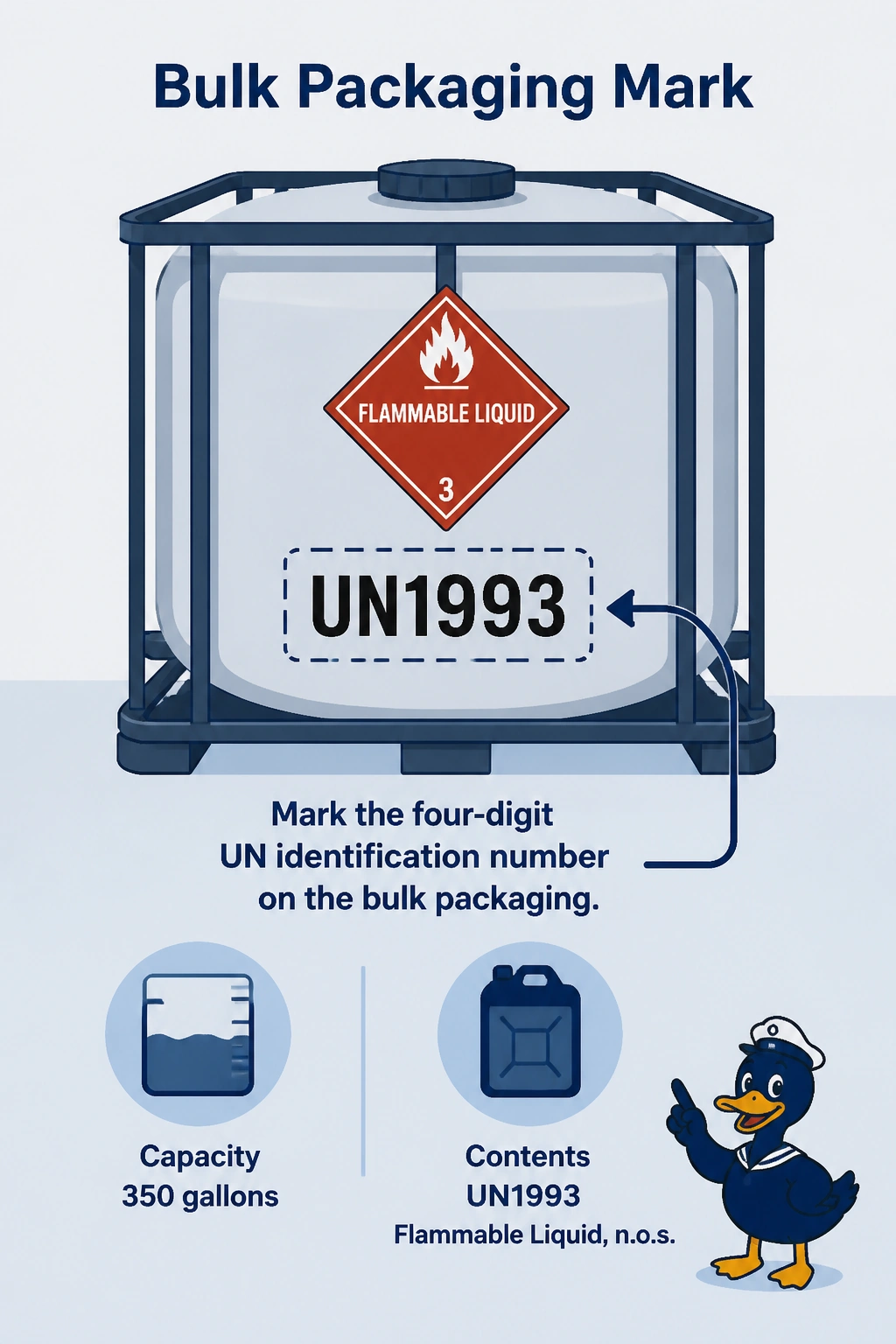
A chemical distributor fills a 350-gallon rigid intermediate bulk container (IBC) with a Class 3 flammable liquid, UN1993, for highway transport. Under DOT Hazardous Materials Regulations (49 CFR 172.302 and 172.332), what marking requirement applies to this bulk packaging?
Select an answer to reveal the explanation.
Short Explanation
When your shipment crosses into bulk territory, first responders need to read its identity from down the block. The trap is thinking a shipping paper inside the cab replaces the four-digit UN number you must display on the outside of the IBC.
Full Explanation
Under DOT 49 CFR 172.302 and 172.332, a 350-gallon intermediate bulk container exceeds the 119-gallon (450-liter) liquid bulk packaging threshold, so the shipper must mark the four-digit UN identification number on the bulk packaging using orange panels, placards, or white square-on-point configurations. Visible identification numbers allow emergency responders to look up isolation distances and firefighting tactics immediately from a safe distance. Choosing to omit identification numbers because the driver carries a bill of lading violates bulk marking rules and leaves responders blind if the cab is inaccessible. Choosing to affix orientation arrows only and skip all hazard class placards omits required hazard communication for bulk containers. Choosing to use a Limited Quantity diamond mark on the intermediate bulk container is invalid because limited quantity exceptions apply only to small inner packagings in combination packages, not bulk containers. As a caveat, IBCs under 3,785 liters (1,000 gallons) require marking on two opposing sides rather than all four sides required for larger bulk tanks. Operationally, inspect both opposing sides of every loaded IBC at the dock to confirm legible four-digit numerals and matching hazard labels or placards.
Prefer to study offline? Printable PDF study book + test engine ($7.50, unofficial). These questions stay free here.