
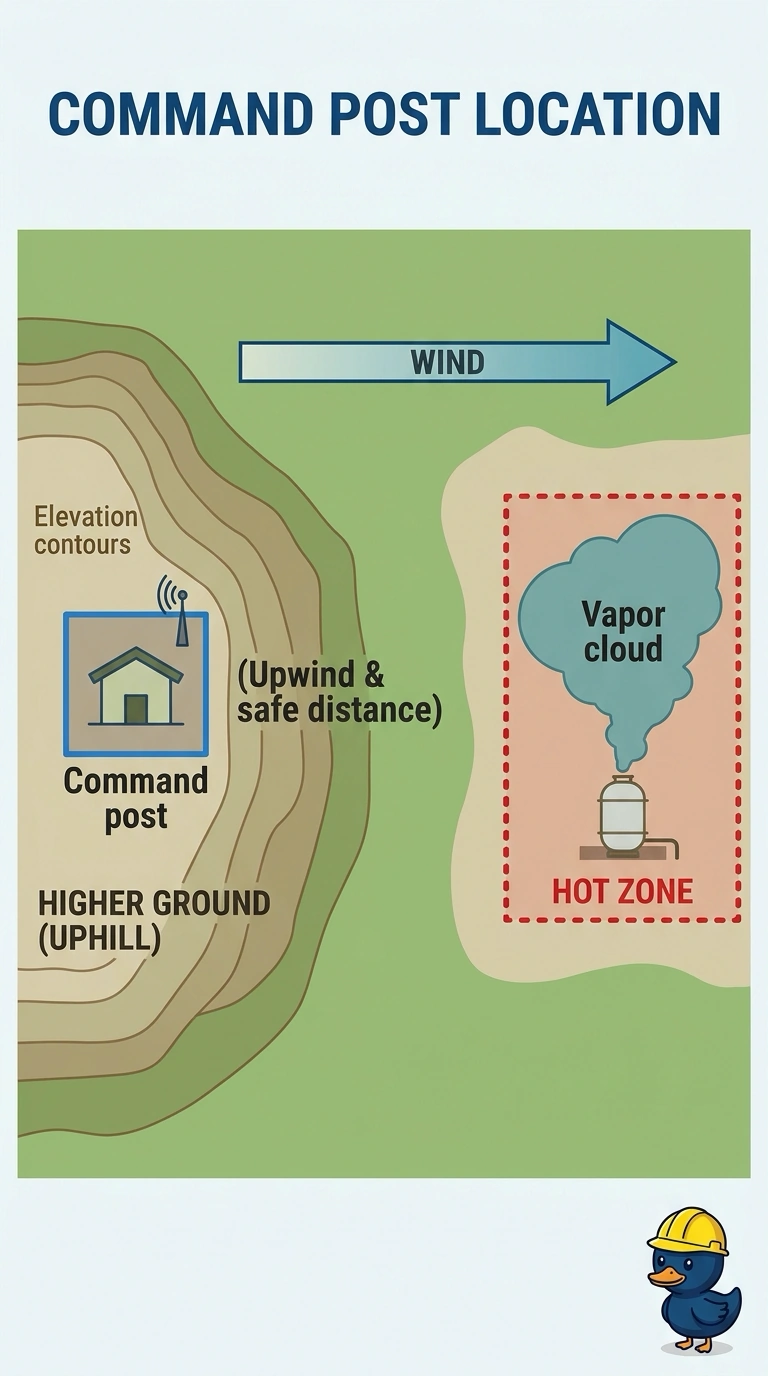
A railcar transfer hose ruptures at a chemical terminal, releasing a heavier-than-air toxic vapor cloud across a sloped loading yard. When establishing the Incident Command Post for incoming emergency responders, where should the Incident Commander position it?
Select an answer to reveal the explanation.
Short Explanation
Gravity and wind dictate where a heavy vapor cloud goes, so put both on your side! The trap is staging command close to the action or in a sheltered low spot, which puts you right in the path of sinking toxic gas.
Full Explanation
Positioning command Upwind and uphill from the release at a safe distance outside the hot zone keeps command staff, staging crews, and communications gear out of the plume path because wind carries vapors away while heavier-than-air gases sink into lower terrain. Staging Downwind of the release to monitor the leading edge of the vapor plume directly places personnel inside the hazardous drift zone where shifting wind speeds can rapidly overwhelm responders. Setting up Inside a low-lying drainage basin near the loading dock for natural shielding creates a severe accumulation hazard because dense vapors pool in depressions, sumps, and ditches. Positioning command Immediately adjacent to the leaking tank valve so responders can hear alarms violates basic exclusion-zone separation and exposes command personnel to splash, fire, or toxic concentrations. One caveat is that wind direction can shift during a multi-hour incident, requiring relocation of the command post if conditions change. As an operational check, verify wind direction using a windsock or weather app before staging vehicles and continuously monitor perimeter air readings at the command post.
Prefer to study offline? Printable PDF study book + test engine ($7.50, unofficial). These questions stay free here.