
After an ammonia leak from a relief valve at a cold-storage warehouse is isolated and the area is ventilated, the incident commander launches an investigation to prevent recurrence. Which action should the investigation team prioritize first to preserve critical incident data?
Select an answer to reveal the explanation.
Short Explanation
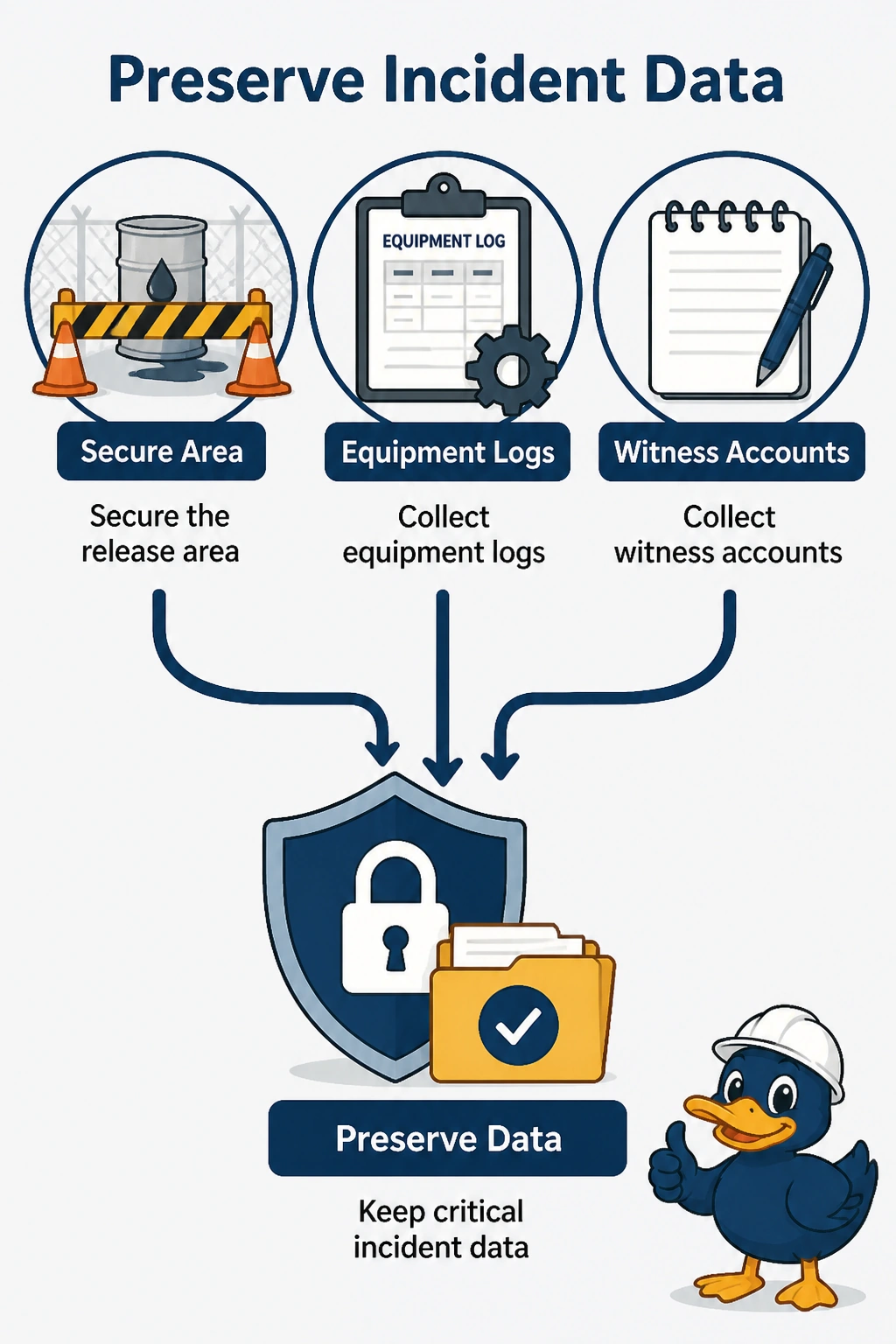
Once the emergency is over, your best clues vanish fast if people touch the gear or forget what they saw. You want to secure the release area and gather equipment logs and witness accounts before anything gets moved or scrubbed. Don't fall into the trap of tearing apart a failed valve before documenting its as-found condition.
Full Explanation
Effective incident investigation depends on preserving perishable physical and human evidence immediately after the scene is stabilized and made safe. Securing the release area and collecting equipment logs and witness accounts ensures that valve positions, control-system trends, and operator recollections are captured accurately before memories fade or equipment is disturbed. Disassembling the relief valve immediately to clean internal surfaces can destroy corrosion patterns, debris, or mechanical-wear evidence needed to identify why the valve lifted or failed to reseat. Updating the facility emergency response plan before interviewing staff puts corrective revisions ahead of fact-finding and risks overlooking the true sequence of events. Reporting the final root cause to the National Response Center first is incorrect because initial release notifications are made immediately based on known quantities, whereas root-cause findings are developed afterward through investigation. As a caveat, scene preservation must never delay medical care, emergency stabilization, or mandatory immediate release notifications. For an operational check, photograph equipment settings, export process historian data, and conduct separate, non-punitive witness interviews as soon as the area is cleared for safe entry.
Prefer to study offline? Printable PDF study book + test engine ($7.50, unofficial). These questions stay free here.