
A valve failure at a chemical terminal releases an amount of anhydrous ammonia to the atmosphere that exceeds its CERCLA reportable quantity under 40 CFR Part 302. Who must the person in charge notify immediately once the release is discovered?
Select an answer to reveal the explanation.
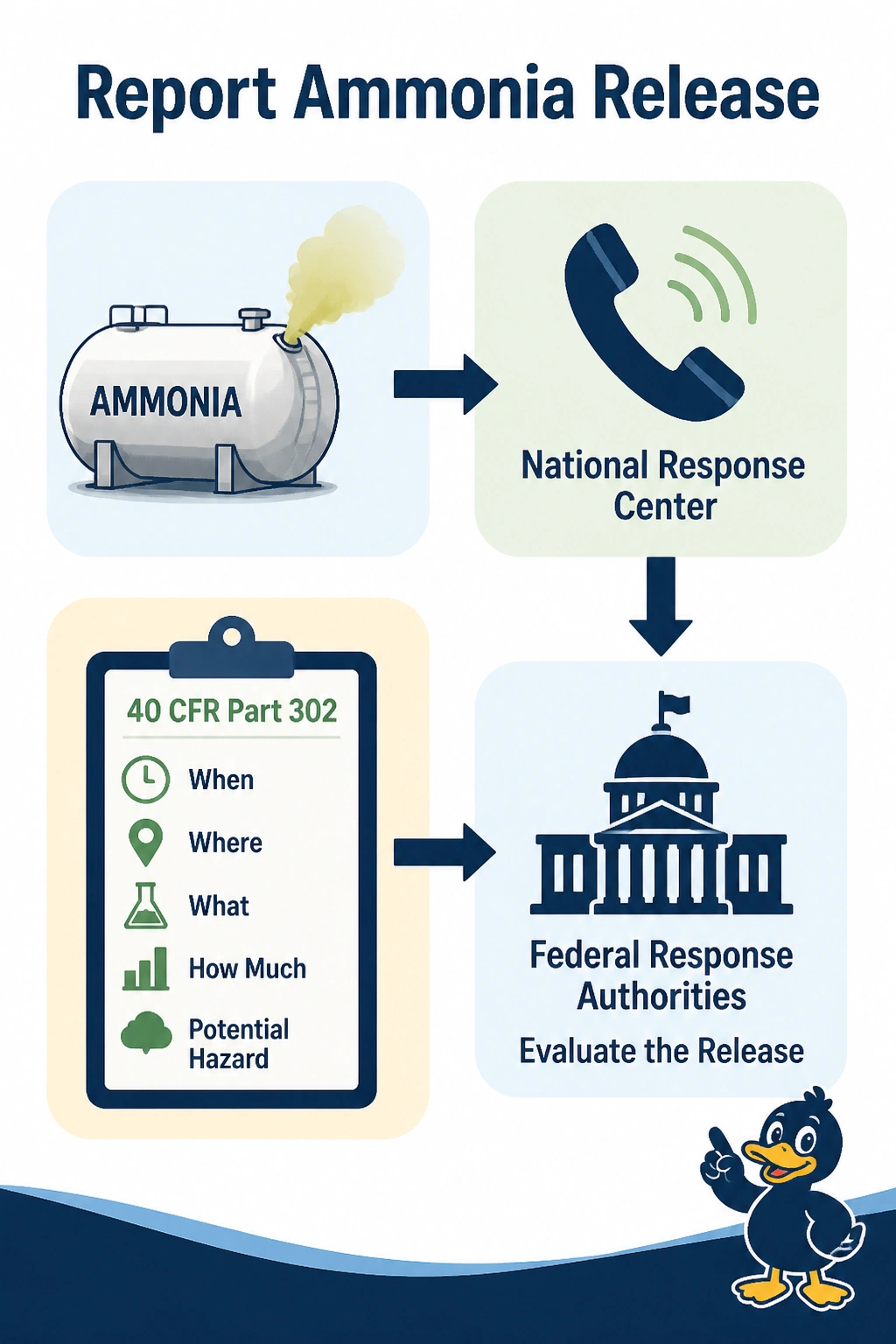
Short Explanation
When a release exceeds the CERCLA reportable quantity, you must make the federal notification immediately. Calling your disposal broker or remediation vendor, or waiting to file a written follow-up after cleanup, does not replace the required call to the National Response Center.
Full Explanation
The National Response Center is the required immediate notification recipient under CERCLA Section 103 and 40 CFR 302.6 when a hazardous substance is released into the environment in a quantity equal to or greater than its reportable quantity within a 24-hour period. The facility's off-site hazardous waste disposal broker and contracted environmental remediation vendor may help with cleanup or waste removal, but calling private contractors does not satisfy the statutory federal notification duty. The state department of transportation motor carrier enforcement division within thirty days is not the proper recipient for a stationary terminal release, and CERCLA requires immediate notification rather than a month-long delay. The State Emergency Response Commission by a written follow-up after cleanup is finished does not satisfy the immediate federal notice; a delayed written filing after response is complete misses the urgency and evaluation purpose of the required call. Caveat: if the exact release quantity is uncertain when the release is discovered, treat a suspected reportable quantity exceedance as reportable rather than delaying notification. Practical check: keep the National Response Center phone number posted in the control room, and record the exact call time and incident report number.
Prefer to study offline? Printable PDF study book + test engine ($7.50, unofficial). These questions stay free here.