
A remediation project team is completing a CERCLA Feasibility Study to compare four cleanup alternatives for a former solvent-manufacturing site with contaminated soil and groundwater. Which pair of threshold criteria must every viable remedial alternative satisfy before cost or community acceptance are weighed?
Select an answer to reveal the explanation.
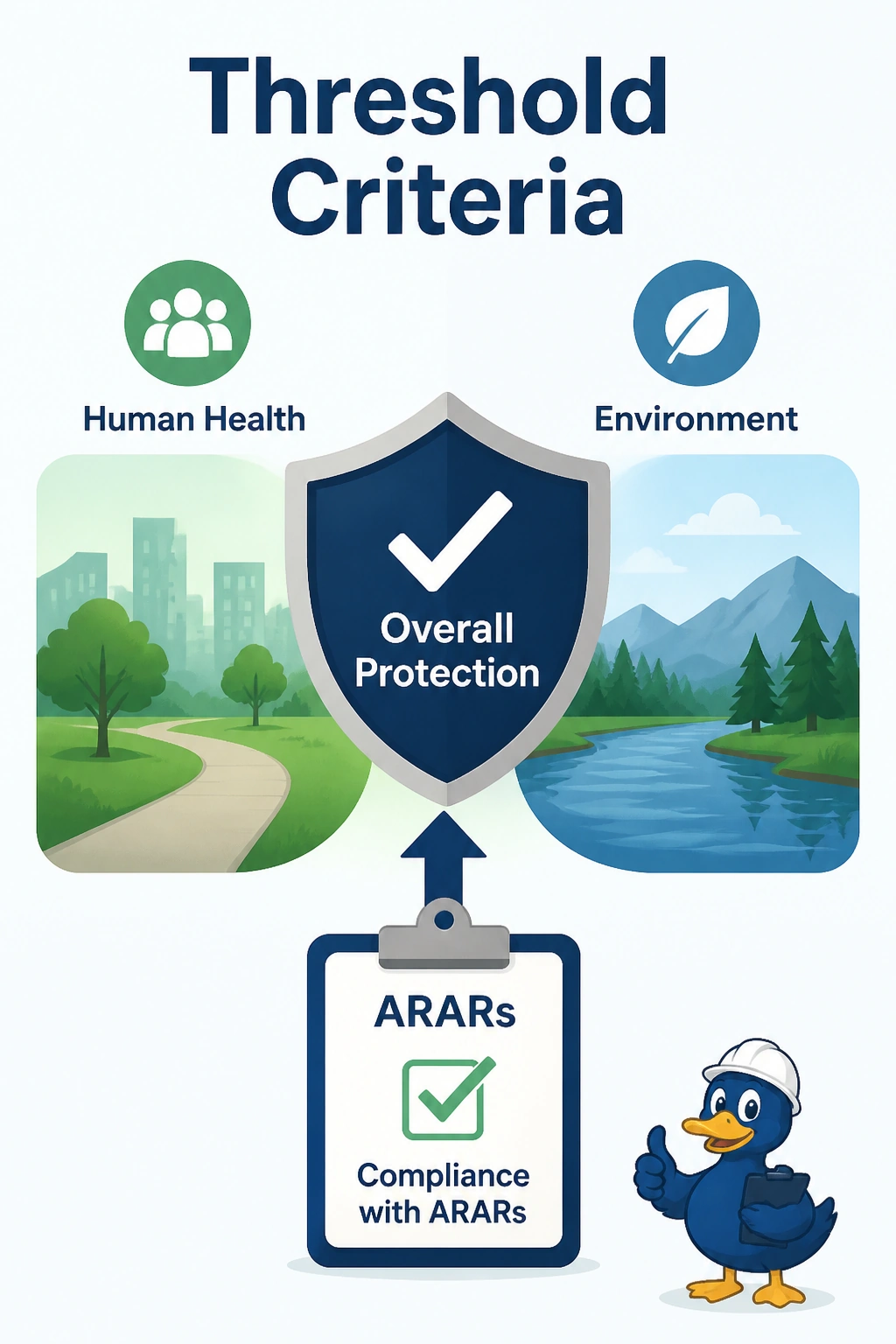
Short Explanation
Before you compare price tags on cleanup options, every candidate remedy has to clear two non-negotiable hurdles. Under CERCLA Feasibility Study rules, your chosen alternative must protect human health and the environment and comply with ARARs. The trap is letting low upfront cost or unrealistic pristine targets override those two threshold gates.
Full Explanation
Under the National Contingency Plan (40 CFR Part 300) for CERCLA Feasibility Studies, remedial alternatives are evaluated against nine criteria grouped into threshold, balancing, and modifying categories. Ensuring overall protection of human health and the environment and compliance with ARARs—Applicable or Relevant and Appropriate Requirements—are the two mandatory threshold criteria that an alternative must meet (unless a statutory ARAR waiver applies) to remain eligible for selection. Selecting whichever cleanup option has the lowest initial capital cost regardless of regulatory standards improperly elevates cost, which is a balancing criterion, above mandatory statutory protection. Guaranteeing that the chosen technology restores the site to pristine pre-industrial levels is not a CERCLA requirement, as cleanup goals are risk-based and tied to reasonably anticipated future land use and ARARs. Bypassing public comment whenever an engineering firm recommends an in-situ treatment method violates the modifying criteria of state and community acceptance required before a Record of Decision. As a project caveat, ARARs include chemical-specific, location-specific, and action-specific federal and stricter state standards. Document each candidate remedy's threshold pass-fail screening in a clear comparative matrix before performing detailed cost tradeoffs.
Prefer to study offline? Printable PDF study book + test engine ($7.50, unofficial). These questions stay free here.