
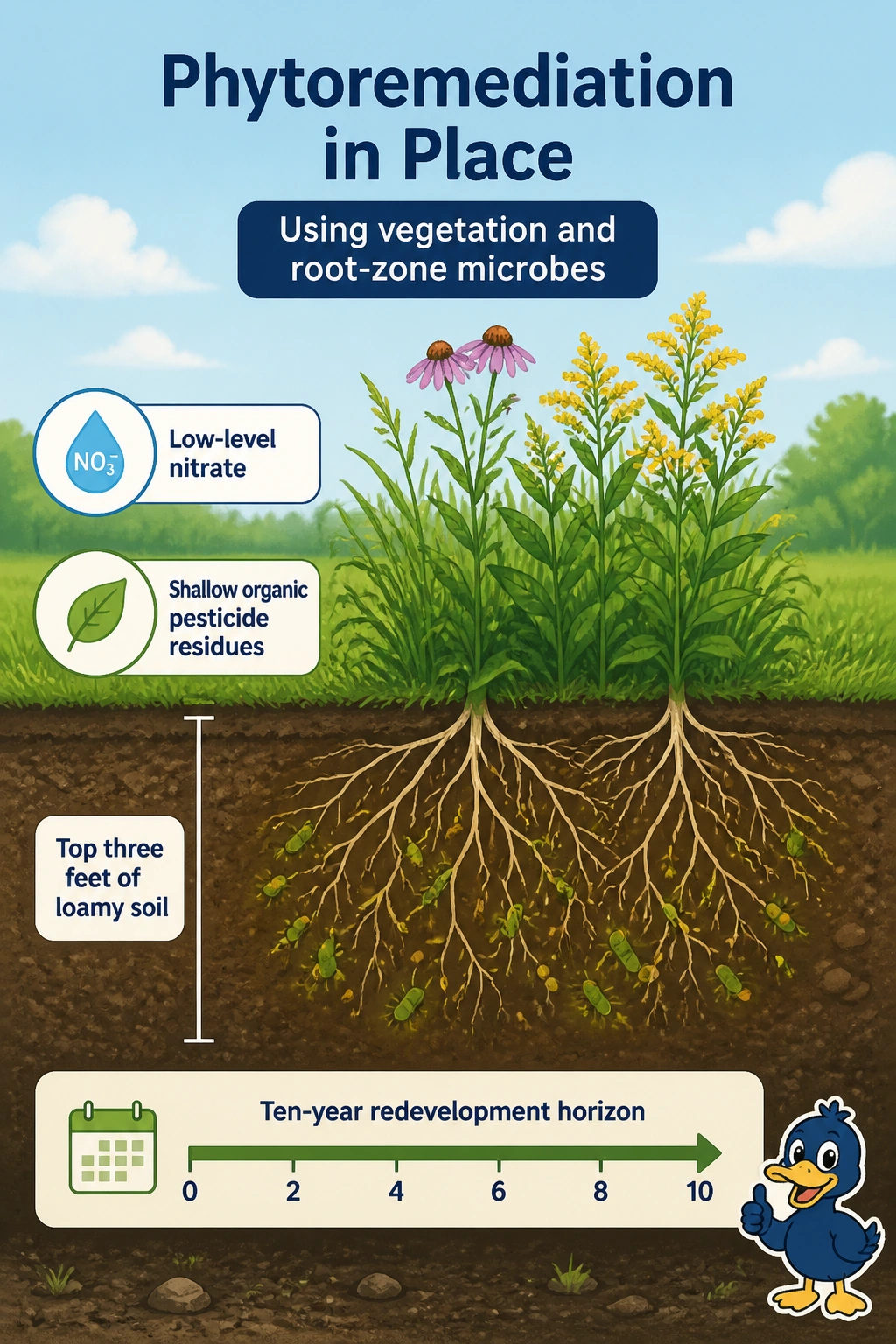
A former agricultural chemical warehouse has low-level nitrate and shallow organic pesticide residues confined to the top three feet of loamy soil, with no immediate threat to groundwater or nearby receptors and a ten-year redevelopment horizon. Which low-cost in-situ remedial technology is best suited to treat this contamination in place?
Select an answer to reveal the explanation.
Short Explanation
When contamination sits shallow and your timeline is measured in years rather than weeks, nature can do the heavy lifting at a fraction of the cost. The trap is picking an aggressive, energy-intensive remedy built for deep source zones when a low-impact biological approach fits your site.
Full Explanation
Phytoremediation using vegetation and root-zone microbes is well suited for shallow, low-concentration nitrate and organic pesticide residues within the top few feet of soil when extended cleanup timeframes are acceptable. Plants take up nutrients and contaminants while root-zone microorganisms biodegrade organic compounds in place, stabilizing soil and minimizing site disturbance. High-temperature in-situ thermal desorption with vapor recovery is designed for concentrated volatile or semi-volatile source zones where rapid mass removal justifies high energy and equipment costs. Deep bedrock pneumatic fracturing with chemical oxidant injection targets low-permeability or fractured rock formations at depth rather than shallow loamy topsoil. Excavation and off-site hazardous waste thermal incineration is unnecessarily expensive and disruptive for low-level, non-acute surface residues with no immediate receptor threat. As a key caveat, phytoremediation is limited by root depth, climate, and potential contaminant uptake into harvestable plant tissue. As an operational check, confirm soil moisture, nutrient balance, and plant survival periodically while sampling root-zone soil to verify concentration reductions.
Prefer to study offline? Printable PDF study book + test engine ($7.50, unofficial). These questions stay free here.