
After an indoor chemical spill of a listed toxic solvent is contained and absorbed using granular clay and polypropylene pads, the emergency response contractor finishes abatement and turns the area back over to plant operations. How must the facility manage the drummed spill cleanup debris during the recovery phase?
Select an answer to reveal the explanation.
Short Explanation
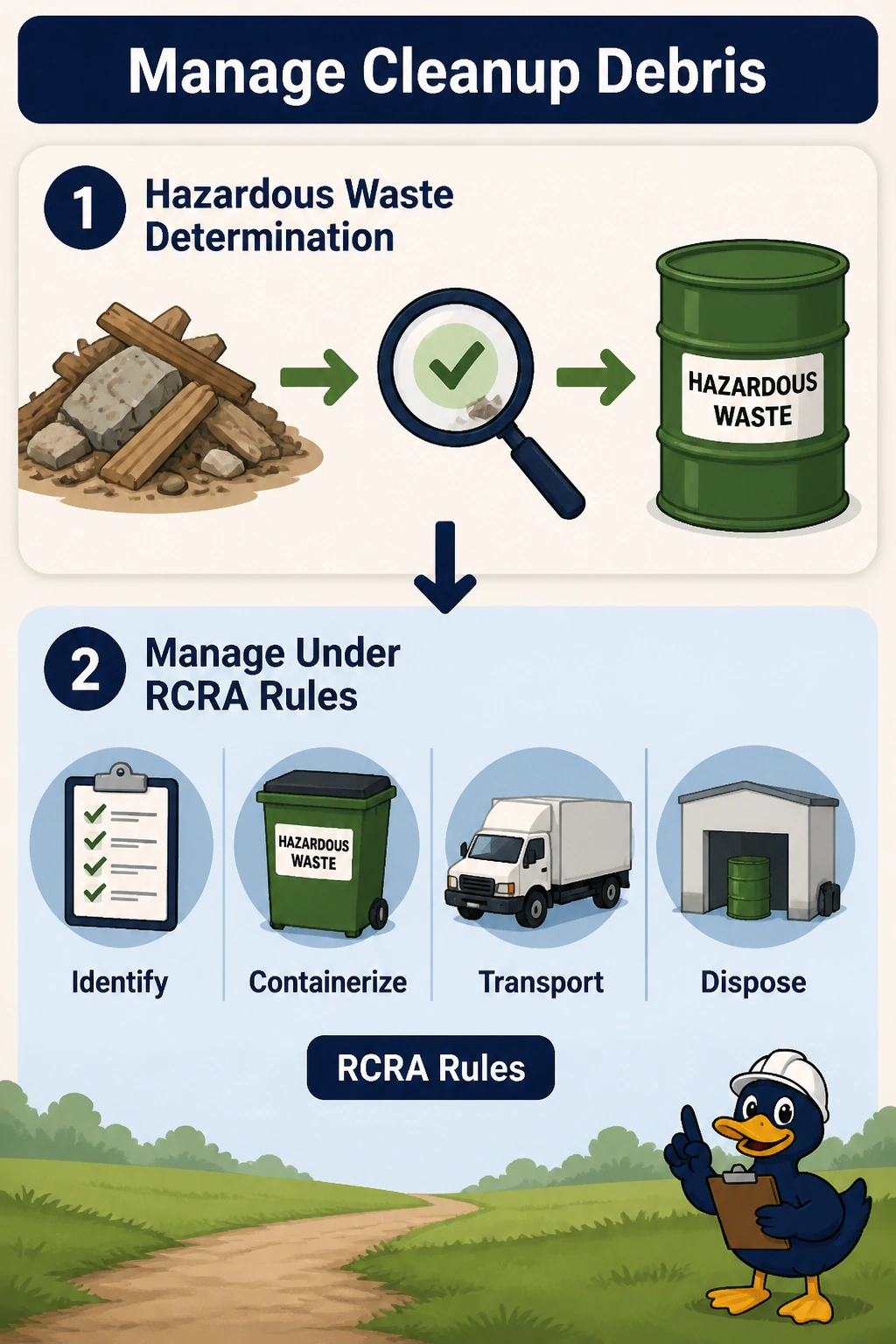
Once the sirens fade and the spill is contained, the cleanup drums themselves become your next compliance test. During recovery, you must perform a hazardous waste determination on all used absorbents, PPE, and contaminated debris before choosing disposal. Never fall into the trap of tossing absorbed solvent into regular trash or rinsing pads down a drain.
Full Explanation
Under RCRA 40 CFR 262.11, any solid waste generated—including spent absorbents, contaminated soil, and disposable PPE from a chemical spill cleanup—must undergo a hazardous waste determination before disposition. Selecting Perform a hazardous waste determination and manage debris under RCRA rules is correct because cleanup media contaminated with a listed hazardous solvent generally carries that hazardous waste listing under the contained-in or mixture principles and must be labeled, accumulated, and manifested appropriately. Choosing Dispose of the absorbed material in the municipal solid waste compactor fails because placing regulated hazardous waste into non-hazardous trash violates RCRA disposal prohibitions and creates landfill liability. Choosing Wash the used absorbent pads in a floor drain connected to the sewer fails because discharging solvent-laden wash water to a sewer violates Clean Water Act pretreatment standards and can create explosive vapors in sewer lines. Choosing Return the drummed cleanup debris to raw material chemical inventory fails because degraded, contaminated spill absorbents cannot be reused as virgin feedstock. As a caveat, certain emergency response exemptions may apply during active, immediate threat abatement, but normal RCRA generator rules govern post-spill recovery. As an operational check, label each recovery drum immediately, log the waste stream, and stage it in a compliant accumulation area.
Prefer to study offline? Printable PDF study book + test engine ($7.50, unofficial). These questions stay free here.