
A remediation team operates a groundwater pump-and-treat system for a chlorinated solvent plume until monitoring wells meet cleanup goals, then shuts down the extraction pumps. Before requesting regulatory site closure, what verification step should the team conduct to confirm that concentrations will not bounce back?
Select an answer to reveal the explanation.
Short Explanation
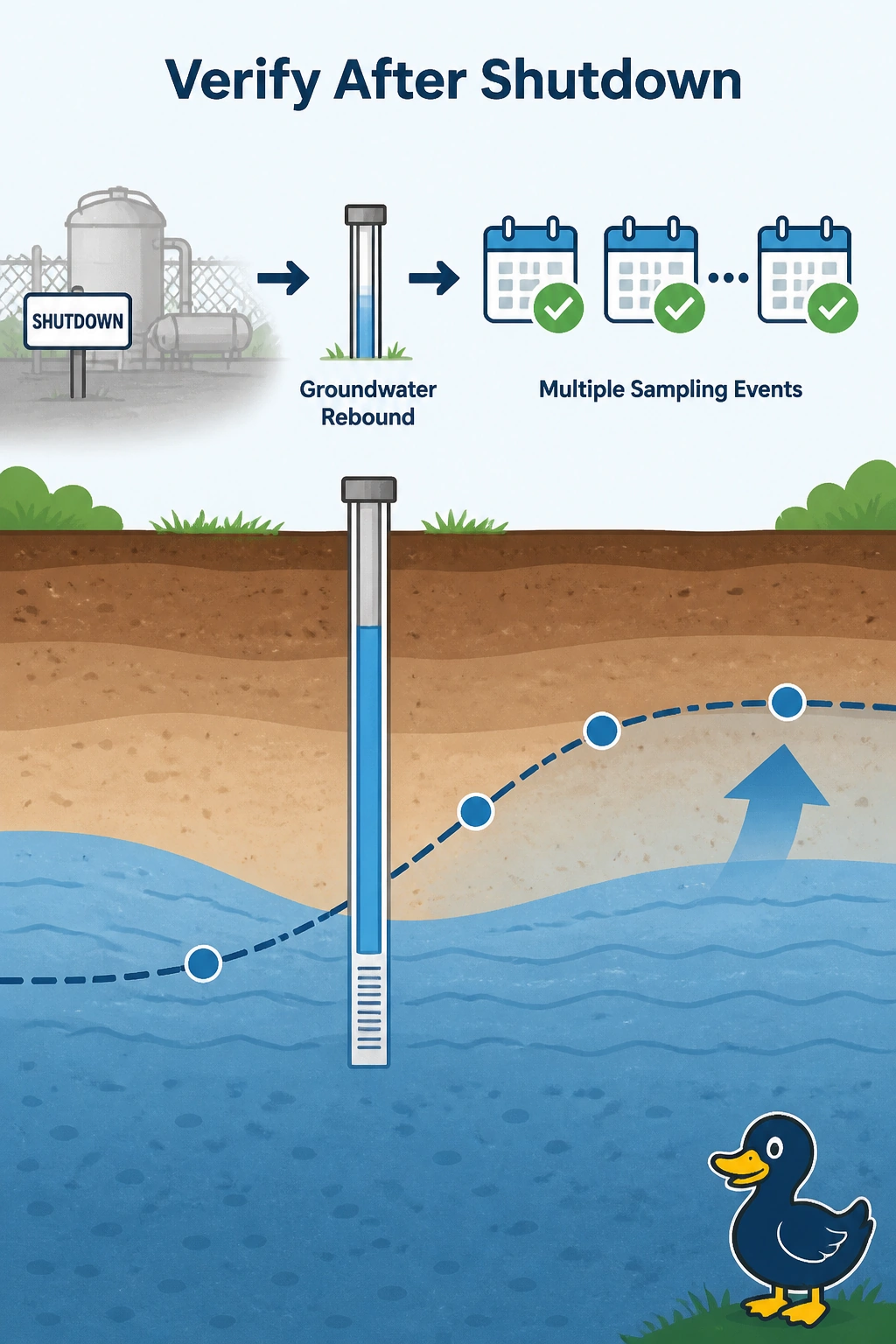
Turning off a pump-and-treat system is like taking your foot off a spring—trapped contaminants can bounce right back if you don't watch closely. The trap is trusting the last sample taken while pumps were running instead of verifying that aquifer concentrations stay low under static conditions.
Full Explanation
Once active groundwater extraction stops, hydraulic gradients relax and residual chlorinated solvents sorbed to fine-grained silts or clays can slowly diffuse back into transmissive zones, causing dissolved concentrations to spike. Therefore, the team must Conduct post-shutdown groundwater rebound monitoring across multiple sampling events to demonstrate that natural groundwater flow and attenuation maintain levels below cleanup standards. Choosing to Decommission the monitoring wells and submit a final closure report immediately destroys the monitoring network before stability is proven, risking costly well re-installation if regulators reject closure. Choosing to Rely solely on the final active-pumping sample to certify permanent aquifer cleanup is flawed because dilution from clean water pulled in during pumping often masks persistent source mass. Deciding to Restart continuous pumping indefinitely even after cleanup goals are achieved wastes energy and capital when the system may have already reached asymptotic mass removal. As a caveat, seasonal water-table fluctuations can also mobilize residual vadose-zone mass, so rebound monitoring typically spans multiple seasons. As an operational check, sample both source-zone and downgradient compliance wells under static non-pumping conditions and plot concentration trends against time before petitioning for closure.
Prefer to study offline? Printable PDF study book + test engine ($7.50, unofficial). These questions stay free here.