
A former industrial smelter site has several acres of shallow soil containing low-mobility heavy metals and weathered polycyclic aromatic hydrocarbons, and off-site hazardous waste landfill disposal is cost-prohibitive. Because groundwater is deep and unimpacted, the remedial objective is to eliminate direct human contact and prevent rainwater infiltration through the impacted soil. Which remedial approach best meets these objectives?
Select an answer to reveal the explanation.
Short Explanation
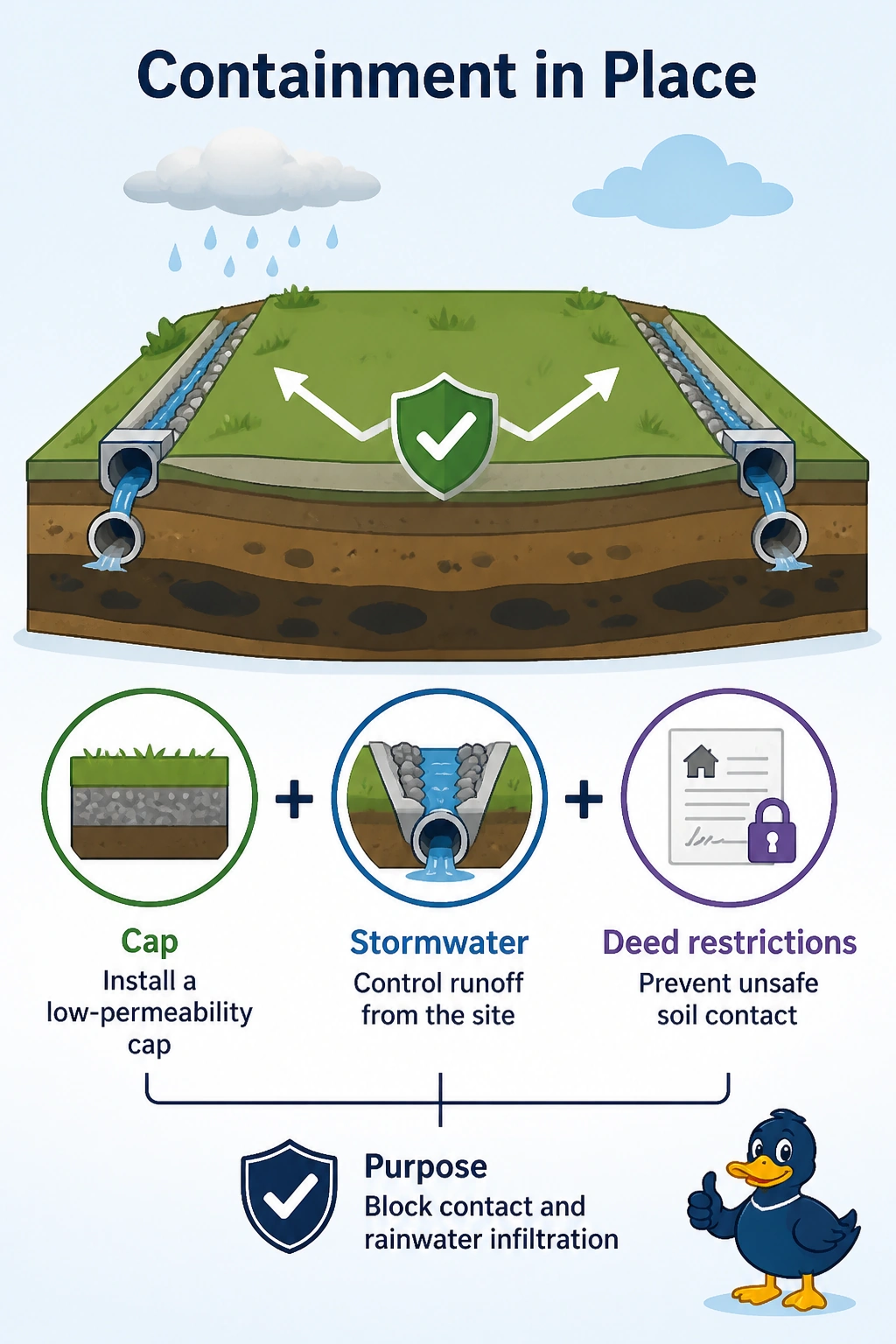
When contaminants won't evaporate and won't biodegrade, sometimes the smartest move is to seal the lid on them! The trap is picking an active treatment built for volatile solvents when your site holds heavy metals and weathered tars. An engineered low-permeability cap with stormwater controls and deed restrictions blocks both contact and leaching.
Full Explanation
When widespread, low-mobility contaminants such as heavy metals and weathered polycyclic aromatic hydrocarbons sit in shallow soil above deep, unimpacted groundwater, containment is often the most practical remedial strategy. Installing An engineered low-permeability cap combined with stormwater controls and deed restrictions physically blocks direct human contact and prevents rainwater from percolating through impacted soil to leach contaminants downward. The choice Soil vapor extraction to volatilize heavy metals from the shallow unsaturated soil fails because heavy metals are non-volatile and cannot be removed by vacuum-induced vapor flow. The choice Air sparging beneath the site to strip weathered polycyclic aromatic hydrocarbons from soil fails because air sparging targets volatile organic compounds dissolved in saturated groundwater, not low-volatility compounds in unsaturated soil. The choice Monitored natural attenuation relying on sorption and microbes to immobilize the metals and tars fails because passive natural processes provide no barrier to direct contact and do not prevent rainwater infiltration through the soil. Keep in mind the caveat that capping leaves contaminants in place, requiring long-term cap inspection, maintenance, and enforceable land-use controls. As an operational check, inspect cap surface integrity, vegetation cover, and perimeter stormwater ditches after major rain events to confirm zero erosion or ponding.
Prefer to study offline? Printable PDF study book + test engine ($7.50, unofficial). These questions stay free here.