
A remediation contractor has excavated petroleum-contaminated soil from around a former underground storage tank pit until field screening and visual staining disappear. Before importing clean fill to backfill the excavation, which verification step should the environmental project manager require?
Select an answer to reveal the explanation.
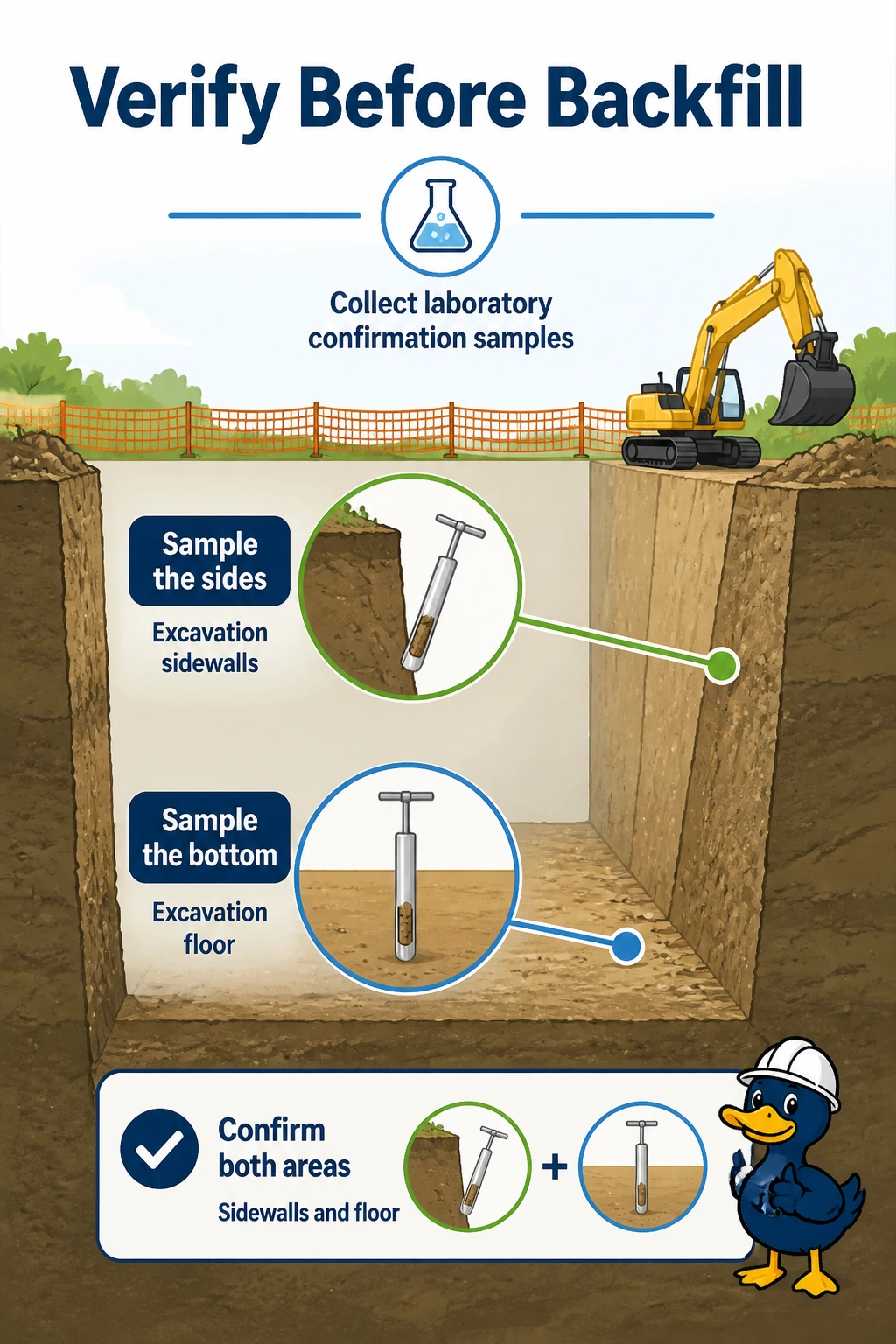
Short Explanation
Visual inspection and field meters tell you when the worst dirt is gone, but only lab confirmation proves your excavation actually met cleanup goals. The trap is backfilling an open pit before you have defensible sidewall and bottom data in hand.
Full Explanation
Before closing a remedial excavation, the project manager must Collect laboratory confirmation samples from the excavation sidewalls and floor to verify that remaining in-place soils meet regulatory cleanup standards. Analytical laboratory data provide legally defensible concentrations for the constituents of concern across the lateral and vertical boundaries of the dig, preventing costly re-excavation later. Choosing to Compact the imported clean fill in lifts and sample only the surface of the finished grade fails because testing clean cover material does not demonstrate whether contaminated soil remains beneath it. Choosing to Rely solely on handheld photoionization detector field readings taken from the excavated spoil pile fails because field screening instruments are non-specific, lack laboratory detection-limit rigor, and measure removed spoils rather than the remaining excavation boundary. Choosing to Install a groundwater monitoring well inside the pit after backfilling to infer soil cleanliness fails because groundwater sampling does not quantify residual sorbed contaminants in unsaturated pit walls and delays verification until after closure. As a caveat, excavation safety rules require collecting sidewall and floor samples using an excavator bucket or safe shored entry rather than entering an unshored trench. As an operational check, hold backfill placement until preliminary laboratory results confirm every sidewall and base sample meets the site-specific cleanup target.
Prefer to study offline? Printable PDF study book + test engine ($7.50, unofficial). These questions stay free here.