
A former electronics plant is being redeveloped into a commercial office building above a residual trichloroethylene groundwater plume. Indoor air sampling reveals chlorinated vapor intrusion above screening levels beneath the concrete foundation. Which engineering control should the remediation team install to protect building occupants?
Select an answer to reveal the explanation.
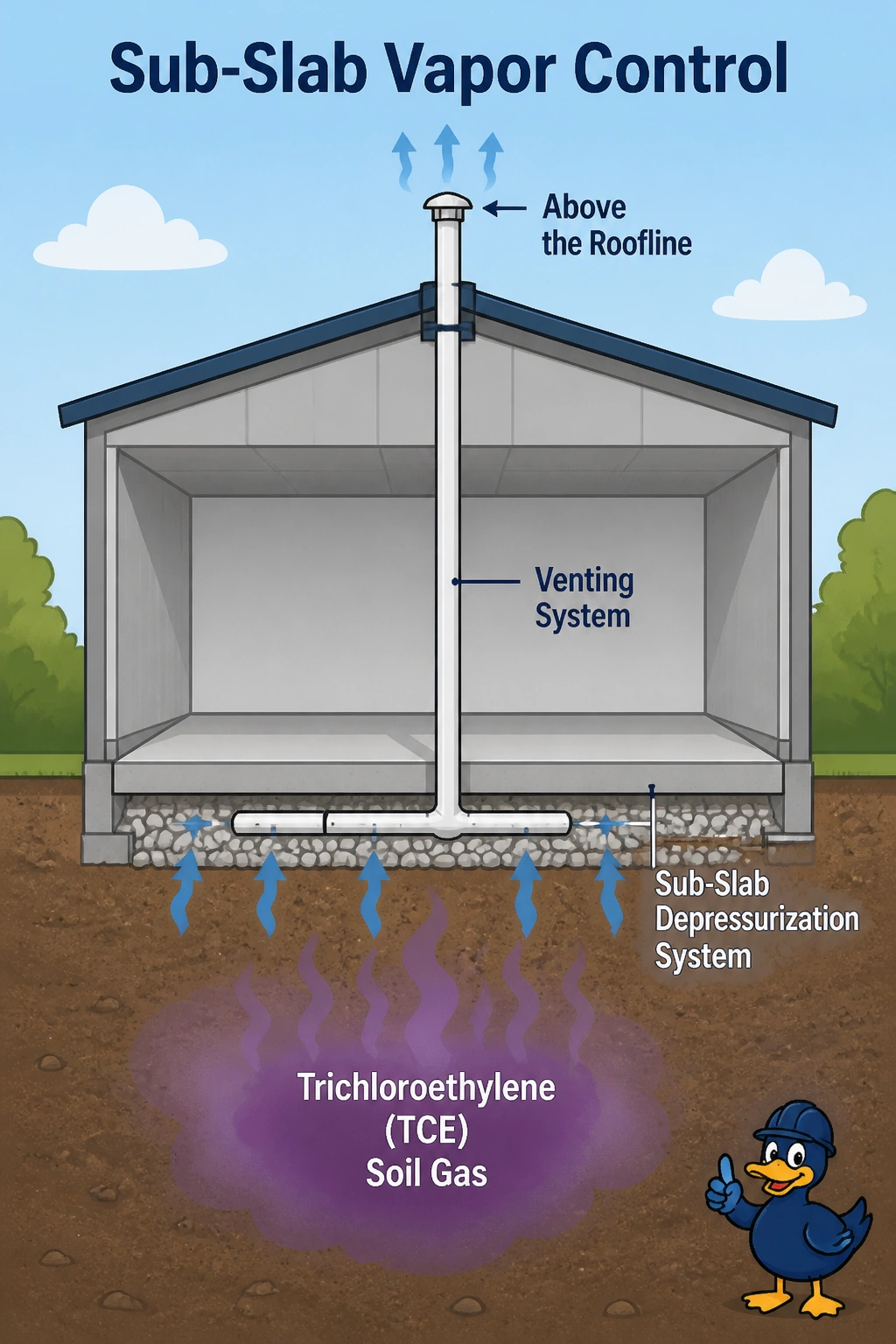
Short Explanation
Think of sub-slab depressurization like a bathroom exhaust fan that keeps steam from drifting into the hallway. A common trap is picking a groundwater remedy at the property line when vapors are already rising right under the floor slab. When indoor air is threatened, you break the exposure pathway directly beneath the building.
Full Explanation
To protect building occupants from volatile chlorinated vapors migrating upward through foundation cracks and utility penetrations, the most direct engineering control is to Install a sub-slab depressurization system to vent soil gas safely above the roofline. By maintaining a continuous negative pressure field beneath the concrete slab relative to the indoor space, soil gas is drawn into collection piping and exhausted outside before it can enter occupied rooms. To Install an activated-carbon groundwater pump-and-treat system strictly along the downgradient property line provides hydraulic containment at the boundary but does not stop vapors already volatilizing from the plume directly beneath the building. To Apply a permeable reactive barrier trench down-gradient of the building to intercept dissolved metals targets a different contaminant class in a downgradient location rather than sub-slab chlorinated vapors. To Excavate and thermally desorb all saturated bedrock beneath the active foundation footprint is structurally impractical beneath an existing building and unnecessary for immediate receptor protection. As a caveat, sub-slab depressurization mitigates indoor exposure without remediating the underlying groundwater source, so long-term monitoring remains necessary. For an operational check, confirm differential pressure gauges show continuous negative pressure under the slab and verify post-installation indoor air sampling meets screening targets.
Prefer to study offline? Printable PDF study book + test engine ($7.50, unofficial). These questions stay free here.