
A specialty plastics plant operated as a Small Quantity Generator for eleven months of an odd-numbered calendar year, but a one-time reactor cleanout in October generated enough ignitable solvent waste to place the facility in Large Quantity Generator status for that single month, and the waste was shipped off-site to a permitted TSDF. Which federal RCRA report must the plant submit by March 1 of the following even-numbered year?
Select an answer to reveal the explanation.
Short Explanation
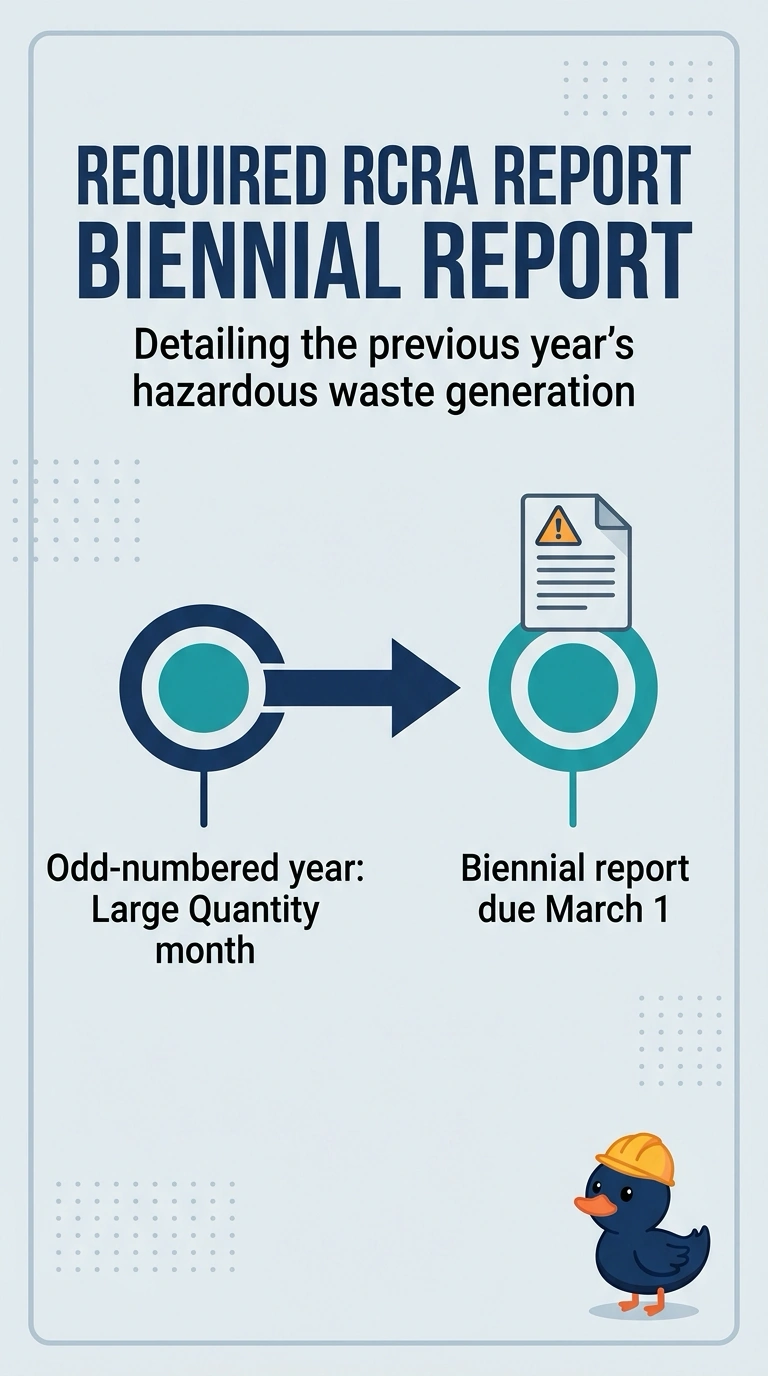
Even a single month at Large Quantity Generator volume puts your facility on the biennial reporting hook for that odd-numbered year. You must file a RCRA Biennial Hazardous Waste Report by March 1 of the following even-numbered year. The trap is assuming eleven months as a Small Quantity Generator exempts you from reporting.
Full Explanation
Under 40 CFR 262.41, any facility that acts as a Large Quantity Generator for at least one calendar month of an odd-numbered year and ships hazardous waste off-site to a treatment, storage, or disposal facility must submit EPA Form 8700-13 A/B by March 1 of the following even-numbered year. Submitting A RCRA Biennial Hazardous Waste Report detailing the previous year's hazardous waste generation fulfills this federal mandate and captures waste quantities, management methods, and off-site TSDF destinations. Filing An annual Toxics Release Inventory Form R covering all October solvent air emissions and waste transfers addresses EPCRA Section 313 chemical-threshold reporting due July 1, not RCRA March 1 generator reporting. Submitting A RCRA Manifest Exception Report summarizing every off-site hazardous waste shipment from the prior year only applies when a signed manifest copy is not returned within regulatory timeframes. Filing An updated EPA Site Identification notification requesting permanent Very Small Quantity Generator status updates registration records rather than reporting annual waste generation. As a caveat, authorized state agencies may require annual hazardous waste reporting rather than biennial cycles. For an operational check, review monthly hazardous waste generation logs every January to identify any odd-numbered year month that triggered Large Quantity Generator thresholds.
Prefer to study offline? Printable PDF study book + test engine ($7.50, unofficial). These questions stay free here.