
An industrial plant is designing a new outdoor tank-truck unloading station for bulk liquid raw materials near a municipal storm sewer inlet. Which site-planning control most effectively prevents accidental transfer spills from reaching surface waters?
Select an answer to reveal the explanation.
Short Explanation
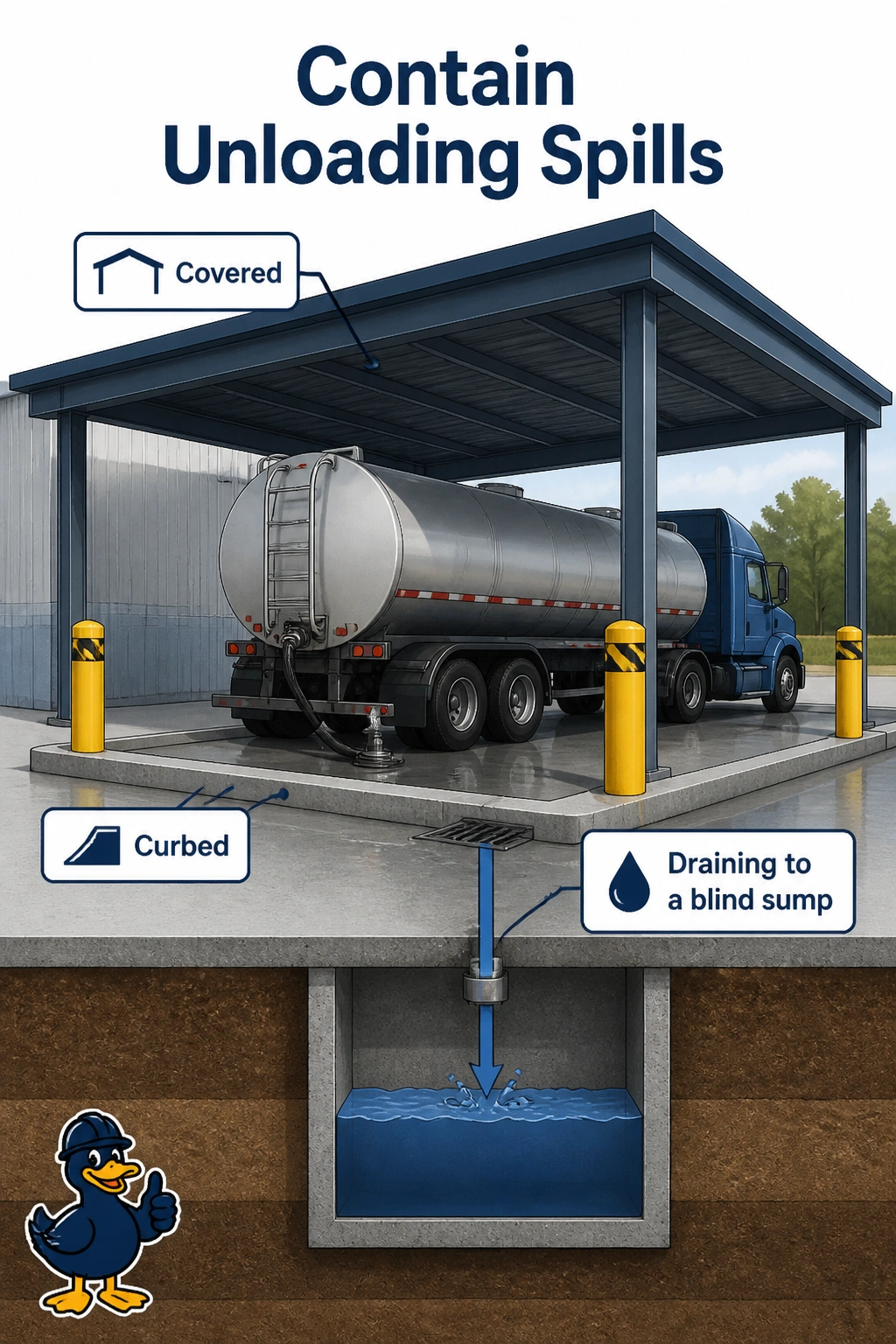
When a transfer hose bursts, gravity moves liquid faster than any driver can unroll a spill kit, so your facility layout has to do the heavy lifting. The trap is relying on administrative reminders or reactive absorbents right next to an open storm sewer. By designing a covered, curbed pad routed to a blind sump, you physically block spills from ever reaching surface waters.
Full Explanation
Preventing stormwater contamination during chemical transfers starts with engineered containment built into the site layout rather than reactive cleanup after a release. Choosing to Grade a covered, curbed unloading pad draining to a blind sump rather than storm sewers provides passive, fail-safe isolation by keeping rainwater out and capturing any spilled chemical in a sealed holding sump for controlled characterization and disposal. In contrast, choosing to Place a supply of absorbent socks beside the storm drain inlet for drivers to deploy later depends entirely on rapid human intervention during an active pressurized leak, which often fails before liquid enters the grate. Similarly, choosing to Require drivers to inspect hoses visually before unloading and log deliveries at the gate is a valuable administrative check, but it does not contain a sudden coupling failure. Choosing to Paint yellow caution stripes around the storm drain grate and post a no-parking sign nearby improves visibility without providing any physical barrier to liquid flow. As a design caveat, the blind sump must be sized for the largest single compartment or transfer volume and kept pumped dry. For an operational check, verify sump high-level alarms and confirm no floor drains connect to the storm sewer.
Prefer to study offline? Printable PDF study book + test engine ($7.50, unofficial). These questions stay free here.