
A growing specialty chemical plant projects that its monthly hazardous waste generation will soon push it from a Small Quantity Generator to a Large Quantity Generator under federal RCRA rules. During facility planning for this transition, which emergency preparedness requirement must the plant establish under 40 CFR Part 262 Subpart M?
Select an answer to reveal the explanation.
Short Explanation
Crossing into Large Quantity Generator status raises the bar on your emergency readiness. You cannot just wing it or hand everything off to the local fire department—RCRA expects a formal written playbook shared with responders ahead of time.
Full Explanation
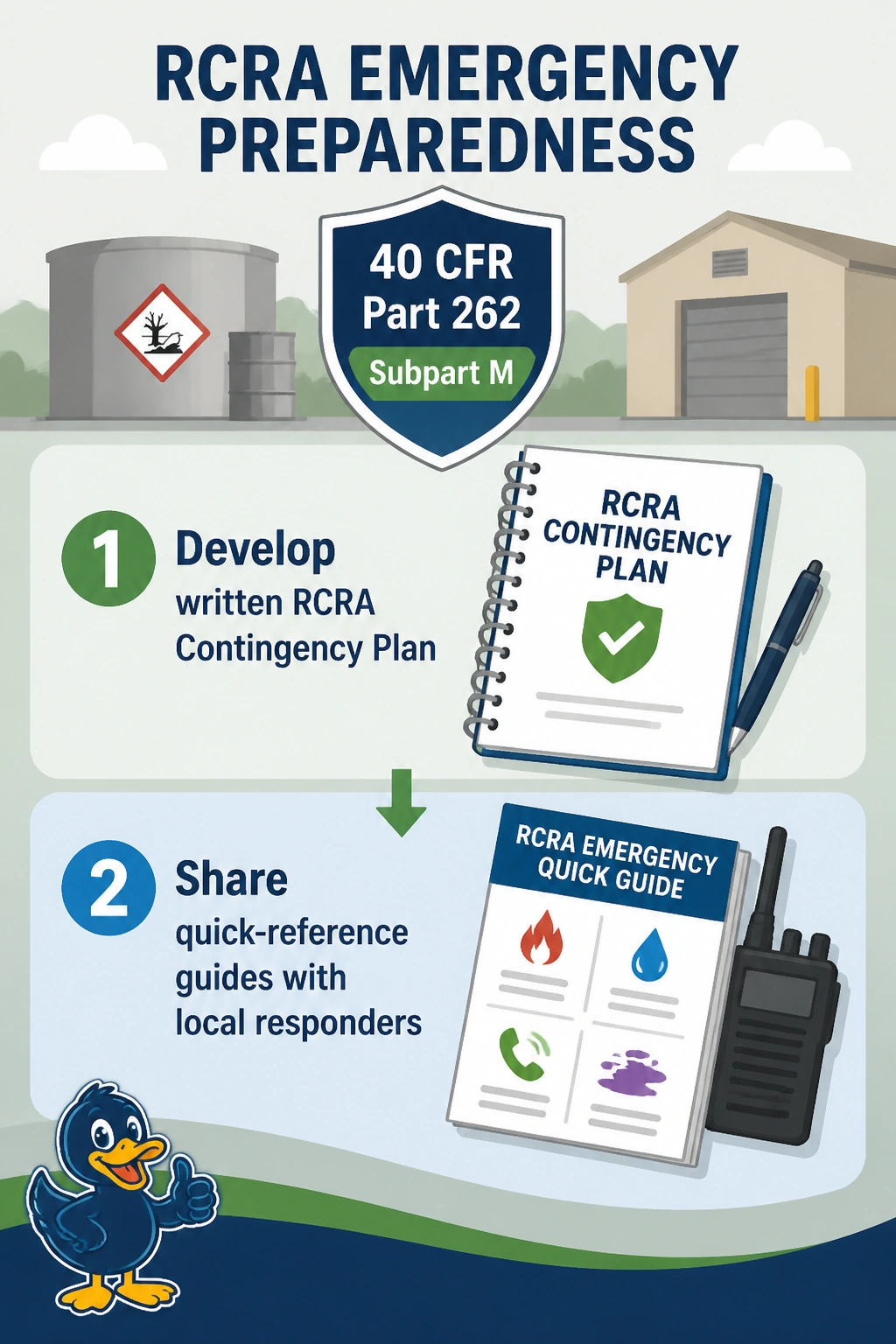
Under 40 CFR Part 262 Subpart M, Large Quantity Generators face enhanced preparedness and prevention rules compared to smaller generators. Before crossing the LQG threshold, the facility must Develop a written RCRA Contingency Plan and share quick-reference guides with local responders. The contingency plan designates emergency coordinators, details evacuation routes, lists emergency equipment, and establishes arrangements with local police, fire departments, and hospitals, while the quick-reference guide gives first responders immediate hazard summaries. Choosing to Eliminate all secondary containment pallets in the central area weakens spill control and violates good containment practices rather than satisfying preparedness rules. Choosing to Apply for a federal Underground Storage Tank closure variance applies to 40 CFR Part 280 tank decommissioning, not LQG hazardous waste emergency planning. Choosing to Delegate all internal spill response solely to municipal firefighters ignores the generator's duty to designate trained internal emergency coordinators and maintain on-site response capability. As a caveat, the facility must also maintain documentation of its attempts to make arrangements with local emergency authorities, even if an outside agency declines to enter a formal agreement. As an operational check, review the contingency plan and quick-reference guide whenever waste streams, storage locations, or emergency coordinator contacts change.
Prefer to study offline? Printable PDF study book + test engine ($7.50, unofficial). These questions stay free here.