
A packaging plant certified to ISO 14001 sets an objective to reduce hazardous waste generation from its printing presses, but total annual production volume doubles during the year. To evaluate whether its process improvements actually reduced waste per unit of output, how should the EHS manager track performance?
Select an answer to reveal the explanation.
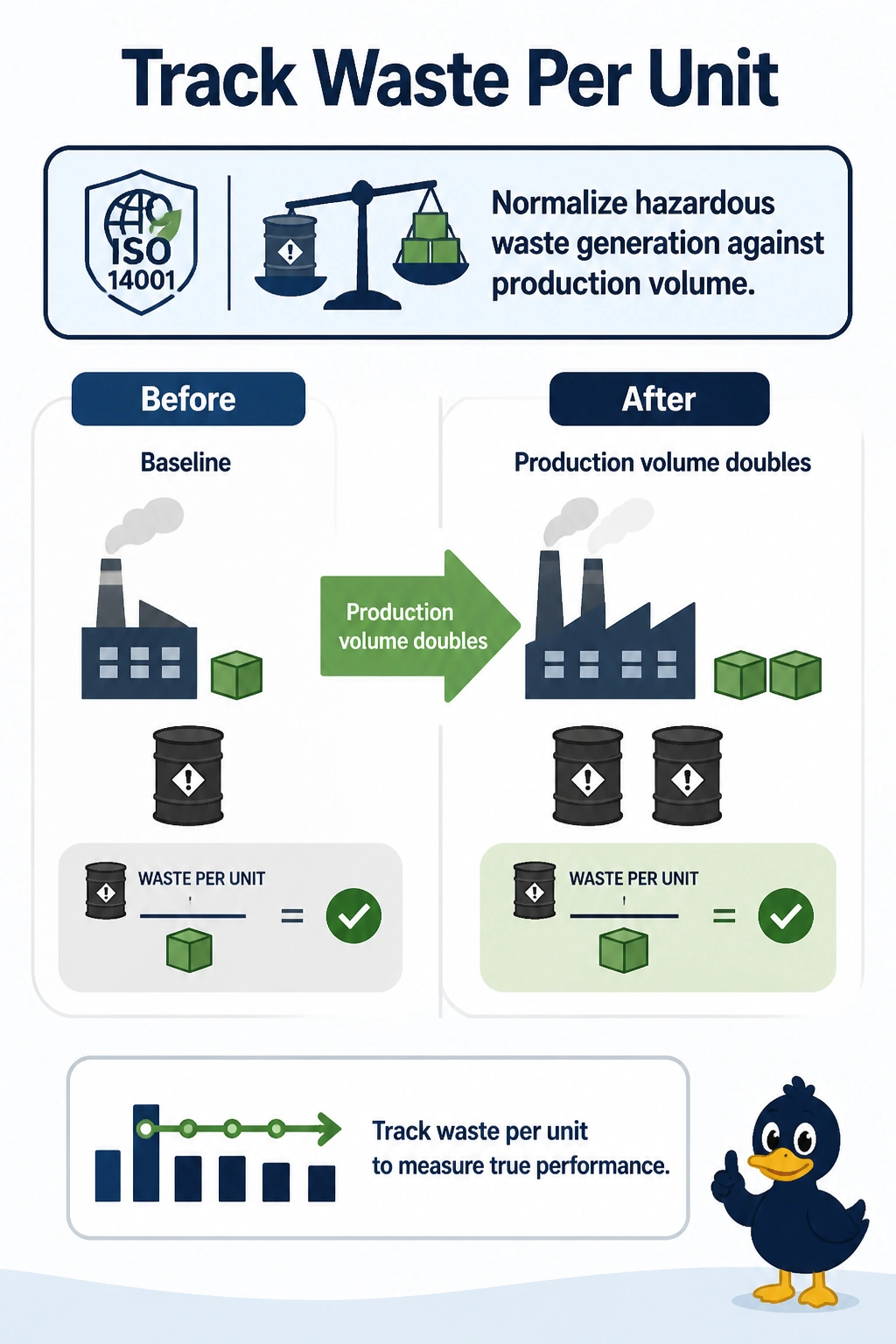
Short Explanation
Raw waste totals can fool you when a plant's order book suddenly doubles. The trap is looking only at total tonnage instead of normalizing waste against production output, which shows whether your process controls are truly working.
Full Explanation
Under ISO 14001 monitoring, measurement, analysis, and evaluation requirements, organizations must select appropriate indicators to track progress toward environmental objectives. When production fluctuates significantly, the EHS manager should Normalize hazardous waste generation against production volume as a performance indicator—for example, kilograms of waste solvent per thousand square meters printed—so management can isolate true process efficiency gains from business growth. Choosing to Track only total annual hazardous waste tonnage without adjusting for production output changes penalizes successful efficiency projects whenever customer demand rises and hides poor efficiency during slowdowns. Deciding to Exclude peak production months from the annual environmental management system review distorts the data set and violates the requirement for complete, representative performance evaluation. Choosing to Replace quantitative waste tracking with qualitative operator surveys during audits removes objective evidence needed for management review and continual improvement. As a caveat, normalized intensity metrics do not replace absolute regulatory thresholds, such as RCRA generator status limits based on total monthly kilograms generated. As an operational check, pair normalized efficiency metrics with absolute monthly waste totals on the management review dashboard.
Prefer to study offline? Printable PDF study book + test engine ($7.50, unofficial). These questions stay free here.