
An automotive parts manufacturer implementing ISO 14001 has identified hazardous waste generation and solvent air emissions as its significant environmental aspects. To satisfy ISO 14001 planning requirements for environmental objectives, what must the facility establish next?
Select an answer to reveal the explanation.
Short Explanation
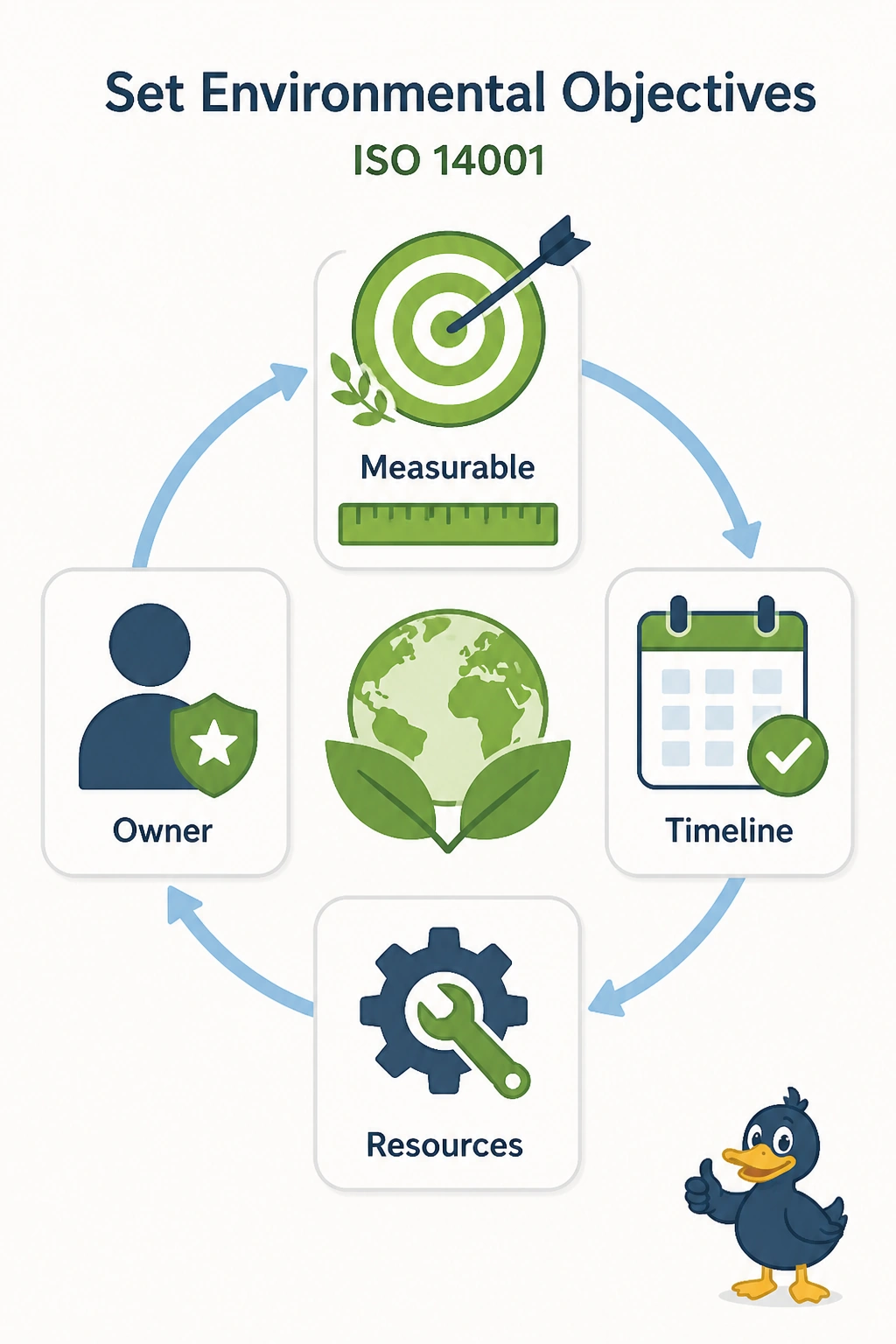
An environmental policy without measurable targets is just a wish list! The trap is relying on vague slogans or waiting for an outside auditor, when ISO 14001 expects you to turn significant aspects into concrete objectives with owners, resources, and deadlines.
Full Explanation
Under ISO 14001 Clause 6.2, Setting measurable environmental objectives with assigned owners, resources, and timelines translates significant environmental aspects and compliance obligations into actionable plans specifying what will be done, who is responsible, what resources are required, when it will finish, and how results will be evaluated. Waiting for an external ISO 14001 registrar to assign facility-specific waste reduction targets misunderstands third-party certification, as registrars audit conformity rather than setting internal operational goals. Publishing general corporate sustainability slogans without tracking metrics or completion dates fails Clause 6.2 because objectives must be measurable where practicable and monitored for progress. Eliminating all non-regulated energy and water aspects from the environmental management scope contradicts ISO 14001's life-cycle perspective, which covers significant impacts even when not strictly regulated. One caveat is that objectives must remain consistent with the organization's environmental policy and commitment to continual improvement. As an operational check, review objective progress indicators during periodic management reviews and update action plans when schedules slip.
Prefer to study offline? Printable PDF study book + test engine ($7.50, unofficial). These questions stay free here.