
A chemical blending facility implementing an ISO 14001 environmental management system has inventoried air emissions and wastewater discharges from its routine daily production runs. To satisfy ISO 14001 aspect-identification requirements, what additional operating conditions must the team evaluate?
Select an answer to reveal the explanation.
Short Explanation
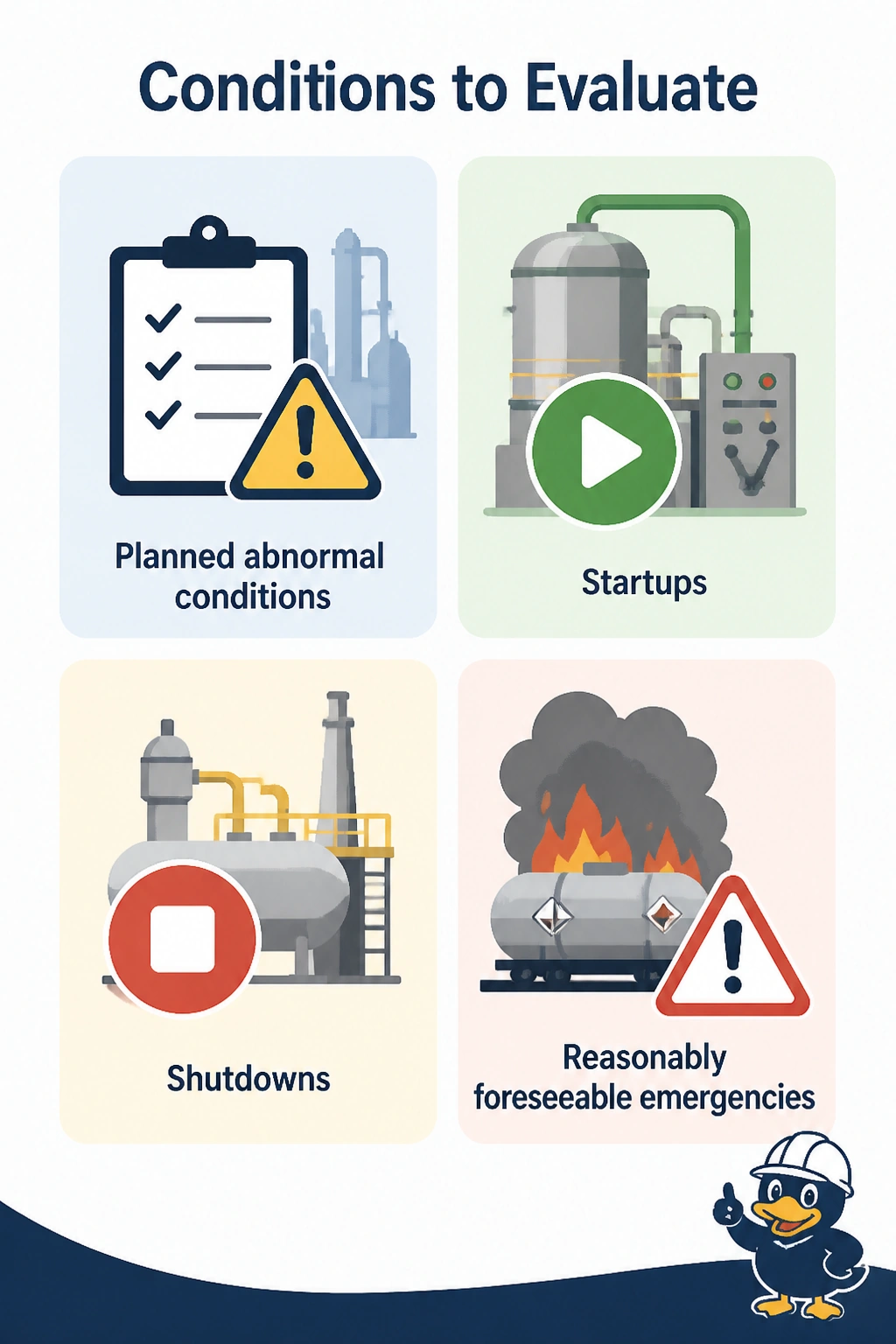
You’ll get a fuller picture by considering planned abnormal conditions, startups, shutdowns, and reasonably foreseeable emergencies—not just routine production. Those non-routine moments can carry significant environmental risks.
Full Explanation
ISO 14001 requires you to determine environmental aspects of activities, products, and services you can control or influence, considering a life-cycle perspective across operating states. Evaluating planned abnormal conditions, startups, shutdowns, and reasonably foreseeable emergencies helps you control high-impact events such as vessel cleanouts, scrubber bypasses, tank overfills, and fire-water runoff. Restricting the review to routine daytime production shifts and excluding maintenance misses emissions from equipment purging, filter changes, and off-shift operations. Considering only operations that currently exceed permit limits confuses compliance status with aspect identification and overlooks significant risks that may remain within limits. Focusing only on outsourced off-site freight transportation ignores on-site manufacturing and storage hazards the facility directly controls. An exam caveat: aspect identification must also reflect planned or new developments and modified processes, not just historical operations. As a practical check, review incident logs, maintenance work orders, and Process Hazard Analyses during your aspect workshop to capture non-routine and emergency scenarios.
Prefer to study offline? Printable PDF study book + test engine ($7.50, unofficial). These questions stay free here.