
A specialty chemical plant operates a covered anhydrous ammonia unit under OSHA Process Safety Management (29 CFR 1910.119) and completed its initial Process Hazard Analysis four and a half years ago. To maintain compliance with federal PSM rules, what action must the plant schedule?
Select an answer to reveal the explanation.
Short Explanation
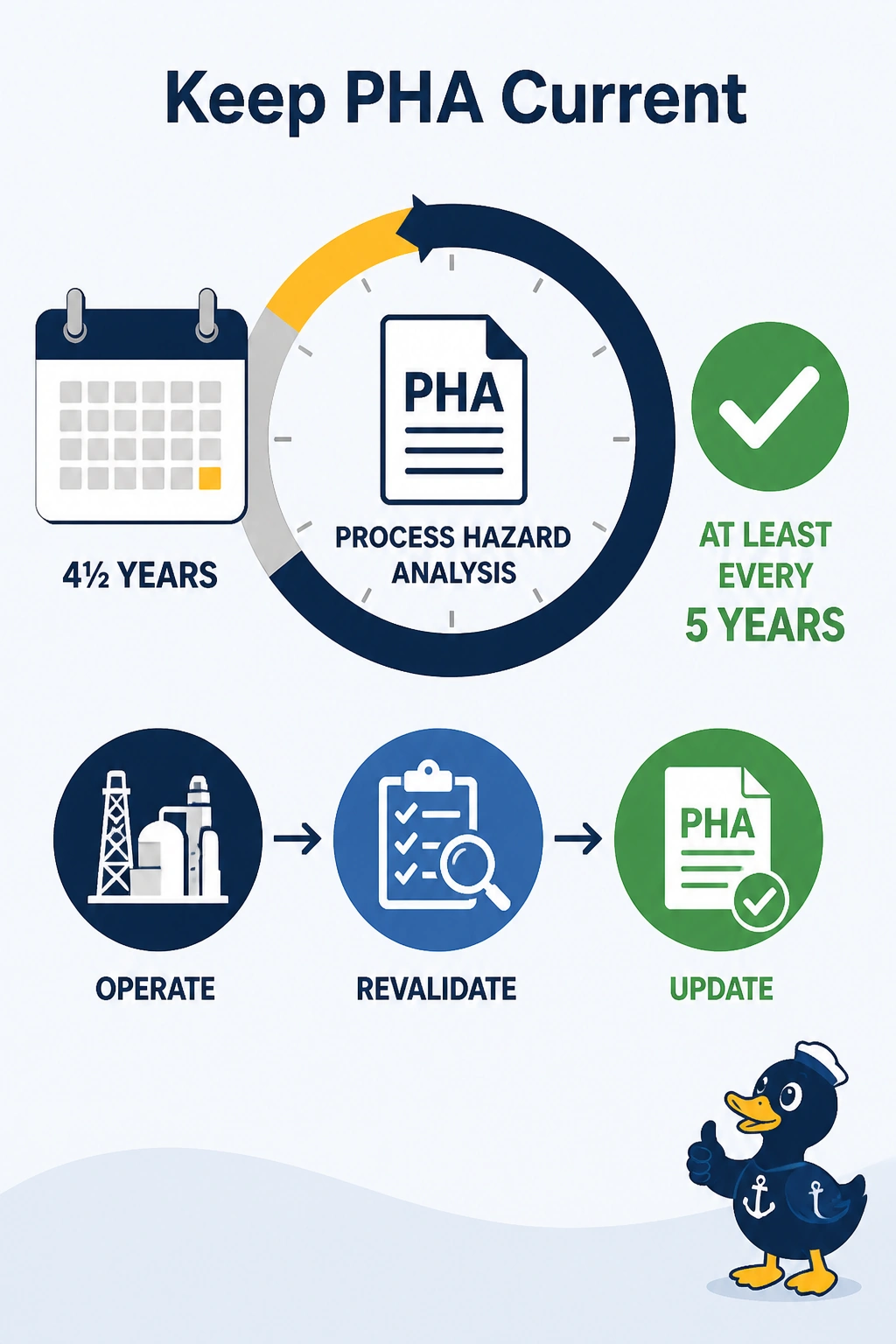
A Process Hazard Analysis is not a one-and-done binder you can leave on a shelf! Remember, you must update and revalidate it on a five-year schedule; a routine walk-through or a catastrophic release is not the trigger.
Full Explanation
Under OSHA 29 CFR 1910.119(e)(6), updating and revalidating the Process Hazard Analysis at least every five years keeps the hazard evaluation aligned with the current process, operating history, and accumulated Management of Change updates. With the initial analysis completed four and a half years ago, the plant must schedule its revalidation before the five-year deadline. Waiting until a catastrophic release occurs to convene a new process hazard team defeats PSM’s proactive prevention purpose and violates the mandatory schedule. Replacing the original PHA with a routine annual safety walk-through also fails: a general walk-through lacks the structured team methodology, piping-and-instrumentation review, and consequence analysis required for a formal PHA. Submitting the original PHA to OSHA for renewal every ten years is incorrect both in interval and procedure; employers retain PHAs on site for inspection rather than filing them for agency renewal. A caveat is that major process changes between revalidation cycles require Management of Change reviews rather than waiting for the five-year mark. As a practical check, verify that prior PHA action items are closed or tracked and that current P&IDs match field piping before convening the revalidation team.
Prefer to study offline? Printable PDF study book + test engine ($7.50, unofficial). These questions stay free here.