
A chemical blending plant uses half-mask air-purifying respirators with organic vapor cartridges that lack an end-of-service-life indicator during routine tank-cleaning tasks. To comply with OSHA respiratory protection standards in 29 CFR 1910.134, how should the EHS manager determine when operators must replace these cartridges?
Select an answer to reveal the explanation.
Short Explanation
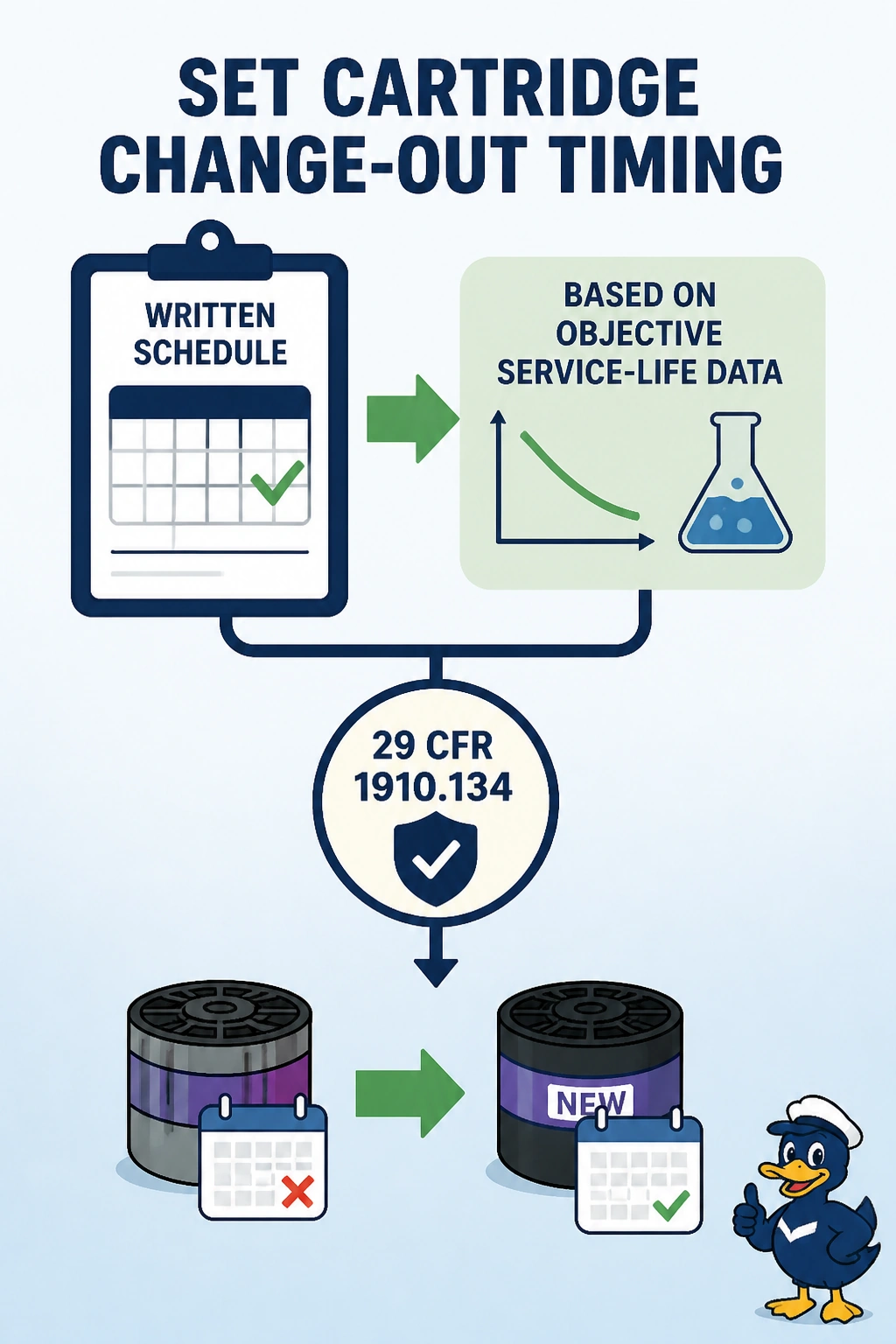
Think of a respirator cartridge like a kitchen water filter that loses capacity long before the tap tastes bad. Waiting for a chemical odor or breathing resistance is the classic trap, because breakthrough can happen before you ever notice a smell. Under 29 CFR 1910.134, you must base cartridge replacement on objective service-life data rather than human senses.
Full Explanation
Under OSHA 29 CFR 1910.134, when air-purifying respirators are used for gases and vapors without an approved end-of-service-life indicator, the employer must Implement a written cartridge change-out schedule based on objective service-life data. This schedule relies on contaminant concentrations, humidity, work rate, and manufacturer breakthrough modeling so cartridges are swapped before contaminant breakthrough occurs. To Instruct operators to replace cartridges immediately whenever they detect a faint solvent odor is non-compliant because olfactory fatigue and poor warning properties can allow hazardous exposure before a worker smells anything. To Allow operators to keep using the same cartridges until breathing resistance noticeably increases is also wrong because particulate loading restricts airflow, whereas gas and vapor breakthrough does not increase breathing resistance. To Switch all operators from half-mask air-purifying respirators to disposable filtering facepieces fails because particulate filtering facepieces do not capture organic vapors. As a caveat, conservative safety factors are needed when ambient temperature or humidity spikes, since moisture reduces activated carbon capacity. For an operational check, review the written respiratory protection program to verify documented change-out intervals, air monitoring inputs, and worker sign-off logs.
Prefer to study offline? Printable PDF study book + test engine ($7.50, unofficial). These questions stay free here.