
Technicians wearing vapor-tight, impermeable Level A chemical-protective suits are performing drum overpacking inside an unconditioned warehouse during a hot summer afternoon. Because impermeable ensembles block evaporative sweat cooling, what health and safety control must the site safety officer implement?
Select an answer to reveal the explanation.
Short Explanation
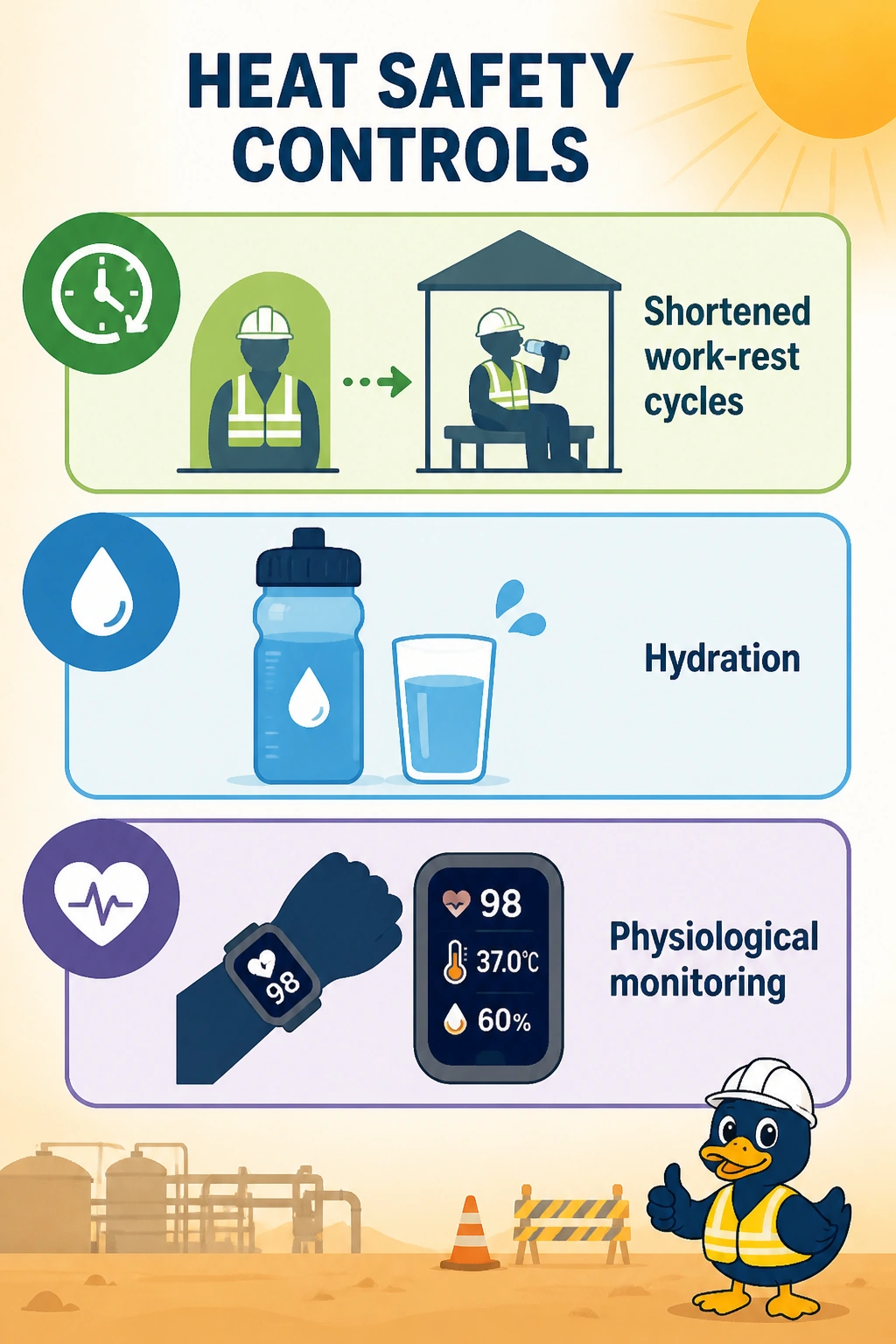
Your vapor-tight Level A suit protects you from hazardous chemicals, but it also traps body heat by blocking sweat evaporation. Protect yourself with heat-stress controls: shortened work-rest cycles, hydration, and physiological monitoring—not less chemical protection.
Full Explanation
Impermeable chemical-protective ensembles block sweat evaporation, rapidly raising core body temperature and creating severe heat-strain risk, even at moderate ambient temperatures. To protect technicians without compromising chemical isolation, the site safety officer must enforce shortened work-rest cycles, hydration, and physiological monitoring. Scheduled rotations into a shaded or cooled rest area, fluid replacement during doffing breaks, and pre- and post-entry heart-rate or temperature checks can identify heat exhaustion before it progresses to heat stroke. Removing respirators inside the exclusion zone exposes workers to immediate inhalation hazards in an active chemical work area. Extending continuous shifts to four hours to reduce suit changes increases cumulative thermal strain and exceeds air-supply limits and safe physiological tolerances. Replacing chemical-resistant suits with cotton coveralls removes the vapor and splash protection that justifies Level A PPE. As a caveat, supplemental cooling vests or vortex air-cooling tubes may extend safe stay times when compatible with the suit and air supply. As a practical check, record ambient temperature, humidity, suit entry time, and exit vital signs on the site heat-stress log for every entry team.
Prefer to study offline? Printable PDF study book + test engine ($7.50, unofficial). These questions stay free here.