
Before an operator connects a flexible transfer hose to unload concentrated sulfuric acid from a tank truck into a plant day tank, which pre-operation inspection step is most critical to prevent a high-pressure spray release during transfer?
Select an answer to reveal the explanation.
Short Explanation
A degraded hose or wrong gasket turns a routine acid delivery into a dangerous spray hazard in seconds. The trap is trusting yesterday's smooth transfer instead of inspecting the hose, couplings, and gaskets right before you open the valve.
Full Explanation
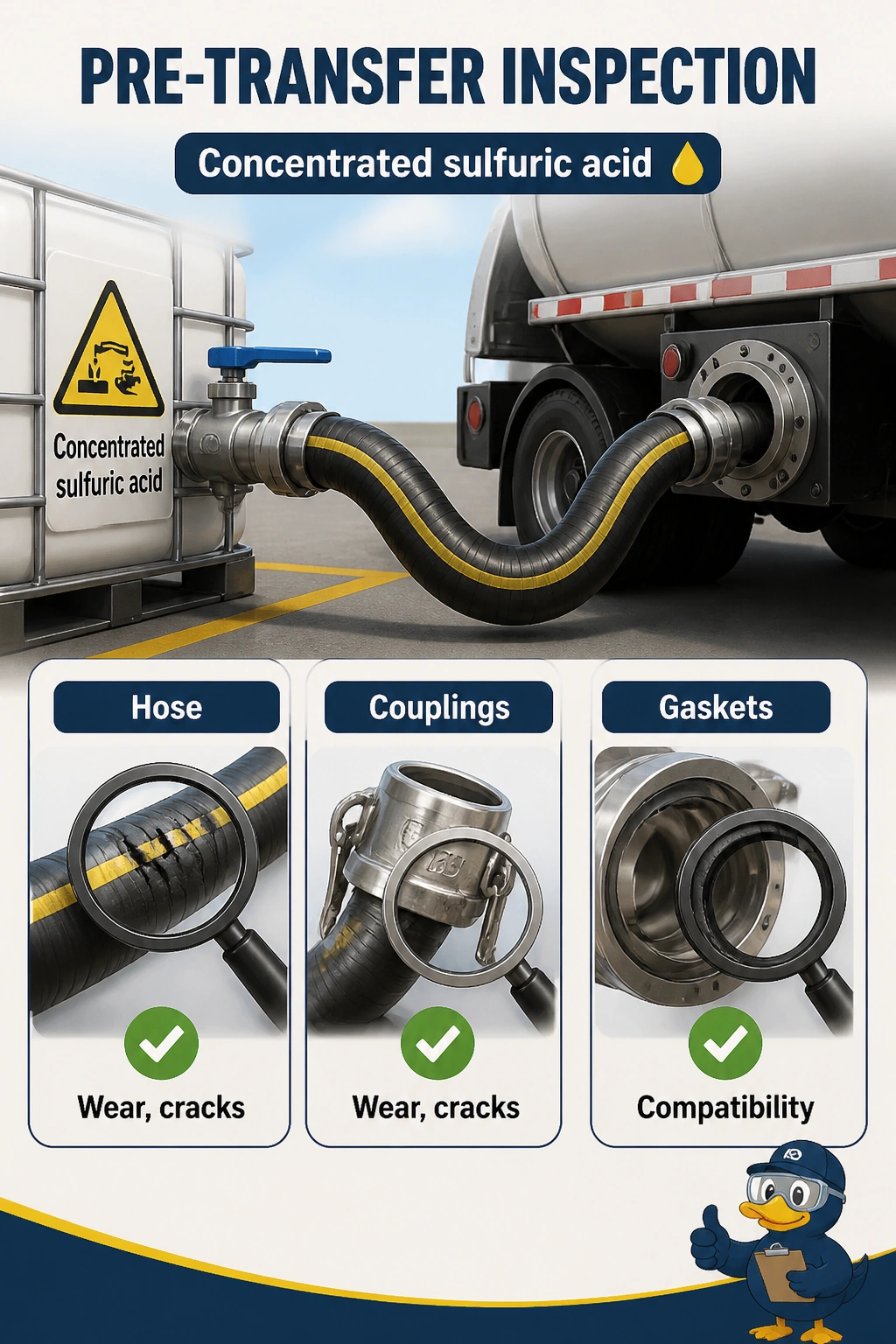
Concentrated sulfuric acid rapidly degrades incompatible elastomers and weakened reinforcement braids, making pre-transfer hardware checks essential. Before pressurizing the line, the operator must Inspect the transfer hose, couplings, and gaskets for wear, cracks, and compatibility to confirm there are no bulges, soft spots, corroded camlocks, or mismatched gasket materials that could fail under pump pressure. Choosing to Verify only the truck driver's commercial license without checking transfer hardware addresses driver credentials while ignoring the physical failure point at the manifold. Deciding to Rely on the previous shift's verbal assurance that the unloading line worked without leaks overlooks damage that can occur between deliveries from dragging, kinking, or residual acid exposure. Choosing to Accept last year's hose certificate without inspecting the hose and gaskets today confuses past certification with present condition and misses new damage from storage and acid exposure. As a caveat, even a visually intact hose can exceed its service life internally, so facilities must track hydrostatic test dates and manufacturer replacement intervals. As an operational check, use a written pre-unloading checklist that requires verifying hose test tags, gasket seating, and containment valve alignment before starting the pump.
Prefer to study offline? Printable PDF study book + test engine ($7.50, unofficial). These questions stay free here.