
Operators at a coatings facility experience solvent vapor exposure above the occupational exposure limit while manually filling open-head drums with toluene. Management wants to implement the most effective control from the industrial hygiene hierarchy before relying on personal protective equipment. Which engineering control best addresses the hazard at the source?
Select an answer to reveal the explanation.
Short Explanation
Putting a respirator on a worker when you can capture the vapor at the drum neck is like wearing a raincoat indoors instead of fixing the ceiling pipe. Under the hierarchy of controls, engineering controls remove or capture the hazard before it reaches your breathing zone. The trap is reaching for respirators or job rotation first because they are fast to roll out, even though they leave the vapor cloud intact.
Full Explanation
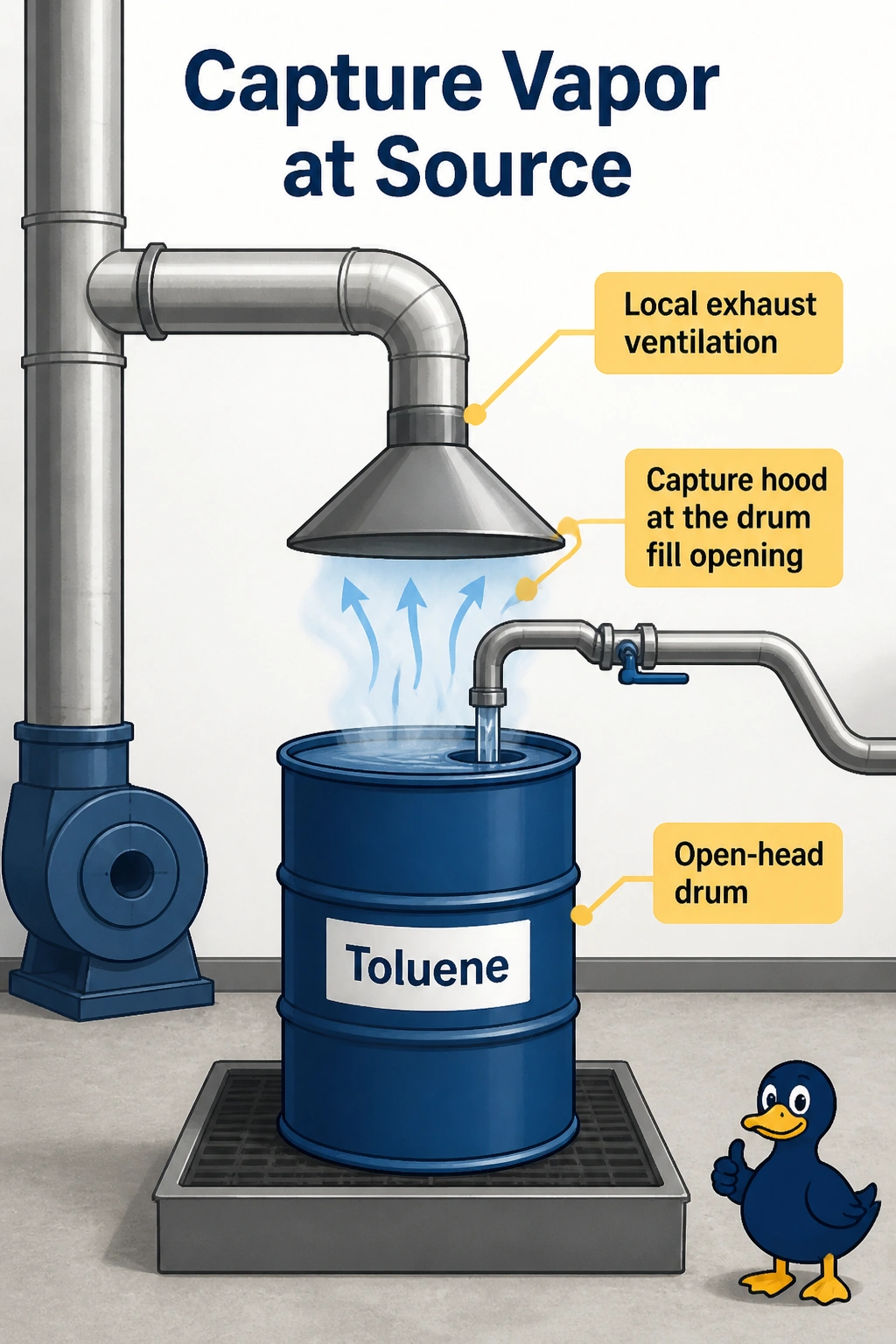
In industrial hygiene, the hierarchy of controls prioritizes elimination, substitution, and engineering controls above administrative measures and personal protective equipment. Installing local exhaust ventilation with a capture hood at the drum fill opening is an engineering control that physically captures toluene vapors at the point of release before they disperse into the operator breathing zone. Issuing half-mask organic vapor respirators to all drum-line operators during filling shifts relies on personal protective equipment, which is the least protective tier because fit, cartridge life, and user compliance can fail. Rotating operators every two hours so no single worker stays on the filling line all day is an administrative control that spreads exposure across more people without reducing airborne concentrations. Posting laminated hazard warning signs and requiring annual solvent safety refresher training is also an administrative control that informs workers but does not physically remove vapors. A key caveat is that local exhaust systems handling flammable vapors like toluene must be properly grounded, bonded, and designed for hazardous electrical locations. As an operational check, measure face velocity at the hood with a calibrated anemometer and conduct personal air monitoring to confirm exposures stay below occupational limits.
Prefer to study offline? Printable PDF study book + test engine ($7.50, unofficial). These questions stay free here.