
A chemical plant plans to torch-cut and abrasive-blast structural steel girders inside a 1965 warehouse coated with thick, aging industrial primer. Before work begins, which environmental study step should the EHS manager require to address both worker protection and debris disposition?
Select an answer to reveal the explanation.
Short Explanation
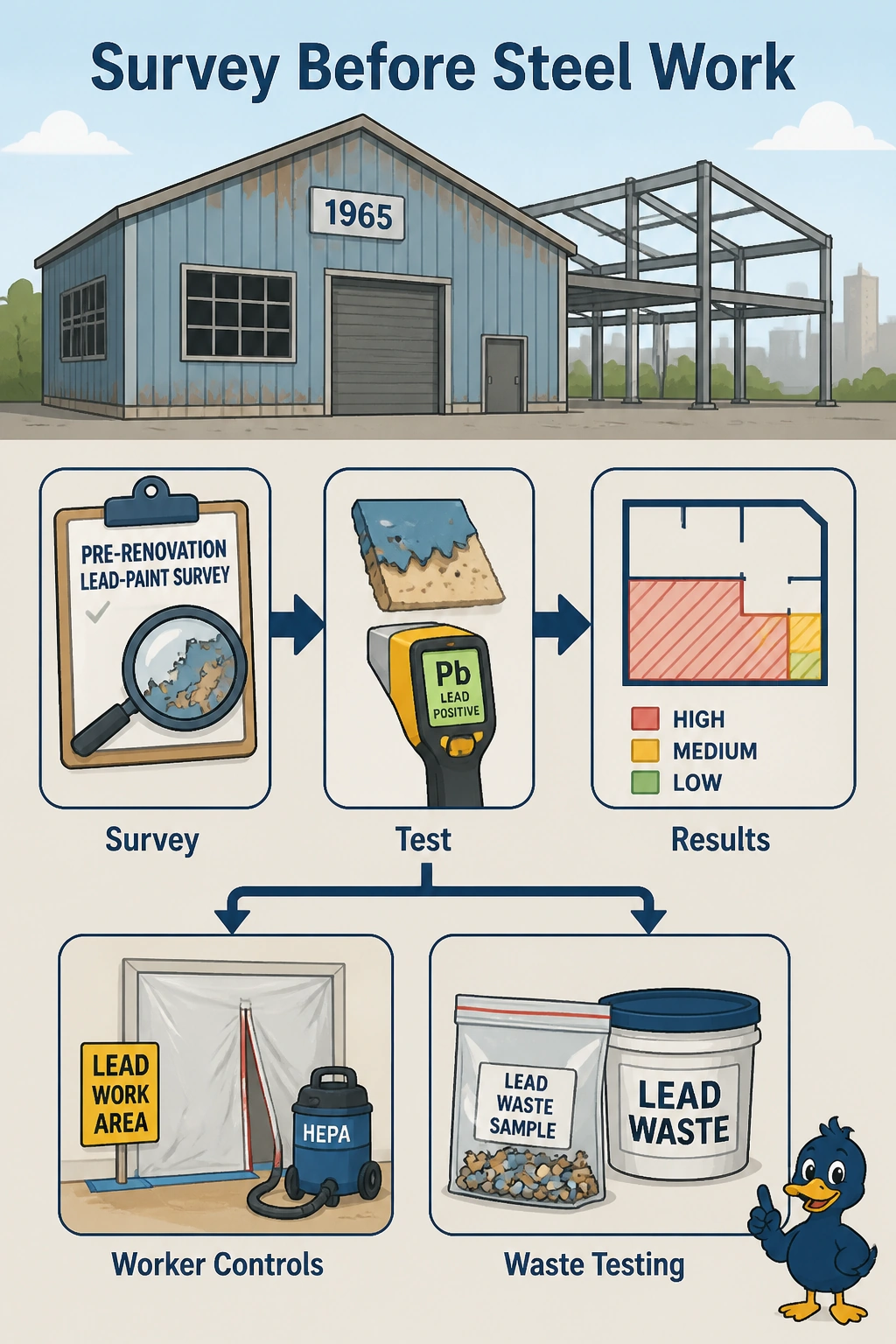
Torch-cutting old industrial paint without checking for lead can turn a routine job into an acute exposure and hazardous waste headache! The trap is testing dust afterward or assuming an exemption, when you need a pre-renovation lead survey upfront.
Full Explanation
Conducting a pre-renovation lead-paint survey to guide worker controls and waste testing using X-ray fluorescence or laboratory paint-chip analysis establishes whether lead is present before disturbance, triggering OSHA Lead in Construction (29 CFR 1926.62) controls and informing RCRA toxicity characteristic testing of blast media and debris. Proceeding with dry abrasive blasting and testing airborne dust only after work finishes exposes workers to uncontrolled lead fumes and dust and spreads contamination across the facility. Assuming buildings constructed before 1978 are exempt from occupational lead exposure rules is backward, because older industrial coatings are the most likely to contain high lead concentrations and OSHA 1926.62 applies whenever lead is present regardless of building age. Disposing of all painted steel debris directly as municipal trash without paint testing risks illegal disposal of D008 toxicity-characteristic hazardous waste. One caveat is that industrial primers may also contain chromium or polychlorinated biphenyls, warranting broader metals or PCB screening when suspected. As an operational check, collect representative paint-chip samples from distinct coating layers and verify contractor respiratory protection and containment plans before issuing a work permit.
Prefer to study offline? Printable PDF study book + test engine ($7.50, unofficial). These questions stay free here.