
During a Phase II groundwater investigation near an active solvent-degreasing plant, a field technician pours analyte-free laboratory water into a sample bottle at the monitoring wellhead, seals it, and submits it with the groundwater samples. What is the purpose of this quality-control sample?
Select an answer to reveal the explanation.
Short Explanation
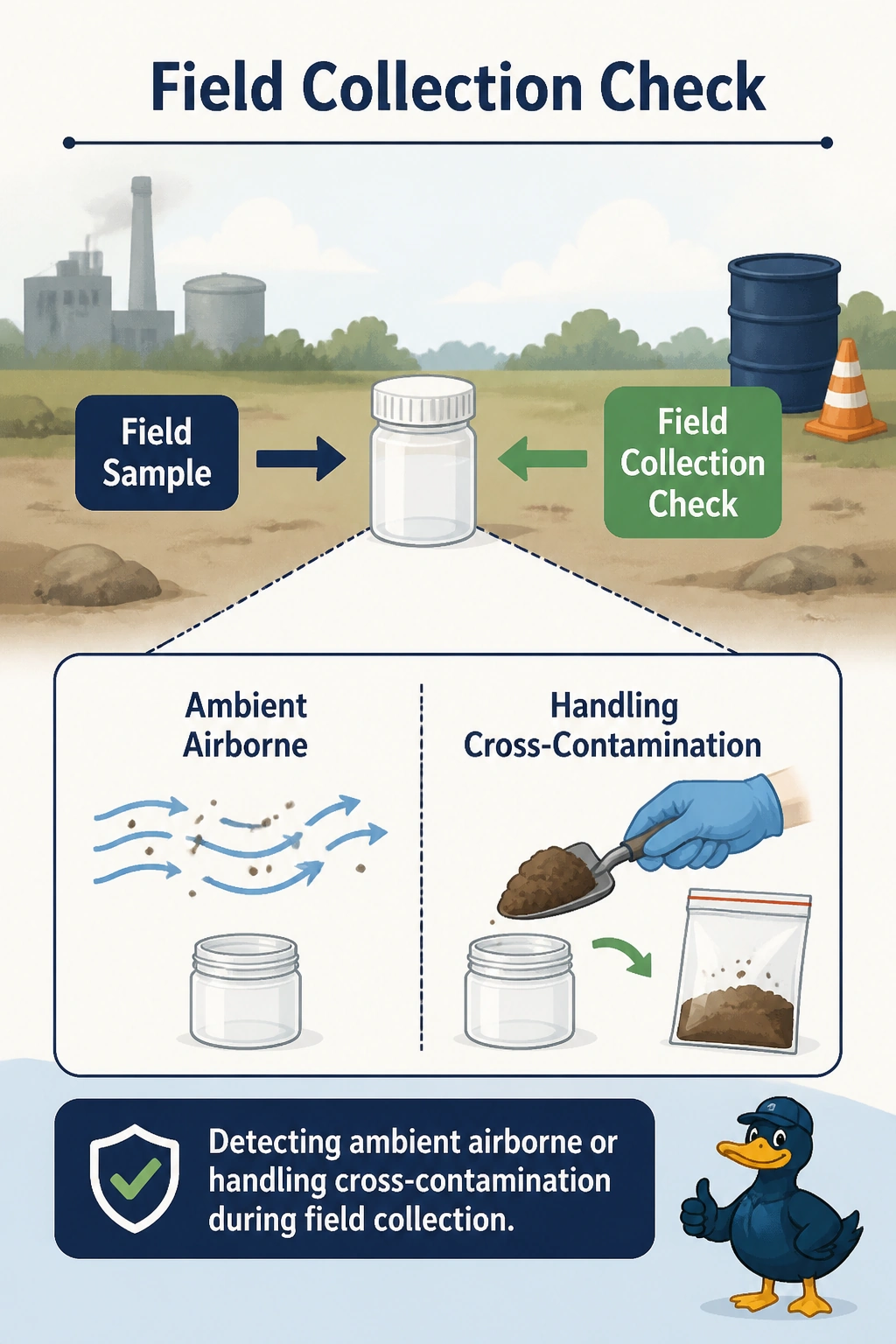
Think of a field blank as a clean-water witness to the air and handling conditions around your sampling crew. Because you pour it at the wellhead, it can reveal airborne or handling contamination—not laboratory matrix bias, equipment-cleaning problems, or sampling precision.
Full Explanation
A field blank is prepared at the sampling location by pouring analyte-free water into a sample container and exposing it to the ambient air and handling conditions experienced during collection. Its purpose is to detect airborne or handling cross-contamination, helping you distinguish genuine groundwater impacts from vapors or dust that enter a bottle in the field. Measuring laboratory analytical recovery bias caused by the groundwater sample matrix is a different question: clean water poured at the wellhead does not test how the groundwater matrix affects analytical recovery. Verifying that reusable bailers and submersible pumps were properly decontaminated is also not the purpose here, because the described sample is poured directly into a bottle rather than used to check cleaned sampling equipment. Evaluating sampling and analytical precision requires a split sample from the same well; a clean-water blank does not compare results from paired portions of groundwater. One exam caveat is that the key feature is exposure during field collection: the water is poured at the wellhead, not kept sealed from the field environment. As a practical check, record the exact time, wind conditions, and well location when you prepare each field blank in your field logbook.
Prefer to study offline? Printable PDF study book + test engine ($7.50, unofficial). These questions stay free here.