
A buyer's Phase I Environmental Site Assessment for an active machine shop identifies a Recognized Environmental Condition from a former underground solvent-degreasing pit near the loading dock. Before finalizing the purchase, the environmental consultant needs to confirm whether subsurface contamination is actually present and quantify concentrations. Which investigation should the consultant recommend next?
Select an answer to reveal the explanation.
Short Explanation
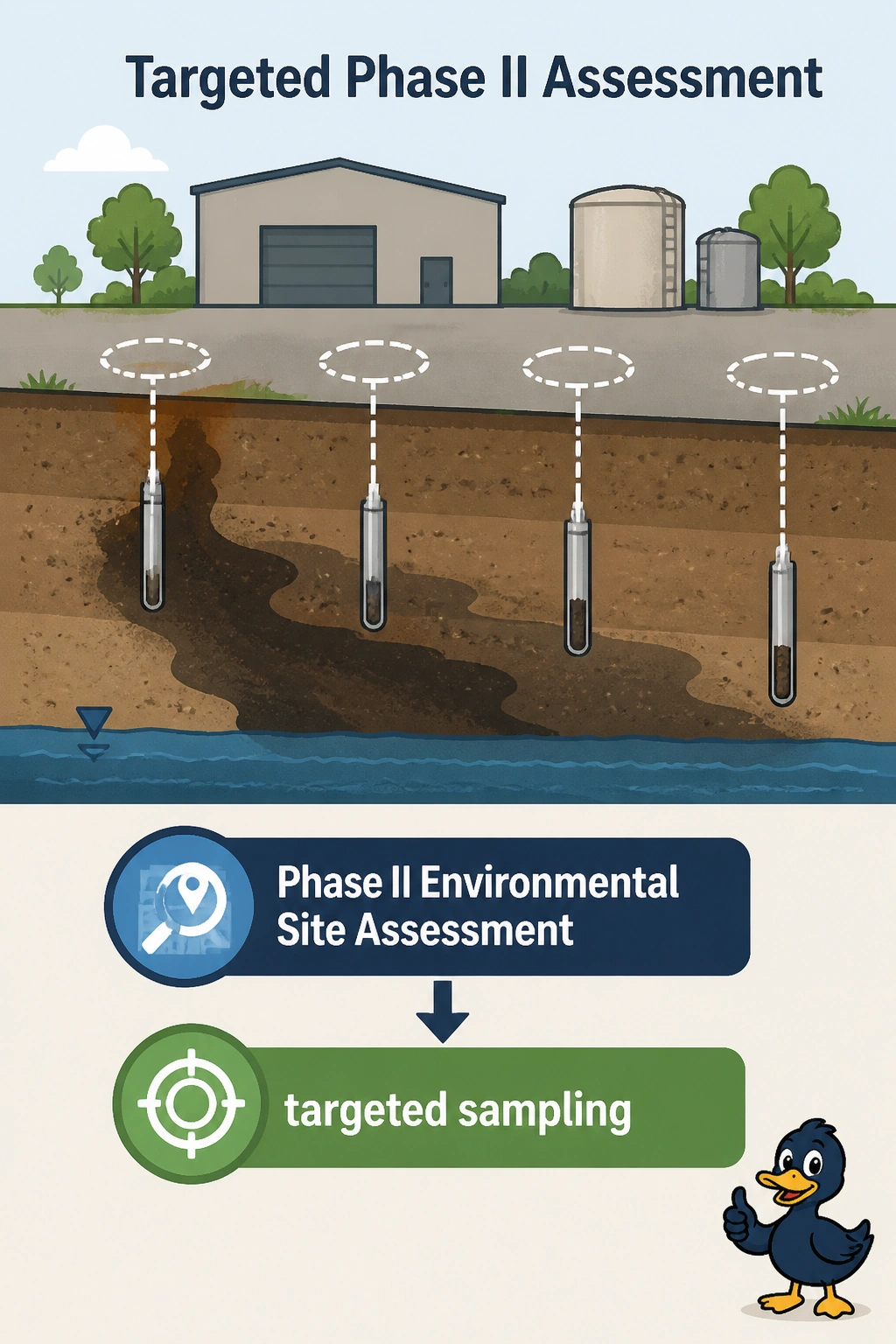
When a records-only property review flags a suspicious area, you need more than paperwork to learn what lies beneath the concrete. A Phase II assessment uses targeted sampling to test soil and groundwater; another Phase I repeats the review, while immediate pump-and-treat cleanup or a Toxic Release Inventory Form R report does not confirm subsurface contamination.
Full Explanation
When a Phase I Environmental Site Assessment under ASTM E1527 identifies a Recognized Environmental Condition, the appropriate next step is to conduct a Phase II Environmental Site Assessment with targeted sampling. A Phase II investigation uses intrusive methods such as soil borings, monitoring wells, and laboratory analysis to determine whether hazardous substances were actually released and at what concentrations, establishing a defensible baseline for property transfer decisions. Commissioning a new Phase I Environmental Site Assessment from a different firm merely repeats a non-intrusive records and visual review without generating analytical subsurface data. Initiating full-scale groundwater pump-and-treat remediation immediately commits capital to an active cleanup system before confirming whether contamination exists, which media are affected, or what remedial objectives apply. Submitting a Toxic Release Inventory Form R report for historical solvent use misapplies EPCRA Section 313 annual chemical release reporting, which applies to ongoing manufacturing thresholds rather than due-diligence subsurface investigation. As a caveat, even a targeted Phase II study may not delineate the full horizontal and vertical extent of a plume if contamination is found, requiring further characterization. For a practical check, review historical site utility maps and clear underground lines before mobilizing drilling equipment.
Prefer to study offline? Printable PDF study book + test engine ($7.50, unofficial). These questions stay free here.