
An environmental specialist reviews laboratory analytical results for groundwater monitoring wells sampled for volatile organic compounds and notices low-level methylene chloride detected in both a monitoring well sample and the accompanying unopened trip blank. What does this quality-control finding indicate?
Select an answer to reveal the explanation.
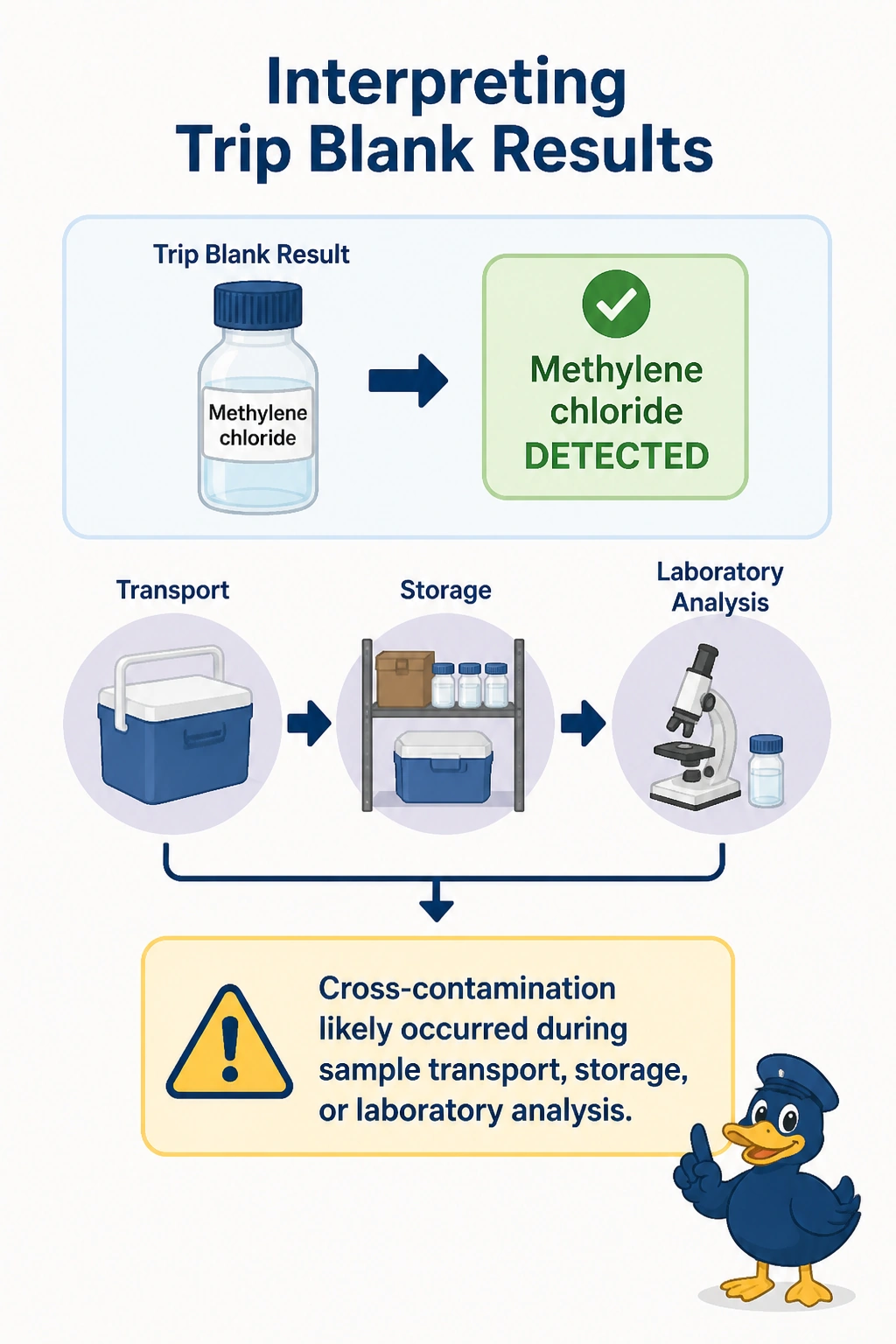
Short Explanation
A trip blank is like a sealed control envelope that travels everywhere with your samples without ever being opened in the field. The trap is assuming any laboratory hit in a well sample proves groundwater contamination. When the unopened blank shows the same common lab solvent, you know the detection likely came from handling, shipping, or the lab itself.
Full Explanation
A trip blank consists of analyte-free water prepared by the laboratory, carried unopened to the field, and returned with the volatile organic compound vials to detect extraneous contamination; finding methylene chloride in both the well sample and the unopened blank indicates that Cross-contamination likely occurred during sample transport, storage, or laboratory analysis. Methylene chloride is a common laboratory extraction solvent, so its presence in an unopened control sample flags potential false-positive bias that must be qualified during data validation. To conclude that The groundwater aquifer beneath the monitoring well is definitively contaminated with a dense non-aqueous phase liquid ignores the contaminated quality-control blank and misinterprets low-level dissolved or artifact detections as free-phase product. Claiming that The monitoring well screen is improperly developed and requires immediate replacement before resampling confuses physical sediment turbidity with volatile organic cross-contamination. Stating that The field team failed to filter the volatile organic compound samples through a 0.45-micron membrane is incorrect because VOC groundwater samples are not field-filtered, as filtration would cause volatilization loss. As a caveat, if the well concentration far exceeds the trip blank level, true site contamination may still be present alongside blank bias. For an operational check, inspect the data validation report and chain-of-custody records to flag the result and schedule confirmatory resampling if needed.
Prefer to study offline? Printable PDF study book + test engine ($7.50, unofficial). These questions stay free here.