
A large automotive assembly plant generates hundreds of partially full, discarded spray-paint and lubricant aerosol cans each month that would otherwise be regulated as ignitable and reactive hazardous waste. Rather than managing them under full RCRA Subtitle C generator accumulation limits, which streamlined management option is available under federal 40 CFR Part 273?
Select an answer to reveal the explanation.
Short Explanation
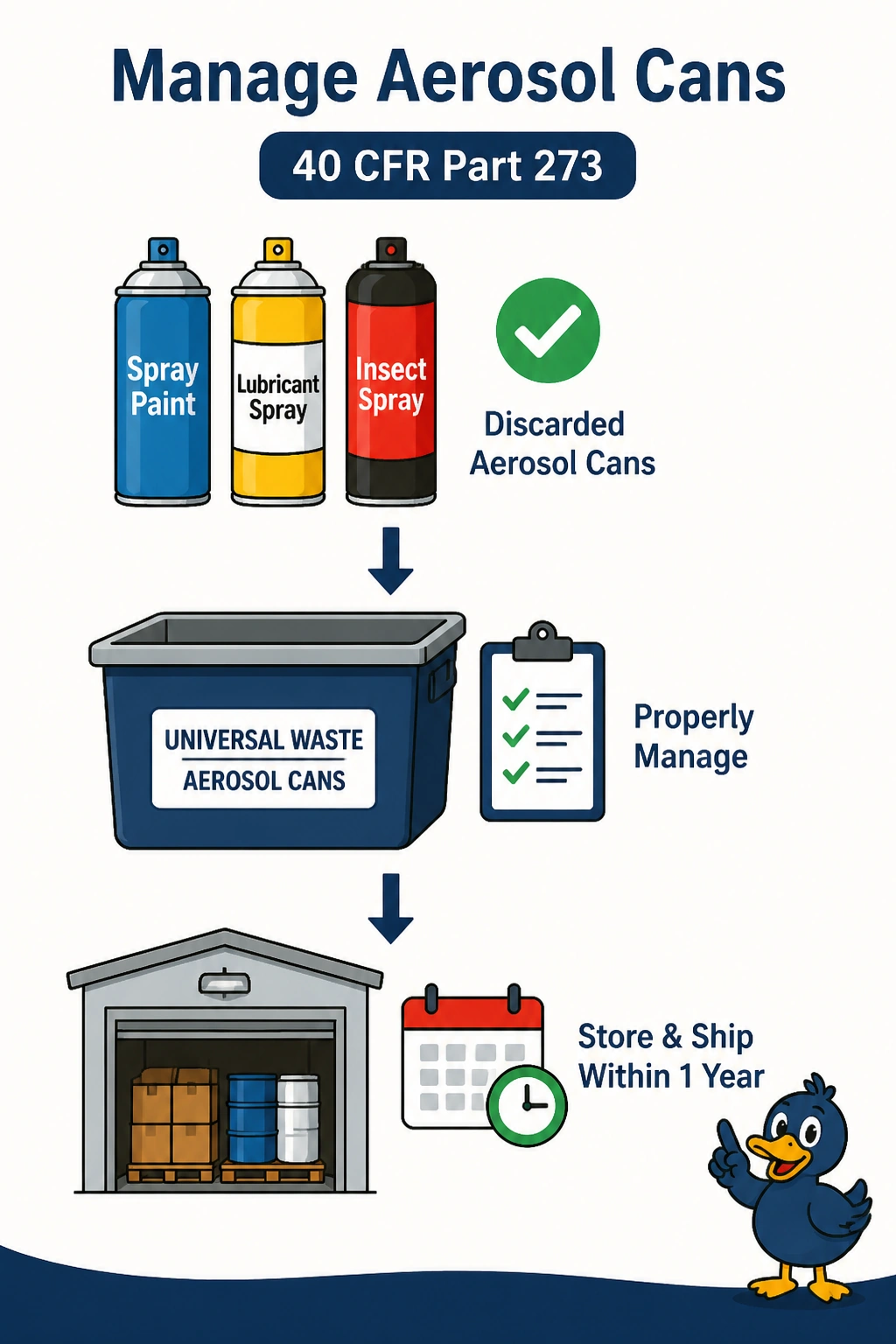
If your plant burns through cases of spray paint and lubricants, managing every spent can as full hazardous waste can bury you in paperwork. The trap is assuming you can toss them in scrap metal or claim a household exemption. Under 40 CFR Part 273, you can manage discarded aerosol cans under the streamlined RCRA Universal Waste Rule.
Full Explanation
Under federal RCRA regulations in 40 CFR Part 273, EPA added hazardous waste aerosol cans to the Universal Waste Rule to streamline collection, storage, and off-site recycling or disposal. By Managing the discarded aerosol cans under the federal RCRA Universal Waste Rule, the plant avoids counting those cans toward monthly generator status while following simplified container, labeling, and one-year accumulation rules. The choice Classifying all plant aerosol cans as exempt household hazardous waste fails because industrial manufacturing facilities cannot claim the residential household waste exemption. The choice Managing emptied punctured cans as ordinary solid waste without a hazardous-waste determination on the drained liquid fails because drained liquid still requires proper RCRA hazardous waste determination. The choice Draining the cans without capturing liquid contents for waste determination violates puncturing standards, which require a dedicated device that captures drained liquids for proper RCRA hazardous waste characterization. Keep in mind the caveat that while federal rules allow universal waste aerosol cans, you must verify whether your state environmental agency has adopted the federal aerosol can universal waste rule. As an operational check, confirm universal waste containers are closed, structurally sound, and clearly marked with one of the phrases 'Universal Waste-Aerosol Can(s)', 'Waste Aerosol Can(s)' or 'Used Aerosol Can(s)', and able to show how long the cans have accumulated (for example an accumulation start date).
Prefer to study offline? Printable PDF study book + test engine ($7.50, unofficial). These questions stay free here.