
A logistics warehouse replaces forty spent lead-acid forklift batteries each year and wants to send the intact batteries off-site for lead and plastic recovery without full RCRA Subtitle C hazardous waste manifesting. Which disposition approach complies with federal RCRA regulations?
Select an answer to reveal the explanation.
Short Explanation
Think of spent lead-acid batteries like returnable glass bottles—the recycling loop works only if you keep them intact and route them to a reclaimer. The trap is thinking you can pour the acid down a drain or toss old batteries in the trash. Federal RCRA rules give you streamlined reclamation pathways, provided the batteries stay intact and go to a legitimate recycler.
Full Explanation
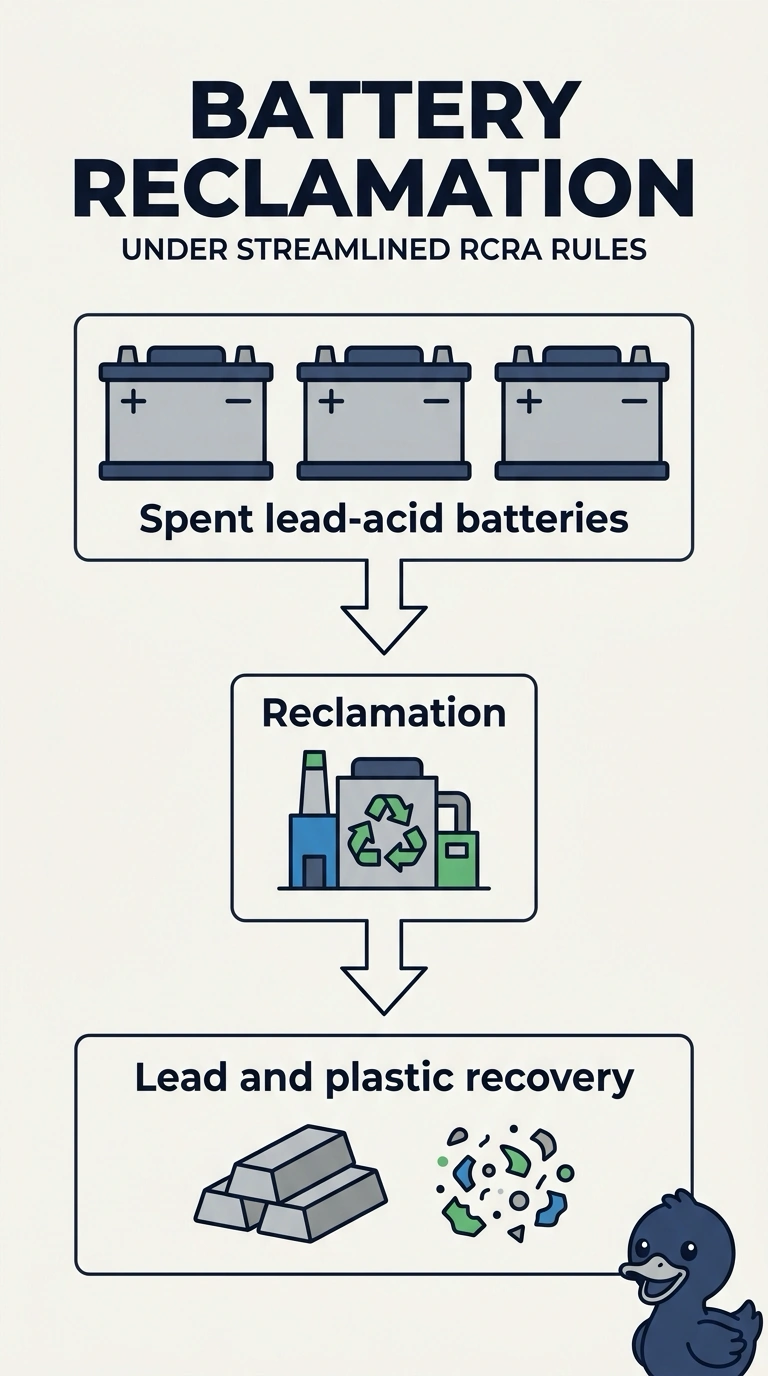
Under federal RCRA regulations in 40 CFR Part 266 Subpart G and the Universal Waste Rule in 40 CFR Part 273, generators can Send intact spent lead-acid batteries for reclamation under streamlined RCRA rules rather than managing them under full Subtitle C hazardous waste manifesting and accumulation limits. Both lead and sulfuric acid electrolyte exhibit RCRA hazardous characteristics, so keeping the casings intact prevents spills while routing the materials to an authorized battery recycler. Choosing to Drain the battery acid into a sanitary floor drain and recycle the empty plastic cases illegally discharges corrosive, lead-bearing acid to the sewer and triggers full hazardous waste generator liabilities. Choosing to Dispose of intact spent lead-acid batteries inside the facility's municipal trash bin violates hazardous waste disposal prohibitions and introduces lead into solid waste landfills. Choosing to Crush the battery casings on-site and ship the mixed debris to a municipal landfill constitutes unauthorized hazardous waste treatment and illegal land disposal. As a regulatory caveat, Universal Waste battery handlers must still label or mark batteries, store them to prevent leaks, and track accumulation time limits (typically one year). As an operational check, stage spent batteries upright on acid-resistant containment pallets and retain bills of lading or recycling receipts from the reclaimer.
Prefer to study offline? Printable PDF study book + test engine ($7.50, unofficial). These questions stay free here.