
A metal-finishing plant generates spent acid pickling bath containing high concentrations of heavy metals and proposes sending it to a fertilizer blender as a 'raw material' to avoid RCRA hazardous waste manifesting and disposal fees. The fertilizer blender's process gains no chemical benefit from the heavy metals, which simply remain in the final product at levels far above commercial fertilizer specifications. Under EPA's RCRA legitimate recycling rules (40 CFR 260.43), how is this arrangement classified?
Select an answer to reveal the explanation.
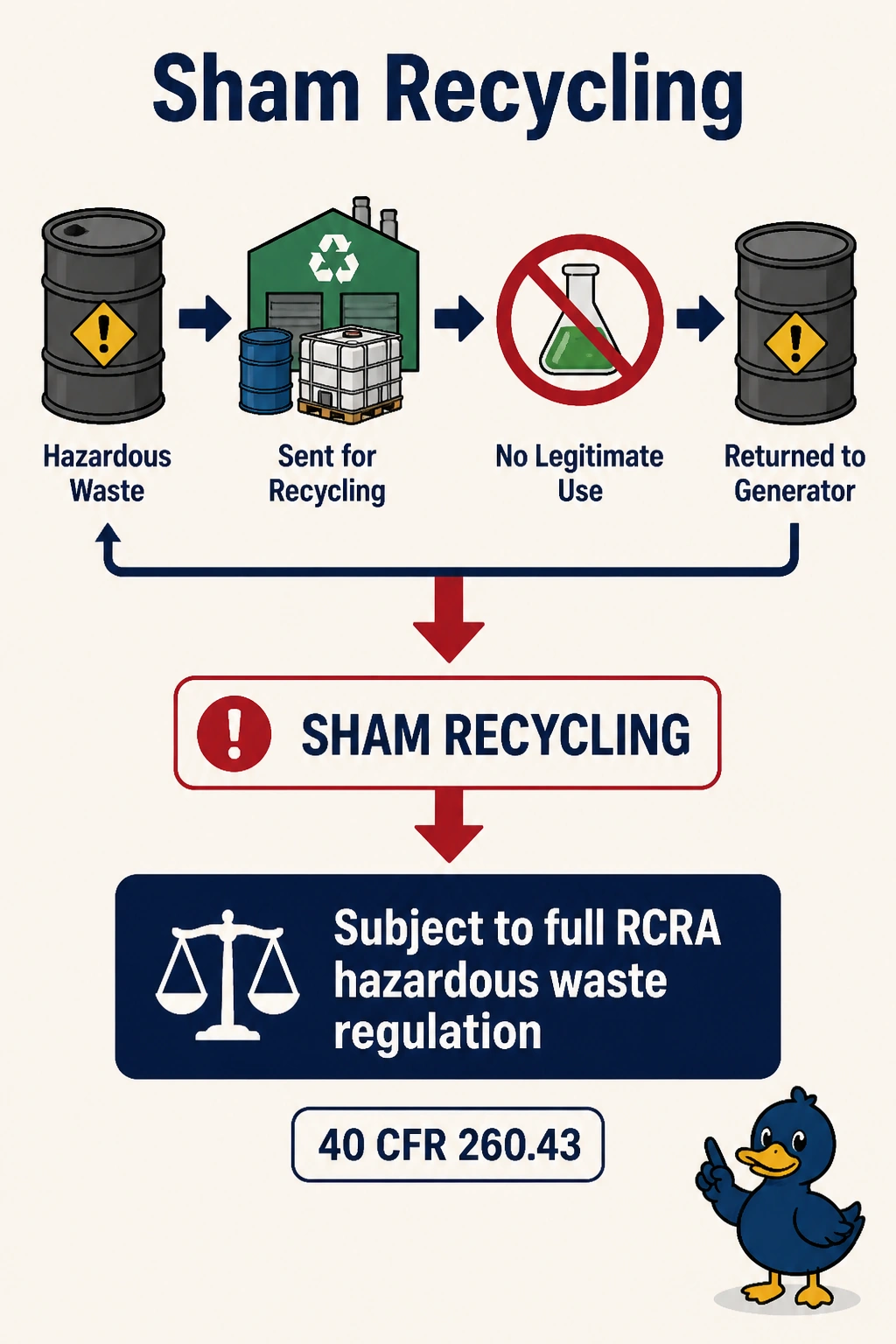
Short Explanation
Calling a waste a 'raw material' does not turn disposal into recycling if the receiving process gets no real benefit and just passes toxics along for the ride. Under EPA's legitimacy criteria, you are looking at sham recycling, which stays fully regulated as hazardous waste. The trap is thinking any off-site reuse claim earns a RCRA exemption.
Full Explanation
Under EPA 40 CFR 261.2(g) and 40 CFR 260.43, this arrangement is "Sham recycling subject to full RCRA hazardous waste regulation" because legitimate recycling must provide a useful contribution to the recycling process or product, yield a valuable product, manage the secondary material as a valuable commodity, and produce a product comparable to a legitimate analogue without passing hazardous constituents along for the ride. Claiming "Legitimate recycling exempt from all RCRA generator recordkeeping" fails because the heavy metals add no chemical value to the fertilizer and exceed commercial product specifications. Classifying the acid bath under "Universal waste management eligible for streamlined transport rules" is incorrect because Universal Waste under 40 CFR Part 273 applies only to specific streams such as batteries, pesticides, mercury-containing equipment, lamps, and aerosol cans. Relying on a "Conditional byproduct exclusion requiring only annual TRI reporting" confuses Toxics Release Inventory reporting with RCRA Subtitle C waste characterization and legitimacy rules. As an operational caveat, even when a secondary material provides a useful chemical contribution, failing the toxics-along-for-the-ride comparability factor can still trigger sham recycling enforcement. For an operational check, document all four 40 CFR 260.43 legitimacy factors in writing before shipping any secondary material off-site for reuse.
Prefer to study offline? Printable PDF study book + test engine ($7.50, unofficial). These questions stay free here.