
A mid-sized asset management firm is evaluating MLOps platforms to operationalize 14 proprietary alpha-generating models. The CTO narrows the shortlist to three vendors but is uncertain which selection criteria should be weighted most heavily for a regulated financial environment. Which criterion should carry the greatest weight in the final vendor decision?
Select an answer to reveal the explanation.
Short Explanation and Infographic
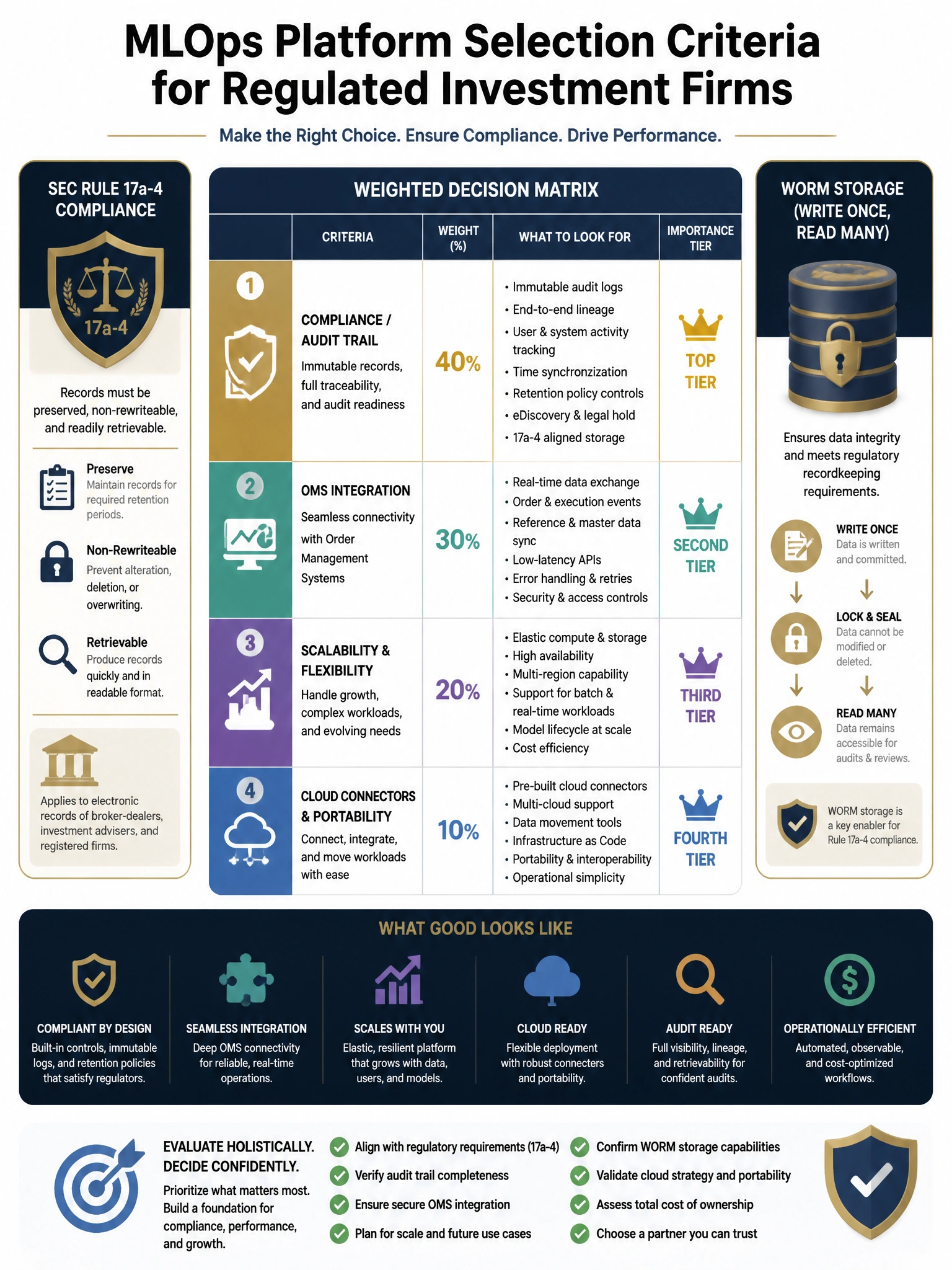
Todd Lammle: Think of MLOps like choosing a trading floor — it has to speak the language of the exchange it plugs into. In regulated asset management, audit-trail compliance and OMS integration are non-negotiable before any other feature matters. Option A locks in both. The other choices optimize for convenience or vanity metrics that regulators don't care about.
Full explanation below image
Full Explanation
For a regulated investment firm, MLOps platform selection must be driven by compliance and operational fit before features. SEC Rule 17a-4 requires that electronic records — including model outputs, retraining logs, and decision audit trails — be stored in WORM (write-once, read-many) format for defined retention periods. A platform that cannot produce immutable, time-stamped model lineage records creates regulatory exposure regardless of its algorithmic capabilities.
OMS integration is equally critical. Alpha models that cannot feed signals directly and reliably into the order management workflow introduce latency and manual intervention, degrading both performance and risk controls. The MLOps layer must be observable at the point where model output becomes a trade instruction.
Option B (cloud connectors) is a secondary concern; connectors can be custom-built or added via middleware and should not override compliance readiness. Option C (market share among retail fintechs) is irrelevant — retail fintech use cases operate under different regulatory frameworks with different latency tolerances and data residency constraints. Option D (free tier availability) signals a misalignment between vendor positioning and enterprise needs; procurement decisions for production-grade regulated infrastructure should never hinge on freemium access.
The CFIA framework treats vendor selection as a risk management exercise. The Gartner MLOps Magic Quadrant and the NIST AI Risk Management Framework both emphasize governance-readiness as a primary enterprise criterion. In financial services, the FINRA Technology Regulatory Requirements Checklist further grounds this: governance, explainability, and auditability precede performance benchmarks.