
A consumer discretionary fund uses web-scraped foot traffic data derived from mobile device pings at retail locations to forecast same-store sales ahead of official reports. Which implementation consideration most critically determines the signal's investment utility?
Select an answer to reveal the explanation.
Short Explanation and Infographic
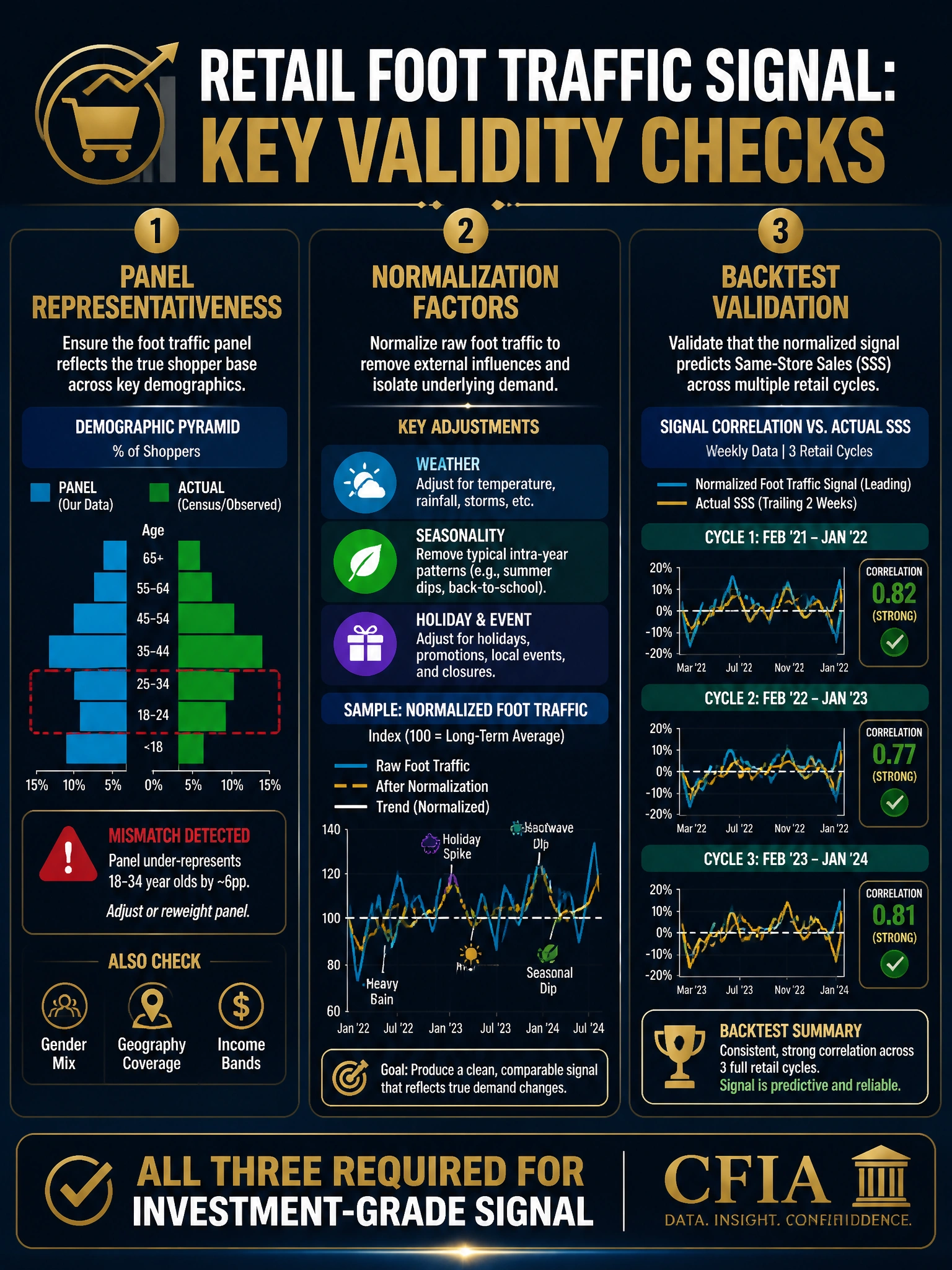
Foot traffic data is only as good as the shoes walking through the door — if your device panel skews young and tech-savvy, you're measuring iPhone owners visiting discount stores, not the actual shopper base. Panel representativeness is the load-bearing wall of this signal; without it, even perfect weather normalization and seasonal adjustment are built on a crooked foundation.
Full explanation below image
Full Explanation
Mobile device-derived foot traffic data (sourced from providers like Placer.ai, SafeGraph, or Advan Research) has become one of the most widely used alternative datasets in consumer equity research. The core premise is straightforward: visits to physical retail locations are a leading indicator of same-store sales, which drive earnings. However, the practical implementation challenges are substantial and frequently underestimated.
Option A's breadth-first approach ignores the critical limitation of mobile device panel composition. Most location data providers derive their panels from opt-in SDK agreements embedded in mobile apps. The resulting panel systematically over-represents younger, smartphone-heavy, app-intensive consumers. For a discount retailer whose core customer is a 55-year-old who does not use apps frequently, the panel produces a structurally biased visit count that cannot be corrected by volume alone.
Option C's assumption of a 1:1 foot traffic to revenue relationship is empirically false. Average transaction value, basket size, and conversion rate vary enormously across retail formats, seasons, and competitive conditions. A luxury retailer with 10% fewer visits but 25% higher average ticket may see same-store sales growth — the opposite of what raw foot traffic signals.
Option D conflates privacy compliance with analytical utility. CCPA and GDPR generally permit aggregated, anonymized location analytics without city-level restriction; city-level aggregation is not required for compliance and eliminates the location-specific granularity that makes the dataset valuable. Proper anonymization at the individual device level satisfies regulatory requirements while preserving location-level signal.
Option B addresses the three core requirements for foot traffic signal viability: panel representativeness validation (ensuring the device panel mirrors the actual customer demographic), normalization for seasonality and weather (visit counts for outdoor strip malls drop sharply during snowstorms regardless of consumer demand), and multi-cycle backtesting to confirm the signal has not decayed as the panel composition or retail landscape has evolved. This methodology is consistent with the Alternative Investment Management Association's Alternative Data Due Diligence Guidelines.