
Summing up, why should governance tooling be connected to both the development and deployment environments rather than treated as a standalone system fed by occasional manual updates?
Select an answer to reveal the explanation.
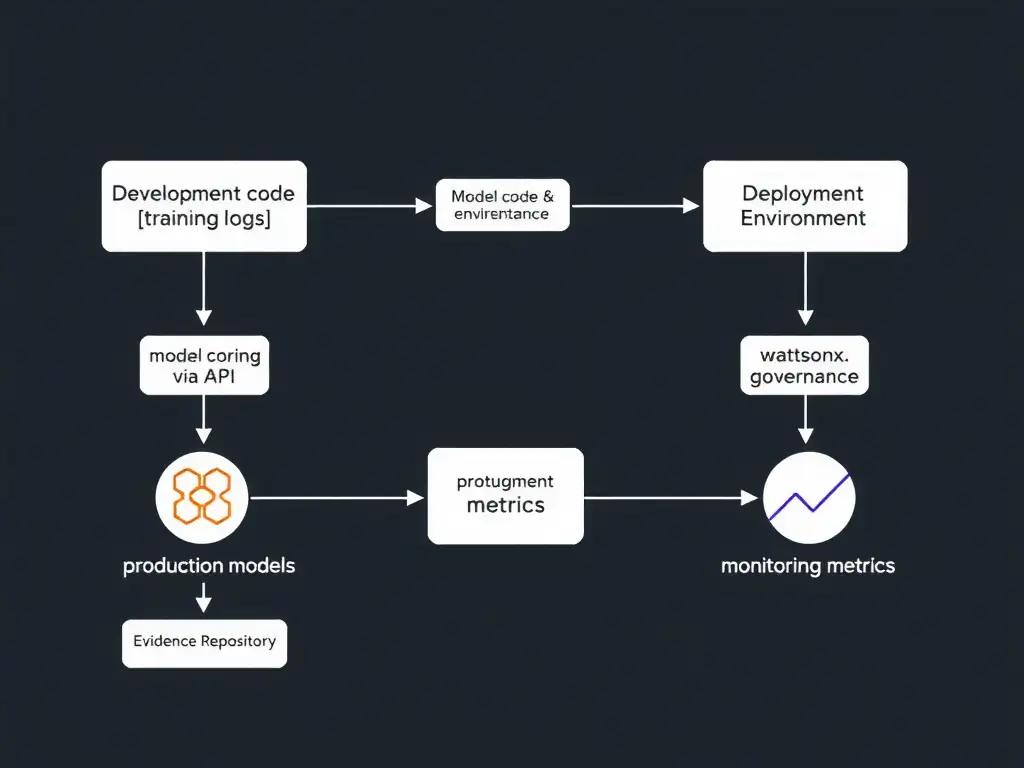
Short Explanation
You want governance tooling wired into development and deployment because it keeps producing evidence as work happens. Manual updates only work when someone remembers, so they’re late and incomplete.
Full Explanation
The correct choice is the one stating that a direct connection produces continuous, accurate evidence and monitoring, while manual updates are incomplete, delayed, and depend on someone remembering to do them. Direct integration removes the dependency on someone consistently performing manual updates, and instead produces evidence continuously as development and deployment activity happens. The option saying standalone governance systems are not permitted under most internal IT policies is incorrect because there is no such general IT policy prohibition described here; the argument for integration is about evidence quality. The option saying a standalone system uses more storage than an integrated one is incorrect because storage footprint is not the reason integration is preferred; reliability and completeness of evidence are. The option saying manual updates are faster for engineers to perform than an automated connection is incorrect because manual updates are typically slower and less reliable for engineers than an automated connection, not faster. For the exam, justify integration on evidence reliability and continuity, not cost or policy.