
Summing up, why must a governed production deployment include drift monitoring even though the model already passed validation?
Select an answer to reveal the explanation.
Short Explanation
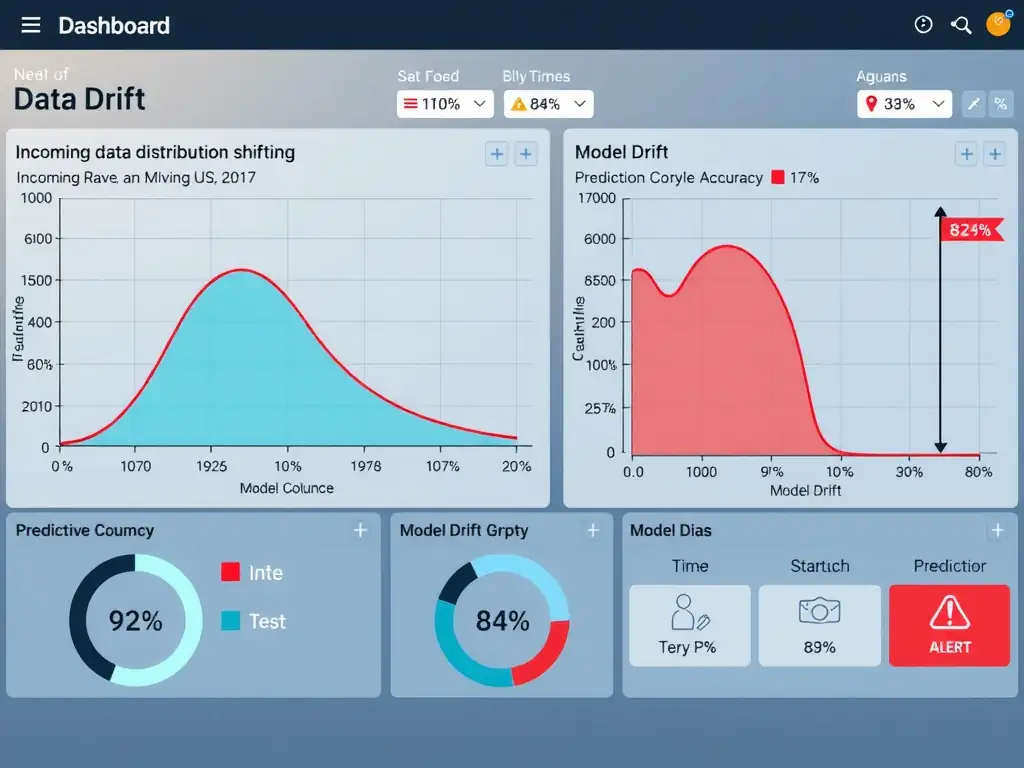
Validation tells you the model behaved correctly at a specific point in time. Drift monitoring tells you whether that behavior is still holding up in production on live data. You need both because they answer different questions.
Full Explanation
The correct answer is the one that says validation confirms behaviour at one point in time, while drift monitoring detects if that behaviour changes afterward, in production, on live data. Validation and drift monitoring cover different time windows: validation is a pre-deployment check, and monitoring is the ongoing check that catches change after the model is live.
The option saying auditor trust in validation results depends on drift monitoring is incorrect because auditor trust in validation results is not conditional on monitoring; the two serve distinct purposes.
The option saying drift monitoring makes inference faster is incorrect because monitoring observes behaviour and does not itself change inference speed.
The option saying drift monitoring replaces the need for validation is incorrect because monitoring does not replace validation; skipping validation would deploy an unverified model regardless of monitoring.
For the exam, describe validation and drift monitoring as complementary controls covering different phases of a model's life, not substitutes for each other.