
An architect asks which choice best summarises the governance lifecycle for AI assets that have stopped being used. What is the correct summary?
Select an answer to reveal the explanation.
Short Explanation
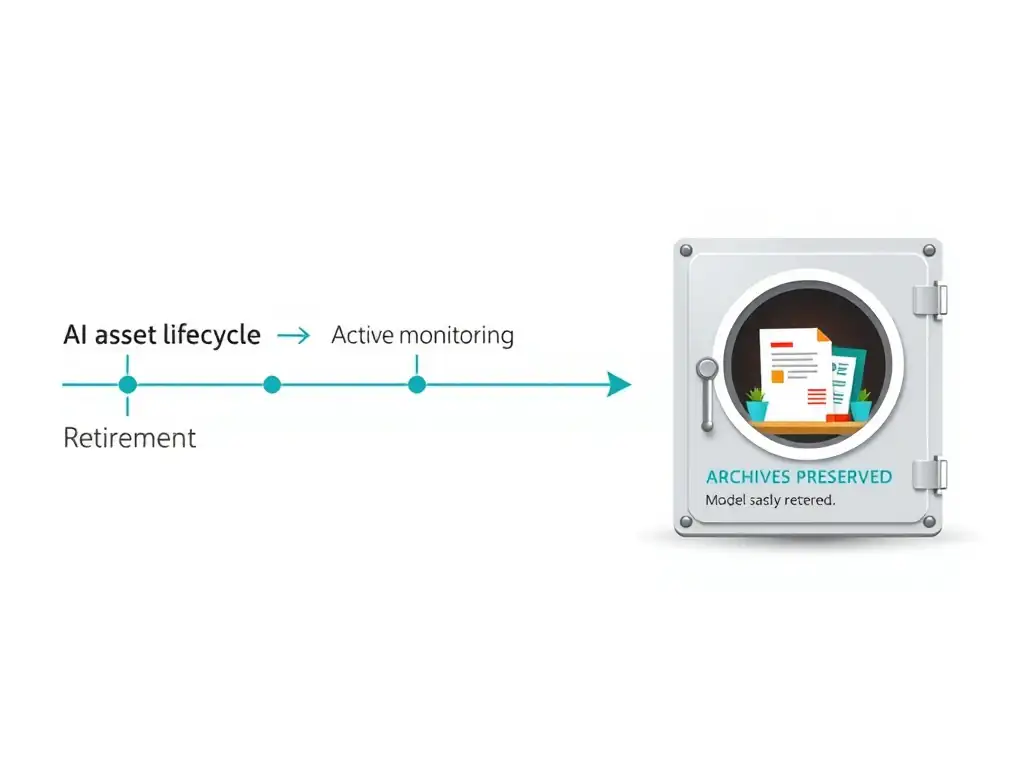
When you stop using an asset, retire or archive it, keep the paperwork, and don't hand its approval to something else. That's the whole lifecycle.
Full Explanation
The correct summary is to retire or archive the asset once it is no longer used, keep the evidence its governance record requires, and never reassign its approvals to a different use case. The governance lifecycle for an unused asset is to change its status to retired or archived, keep the evidence that obligations require, and treat its approval as specific to that asset rather than transferable.
The option about deleting the asset's entire history as soon as usage stops is incorrect because deleting the history removes evidence that may still be needed to demonstrate how the model was governed while it was in use.
The option about keeping the asset marked active regardless of usage is incorrect because an inaccurate active status misrepresents what is genuinely deployed, undermining the inventory's purpose.
The option about transferring the asset's existing approval to whichever new project needs one next is incorrect because an approval reflects a specific use case's risk assessment and cannot stand in for the assessment a different use case requires.
For the exam, hold all three elements together: retire the status, preserve the evidence, keep approvals non-transferable.