
Which statement best summarises how a scalable lifecycle-tracking implementation should be structured?
Select an answer to reveal the explanation.
Short Explanation
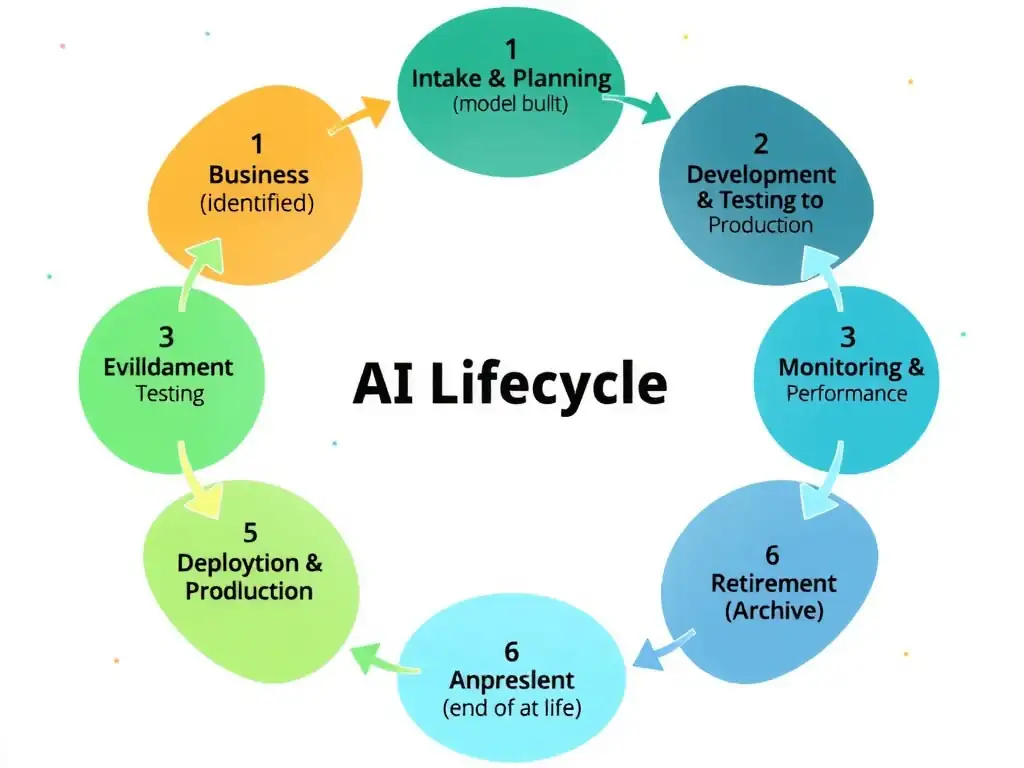
You want one continuous record per asset from intake through retirement. That single thread is what makes lifecycle tracking scalable. Disconnected snapshots don't add up to a lifecycle.
Full Explanation
The best summary is a continuous record per asset that follows it through intake, development, validation, deployment, monitoring and retirement. A continuous record is what scales: it captures every stage automatically as the asset moves through it, rather than depending on someone reconciling fragments later. Separate, disconnected records at each major milestone, reconciled manually before an audit, are incorrect because manual reconciliation before an audit is labour-intensive and error-prone, and defeats the purpose of ongoing tracking. A single tracking entry created only once a model is approved for production use is incorrect because creating the record at approval discards everything that happened before it. Tracking that applies to purchased or vendor models but not to internally built ones is incorrect because vendor and internally built assets carry the same governance risk and both need tracking. For the exam, describe the target state as one continuous record spanning every stage, for every asset.