
A project lead has confirmed a model is no longer used anywhere in production. Which action correctly closes out that model's governance lifecycle?
Select an answer to reveal the explanation.
Short Explanation
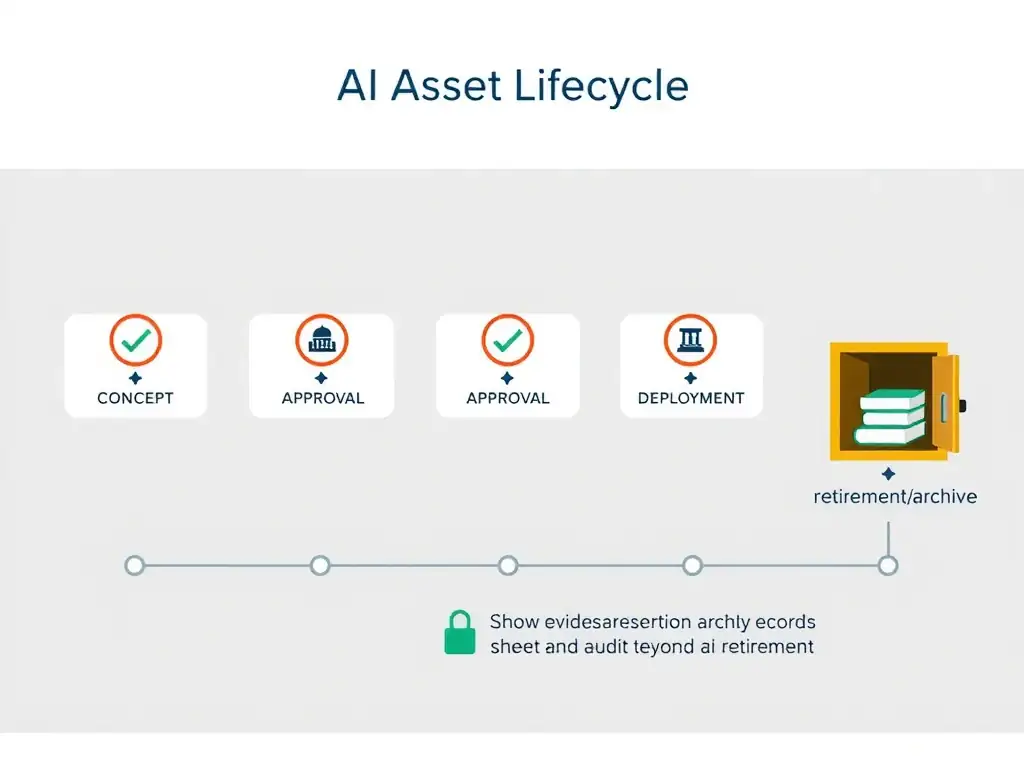
When a model's no longer used in production, you retire or archive it in the inventory. Keep its evaluation, approval, and monitoring evidence so the governance history stays intact.
Full Explanation
The correct action is retiring or archiving the asset in the inventory while preserving its evaluation, approval, and monitoring evidence. Confirmed non-use is the trigger for retirement, and the correct action pairs a status change with preservation of the evidence that governance obligations require to remain available.
Deleting the model's entire record so the inventory only reflects models still in service is incorrect because it destroys evidence that may still be needed for audits or later questions about the model's history.
Leaving the inventory entry marked active, since removing active status could confuse historical reporting, is incorrect because leaving a genuinely unused model marked active misrepresents the current state of the inventory, which is the opposite of what accurate historical reporting needs.
Transferring the model's approval record to a different, currently active model to avoid re-approval work is incorrect because reusing an approval for a different model bypasses the assessment that model's own use case requires.
For the exam, pair the status change with evidence preservation as a single correct action, not two separate trade-offs.