
As part of a production rollout, a team wants to confirm its inventory is complete before go-live. Which check best serves that goal?
Select an answer to reveal the explanation.
Short Explanation
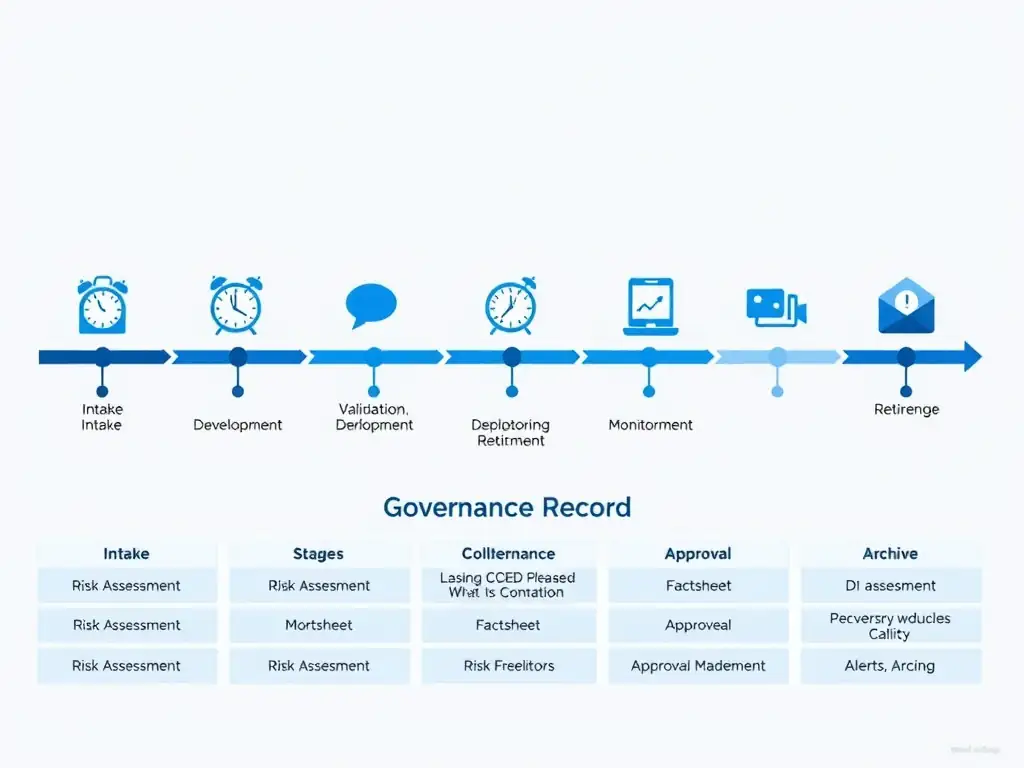
You need to know every model and generative AI asset has a complete lifecycle record from intake to deployment. That's the inventory check. Accuracy, autoscaling, and rollback plans matter, but they don't prove your inventory is complete.
Full Explanation
The correct choice is confirming that every model and generative AI asset involved in the rollout has an unbroken record from its original intake through to its current deployment stage. Inventory completeness is specifically about whether the lifecycle record is unbroken from intake onward; a gap anywhere in that chain means the asset is not fully governed even if it works well technically.
Confirming that the model achieves the target accuracy score on the latest test set is incorrect because accuracy is a model-quality metric, not an inventory or lifecycle-tracking check.
Confirming that the deployment infrastructure has autoscaling enabled is incorrect because autoscaling is an infrastructure concern unrelated to lifecycle records.
Confirming that the rollout has a rollback plan documented in the runbook is incorrect because a rollback plan is operational readiness, a different control from lifecycle tracking.
For the exam, keep lifecycle-completeness checks separate from performance and operational checks.