
The risk that a model's real-world performance quietly degrades weeks after launch needs mitigating. Which choice best addresses it?
Select an answer to reveal the explanation.
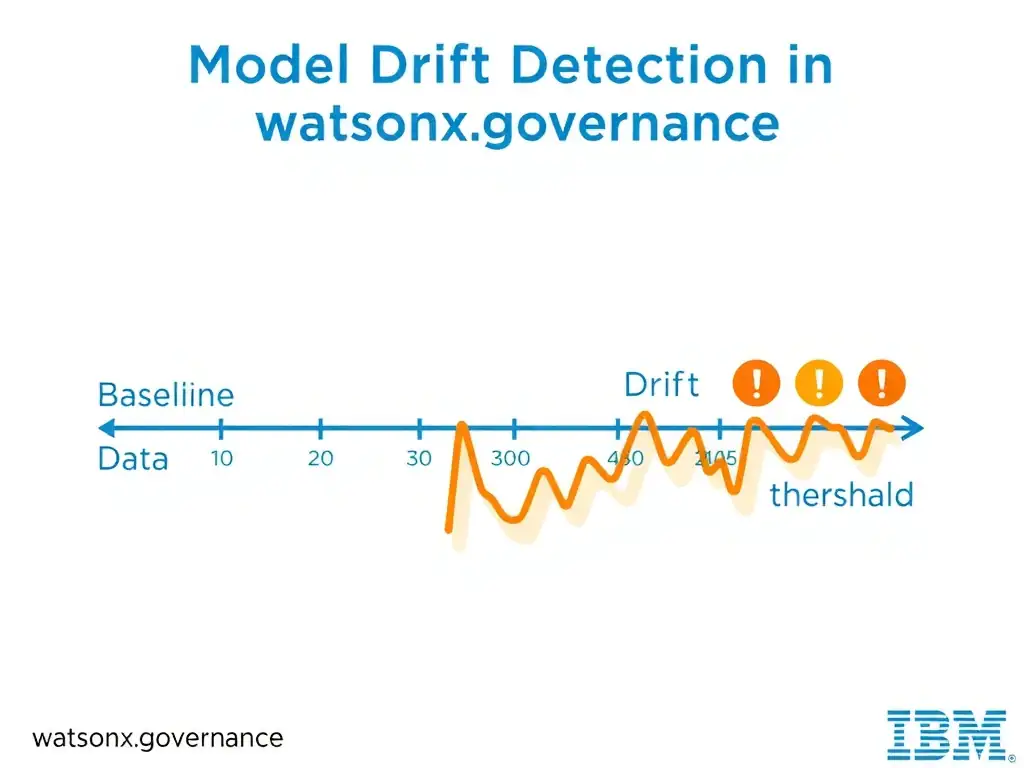
Short Explanation
Pre-deployment validation tells you it was right on day one. Only ongoing monitoring tells you it's still right on day sixty, so you need continuous monitoring for data and model drift with alerts when behaviour diverges from the validated baseline.
Full Explanation
The correct choice is continuous monitoring for data and model drift, with alerts when behaviour diverges from the validated baseline. Quiet post-launch degradation is, by definition, something a pre-deployment activity cannot see; only monitoring that runs continuously after deployment can detect it.
The more thorough validation pass performed once, before the model is deployed, is incorrect because a thorough but one-time validation still only speaks to the model's state at that single point in time.
The larger training dataset used to build the original model is incorrect because a larger training set may improve the original model but says nothing about whether its live behaviour later changes.
The stricter access controls on who may query the deployed model are incorrect because access control addresses who can use the model, not whether its predictions remain accurate.
For the exam, treat drift monitoring as the specific answer to risks framed as 'behaviour changes over time after deployment'.