
Which statement best summarises how watsonx.data keeps lakehouse data trustworthy?
Select an answer to reveal the explanation.
Short Explanation
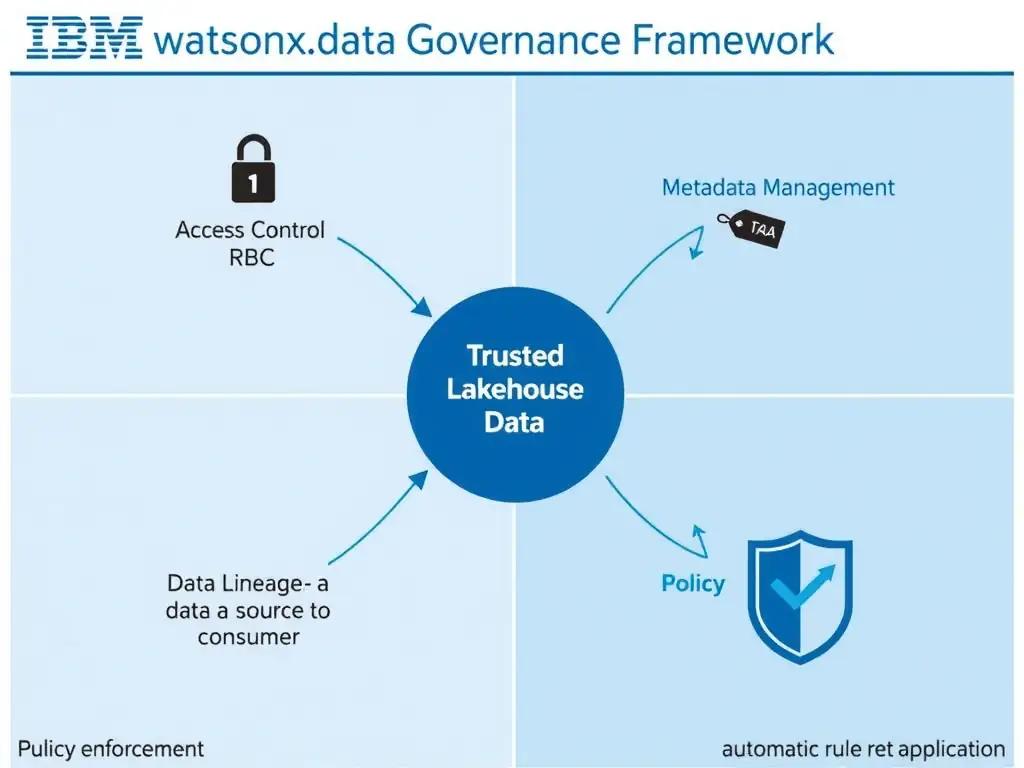
You keep trust by governing the shared data itself, not copies. Access control, metadata, lineage, and policy sit on the assets, so every engine and consumer reads through the same controls.
Full Explanation
The correct answer is the statement that access control, metadata, lineage and policy are applied to the governed data itself, so every engine and consumer works from the same controlled assets. The governance model applies to the shared data itself. Access control decides who reads it, metadata describes it, lineage records where it came from, and policy expresses the rules - and because engines resolve data through that layer, every consumer inherits the same controls. The approach where each consuming team applies its own controls to its own copy of the data is incorrect because per-team copies fragment governance, drift apart, and make revocation impossible. The approach that restricts the platform to a single query engine is incorrect because restricting to one engine sacrifices the multi-engine benefit without improving trust; governance is not enforced by engine scarcity. The approach that applies controls to reports and exports, leaving source tables open for flexibility, is incorrect because governing outputs leaves the source reachable by anyone with query access. For the exam, remember the shape: govern the shared data once, and let every engine and interface inherit it.