
A platform team is defining how downstream consumers should reach curated lakehouse tables. Which principle should the standard be built on?
Select an answer to reveal the explanation.
Short Explanation
You want one governed copy queried in place through supported SQL engines and interfaces, whatever the client. That keeps BI tools, notebooks, and apps seeing the same numbers under the same policies. Per-team copies are the old pattern the lakehouse replaces.
Full Explanation
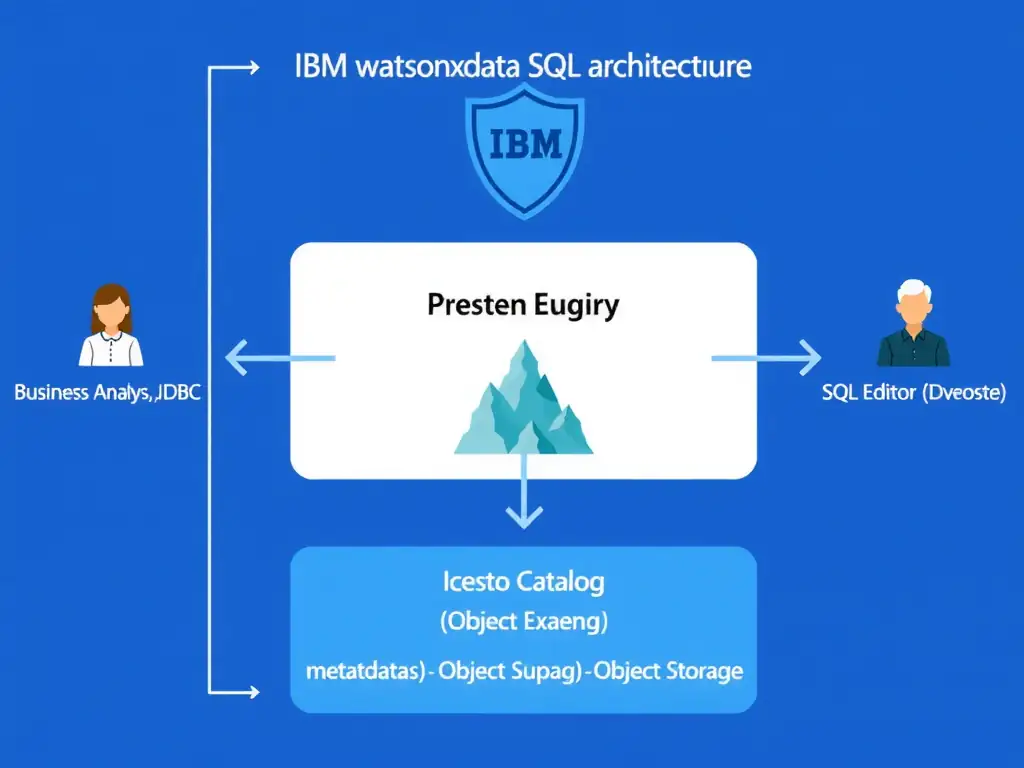
The standard should be built on consumers querying the governed tables in place through supported SQL engines and interfaces, whatever their client. The lakehouse keeps one governed copy of the data on object storage and layers catalogs, policies and engines above it. A standard built on querying in place through supported interfaces gives every consumer current data, consistent definitions and uniform enforcement, regardless of whether the client is a BI tool, a notebook or an application.
The approach where each consuming team receives its own copy of the tables, sized and tuned for its workload, is incorrect because per-team copies reintroduce the data marts the architecture exists to consolidate. Each copy needs its own refresh, its own governance and its own reconciliation, and teams will report different numbers.
The approach where consumers are given storage credentials and choose their own reader library is incorrect because handing out storage credentials moves enforcement from the catalog to the honour system. Readers would bypass every policy and would each interpret table metadata independently.
The approach where all consumption is routed through a single nightly batch export that every team shares is incorrect because a single nightly export makes freshness a property of the schedule rather than of the data, and it fails outright for any interactive or operational consumer.
For the exam, this is the sentence to remember: governed data queried in place, through supported engines and interfaces.