
Which combination describes a production-ready ingestion pattern?
Select an answer to reveal the explanation.
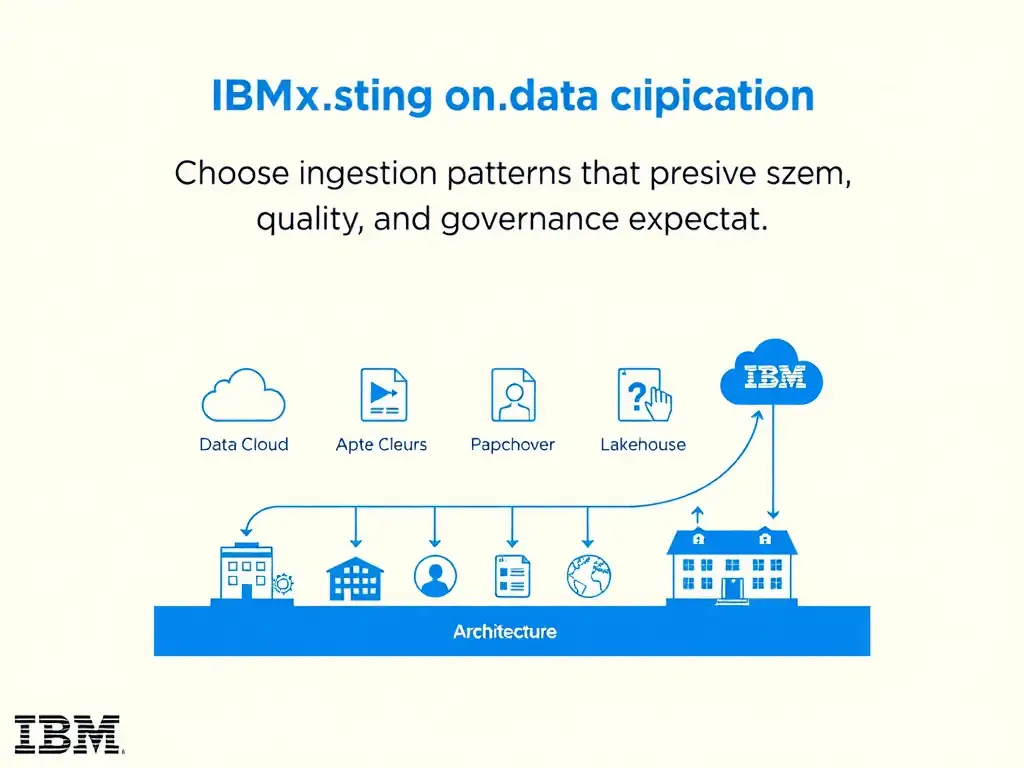
Short Explanation
You need a production ingestion pattern that validates structure at load, decides what happens to bad rows, and captures metadata and lineage as part of the pipeline. If you defer any one of those, you're not production-ready.
Full Explanation
The production-ready pattern is the one that validates schema at load, applies explicit quality handling for non-conforming data, and captures metadata plus lineage as part of the pipeline. Production ingestion enforces the structural contract, handles non-conforming records deliberately rather than by accident, and records provenance so the resulting tables can be trusted and traced. The pattern that maximizes throughput with minimal checks and defers metadata to a later cleanup is wrong because throughput bought by skipping checks produces fast delivery of unreliable data, and deferred metadata is reconstructed rather than observed. The pattern that aggregates on ingest, omits schema definition, and applies governance at the dashboard is wrong on all three counts: aggregating on ingest discards detail, no schema removes the consumer contract, and governing dashboards leaves the source open. The pattern that relies on manual file transfers on a schedule, with correctness verified by the consuming team, is wrong because manual transfer offers no schema enforcement, no failure signal, and no lineage, and it pushes verification onto people who cannot see the source. For the exam, recite the triple: schema, quality, governance.